Wednesday, September 05, 2018

Eulogy i.m. Joan Sheppard

Eulogy i.m. Joan Sheppard read at Tribe’s Chapel, Eastern Avenue Shoreham-by-Sea on Tuesday 4th September 2018.

The service was intimate and personal and I spoke the text below and my aunt, Marjorie, spoke eloquently and extempore about Joan as a sister. 


Women’s lives often seem chaotic and fragmentary, but in fact they are often simply multi-faceted. A kaleidoscope of relationships, responsibilities and roles. In the case of Joan, I can’t rely much upon my early memories because they are so hazy, and the life before that time (and after too) is quite literally a collection of snapshots: the photographs I liberated from the dust museum of material possessions that was Oakapple Road, at the same time Joan herself was liberated to the excellent care of St Clare’s. We will see some of them this afternoon.

Of course, I have some general memories of being raised by her, and of course, I like to think judging by the result (me) she was good at it. She was reliable and efficient, sensitive and responsive. In keeping with many women of her generation, she gave up her career for housewifery. She taught me to type.   

There is one photograph of her at work in the typing pool of the Alliance Building Society, in the early 1950s. It’s like one of those film stills of the era in which the glamorous starlet is deliberately surrounded by what would have been called ‘Plain Janes’ in those days to emphasise her good looks. But there is nothing contrived about the photograph.

It was her good looks that kept her at home. My father didn’t want her to return to the male-dominated sexist environment of ‘the office’. She did return to work in the more liberated 1970s, part time, at Vagas, and laid out patterns for Marks and Spencers’ clothes. When I cleared out Oakapple Road, I managed to find a friend who was doing fabric design. Her mini creaked low in the road as she transported a cupboard full of offcuts. Joan was a near hoarder, I think.

In some ways she had the sensibility of a recluse as well, with a natural inclination towards extreme caution. She wouldn’t say ‘Boo’ to a goose. In fact, she was often so timid, that she would be terrified that the goose might say ‘Boo’ to her! The world was full of potential harm. It must have been quite exhausting to navigate it, a poisonous spider free with every bunch of bananas from the greengrocers! On the other hand, she was surprisingly tough, and supportive of me, if I needed help. Or tough on, against, or towards, me (if she thought that necessary).

Yet she had a very silly sense of humour. I remember once we were eating (lots of memories revolve around food, prepared from a 1950s Stork Margarine cook book, which had the status of rabbinical law). We were eating prunes (prunes are a running theme of this memorial) and I ate my first, stone in my spoon, and I asked, ‘What shall I do with the stones?’ She said, ‘Put them where I put mine,’ pointing to the flat rim of her bowl, upon which there were already a number of stones. I obeyed her instruction, deliberately misunderstanding what she meant, and put my unwanted stone in her bowl next to her discarded stones. We laughed. The incident became a running joke, a catch-phrase we would use whenever appropriate: ‘Put them where I put mine.’

Like other memories this doesn’t connect with many others, though perhaps it ties in with Frank Crumit’s silly ‘Prune Song’, which she would sing at times, but it has little detail in it to date it.

I made poetic use of those liberated photographs, in a piece called ‘With’. It’s a collage, appropriate to this fragmented account, and I have remixed it to isolate the sentences about Joan. They come in no particular chronological order, but neither does memory. They relate, better than I can in speech, how those facets of her life fit together – or don’t. Here are some of the sentences:

My mother sits in a large living room with family photographs on the sideboard. My mother dressed as a rag doll with the Christmas tree beside her. My mother with gloves leans, languid, against a frosted sash window. My mother as a toddler advances across the grass, with arms waving, while over the road an awning advertises Antarctic Real Cream Ices. My mother laughing in a sleeveless jumper on the low metal folding-chair, with both her hands resting, claw-like, across her knees, her floral skirt. My mother grips the rail of the ship with me standing long-haired, shirt collar worn over jacket collar, sun-face lapel badge, beside her. My mother’s ferocious gaze, eyebrows stark, with a crowd of ox-eye daisies as chorus. My mother and father and aunt (and me) picnicking with a tablecloth by the roadside, beneath the barbed wire fence. My mother with rows of fuchsia, morning glories, geraniums. My mother and my son grin in the light with a pool of shade leaking from the tree behind. My mother pouring Blue Nun with my son scooping up his dinner. My mother and her sister rest on the bench with the canopy above. My parents’ wedding, 1950, the full contingent packing in, smiling, with Air Ace teeth and Dr Crippen spectacles, handbags and bonnets, double-breasted suits and bouquets. My mother turns towards flamingos with a bag slung across her shoulder. My mother coming out of a caravan with flip-flops and a bath towel. My mother, hair high, frowns, leans out of the dip of the deck chair, with the green budgie in its cage, sharpening its beak on the cuttlefish, echoing everyone’s voices.  My mother Hoovers the cat with the Hoover. In the Triumph Herald, my mother pours tea from a thermos with a shopping bag beside her. My mother as a giggling girl, my aunt as a smiling girl, with the tall woman, the toddler on the wooden horse taking my mother’s resistant hand. On Hove Lagoon my father and I look back to my mother on the quay, as he rows us out with ease and care. My grandparents on the picnic chairs, my mother and I slump on the rug with the Tupperware and transistor radio. My mother and aunt sit on a cannon, both laughing with straw hats. My mother smiles in her homemade dress, with dinner yet to be served. My mother and father cut the cake with a clump of hands and knotted ball of fingers. My mother at the church door, smiling full and unabashed, accepts her centrality to the universe with this moment. On her father’s arm, with her wedding veil down, my mother thinks she’s invisible.


People have supposed that Joan didn’t have much of a life in the care home and it’s true, she wasn’t a great joiner-in, and liked that invisibility, but I think her life there was an improvement on her virtual incarceration in Oakapple, kept almost bed-ridden by a hefty chemical cosh. Immediately off the drugs, a fragile but contented person gradually emerged, and she lived happily, according to the routines and rhythms of St Clare’s and its friendly staff. When dementia overtook her, I don’t think she seemed unhappy or confused, just diminished: there was less there each time I visited, the recitation of a narrowing set of themes. Finally just ‘I’m fine!’

But for most of her stay, she was coherent, and talked about the family and news that she received via phone calls, letters, visits and the media. After one such visit, in April 2016, I recorded the subjects of her conversation. You won’t be surprised that this lively, intelligent, far-ranging, engaged, amusing and serious itinerary of people, actions and opinions, also resists consequential ordering. Again, it’s all detail: no generality. She talked with me about:


Frustrated spinsters, the Spanish Inquisition, Mr Thrower and his family, Olive on the phone, Tommy Cooper, Ken Dodd, busy Marjorie, Joan getting married (‘I didn’t know anything about the world’, she laughed), Melanie, Jeremy Corbyn’s scruffiness, Chris Whyte (the astronaut from Southwick), the other astronaut from Chichester, on not being able to choose what to wear, her hair wash, the damp towel, the forbidden chocolate slice (‘I’m a chocoholic!’), seagulls, owls, Tommy Cooper (‘a violent alcoholic’), Neanderthal Man, falling over in the night, Hitler’s … (well I can’t say it here, but he only had one of them), on the Moon Landing having been faked in a film studio, The Times, The Daily Mail, the Express, the Shoreham Herald, the celebrations for the Queen’s 90th birthday, the forthcoming celebrations for Mum’s 87th birthday, her strict anti-Royalism, on how Queen Victoria married a German, how Yasmin the Yemani waves to her, the crack in the wall examined by Mr Thrower, the contents of my latest letter to her, on Joyce in her nursing home, the Hippodrome, Frankie Howerd, the Clock Tower in Brighton (‘Is it still there?’) a corned beef sandwich (her favourite), Miss Barnett’s Holy Communion at St Clare’s (she’d taught me at school in the mid 60s), cod and chips, Stephen’s liver, the nurse from Worthing Hospital who visits her, Maureen and Ted, a card from Marjorie, her gallery of photographs, her amazing lack of wrinkles (unlike prunes, which remember, form a running theme of this memorial), her amazing teeth, her no need of reading glasses, my Senior Railcard, my Bus Pass (she laughed uproariously at my photograph), Tommy Cooper, David Cameron’s expenses, Charles and Camilla’s ‘carryings on’, Edward VIII’s Nazism, the weirdness of codeine dreams, Peter and Wendy, Peter and Wendy’s family, Richard’s visit to Colombia, the length and arduousness of his journey (a 9 hour flight), the length and arduousness of my journey from Liverpool, my forthcoming retirement, glasses of Lambrusco, Patricia’s mother’s nursing home, Red Rum, and – wait for it – the present whereabouts of Sergar. 

I will miss the intimacy of those insanely free-form conversations as much as the fixed scenes in the photographs and the melting, morphing ones in my memory.


The pre-re-mix of the text is published in Words Out of Time, which is available here. Oddly I'd forgotten there was a rejected passage (the original was too long) - I've just used one or two of its sentences in the final mix - which I posted here. But the piece used on the day was the shortened version, printed above. The full version is here.

My memorial for my father is here

'Standing By', my poem in his memory, is now published with another poem as The Drop. See here. 

Sunday, September 02, 2018

Robert Sheppard: Thoughts on a Year after Leaving Edge Hill

It’s a year since I retired, and it’s about six months since I stopped referring to myself as retired and started to think of myself as a full-time writer. You can look back at my ‘first day of freedom’, AND at my retirement ‘do’ rap. I'm curious that, in the latter, I wrote and recited the following:


Generally depressed by the Brexit result which has left many students bereft of a cleanly conceptualisable future, young people have discovered that they are not just individual consumers but that they form an electorate, surprisingly left-leaning, that wishes to scrap tuition fees and loans and even to erase standing student debt. They’ve even been gifted two elections to try this power out, and they’ve got a taste for it.

That makes this moment a potentially interesting one that could stall the growing pitting of student against staff and suggests a more collaborative future for HE

As I put it in a recent poem about ‘one of those days in sovereign global Britain’

(you didn’t think you were going to get away without this, did you?)

There are no students in this poem yet their standing debt
Has nurtured a collective electorate that forms beyond
The ‘envies’ of petit bourgeois consumerism
This semantic field is manured with usurers’ tears
(The poem is one of my versions of Surrey's sonnets.)

The industrial dispute during the year over, well, pensions (you wait until Brexit when they will ‘roll back the state’ – what do you think the second half The English Strain and Bad Idea (so far) is about?)… The dispute in the ‘old’ universities did indeed answer some of these issues. Students on the whole lined up behind staff, part time lecturers finally revolted against their exploitation, and academics become militant in an inspiring way. It was a shame this dispute was not also in the ‘new’ universities sector where the exploitation (caused increasing research, increasing teaching, increasing admin and increasing bullying) is more acute. It was, as they say, consciousness raising. My involvement with the Ern Malley Orchestra (see here), many of whose highly unionised members teach at Liverpool University, showed me what was happening second hand. I took part in the only way I could: I (temporarily) resigned as an external examiner. I also talked at a conference on the profession of Creative Writing (a keynote, follow the links to the text at the end of this post), though that was before the dispute. I'd not seen such a negative vibe amongst Creative Writing tutors before. Exhausted.

Actually I've had quite an active year, professionally, given that I’ve retired. No, I haven’t, have I? I am a full time writer. This seems to be true in a very literal but limited way. I have written a lot of creative work, but NO critical work at all. Only that keynote (and a post about Roy Fisher's radicalism, here). No editing. No curating poetry readings. None of the things I thought I might do. The magazine Patrica and I proposed, Three Famous Aviators, remains firmly glued to the tarmac. Though I've been pondering how to process the 'fictional poet' trilogy (as I see it, and as I see it here). But that's creative work again.

I can’t quite explain this, but now I’ve had a year ‘off’ (though no holiday) I might turn my attentions to more than my creative work (some of which is recorded on this blog: the ongoing sonnets, the collaborations withPete Clarke and Trev Eales, and more). I suppose if my goal was to have no goal (as Patrick Kavanagh put it) I shouldn’t be surprised to find I have no goal. But certainly not targets. No outputs. No projects. But possibly a (private) list.

I've just seen the contents of the 'Robert Sheppard Companion'. It's overwhelming and I'm not going to be lonely with a companion like that! A big boot up the rear from other people's suppositions about what it is I might have been doing.

Watch this space. An upcoming post on the history of Pages itself may suggest some renewed literary activism. Even 'aesthetic justice'.

(The above was mostly written before my mother died, so a lot of these thoughts have been put on hold while I deal with the bureaucracy of death. Here.) 

Saturday, September 01, 2018

Atlantic Drift published a year ago today

It's a year now since Atlantic Drift - the transatlantic anthology edited by James Byrne and myself - was published. It's not too late to buy it, or to adopt it for teaching purposes. Or just to read for pleasure and enlightenment. The inclusion of poetics in the volume as well as work by the 24 poets is part of our venture to further the use of a speculative writerly discourse, by writers and readers. (There is a lot on this blog about poetics.) 
Read the first review by Ian Brinton on the Tears in the Fence website here
Read the second response by Clark Allison on Stride here
Read an online review by Steven Waling here
Read the third review of Atlantic Review in the print journal Poetry London by Mary Jean Chan, or read online here.
Here's an account of the Berkeley Uni launch in the US. 

It's on the ARC site, and you may also buy the book through that link!

Links to much more about the anthology, the launches, etc, here. Including the London Review of Books Shop one.


Saturday, August 18, 2018

i.m. Joan Winifred Sheppard (1929-2018)

With (remix August 2018)

i.m. Joan Winifred Sheppard (April 25th 1929-August 16th 2018)

My mother sits in a large living room with family photographs on the sideboard. My mother in the typing pool, glamorous, with eyes lowered to copy. My mother as a rag doll with the Christmas tree beside her. My mother with gloves leans, languid, against a frosted sash window. My mother sunbathing with a sun-glared garden behind her. My mother as a toddler advances across the grass, with arms waving, while over the road an awning advertises Antarctic Real Cream Ices. My mother perched high on a groyne with her crossed leg dangling. My mother with curlers, stretched across the low metal folding-chair. My mother laughing in a sleeveless jumper on the low metal folding-chair, with both her hands resting, claw-like, across her knees, her floral skirt. My mother grips the rail of the ship with me standing long-haired, shirt collar worn over jacket collar, sun-face lapel badge, beside her. My mother with wavy hair, half-smiling, direct gaze. My mother with wavy hair, in profile. My mother with hundreds of huge roses, petals carpeting the grass. My mother’s ferocious gaze, eyebrows stark, with a crowd of ox-eye daisies as chorus. My father and mother and aunt (and me) picnicking with a tablecloth by the roadside, beneath the barbed wire fence. My mother’s friend’s two children, one in school uniform, the other (my age) with his Open and Look picture-book. My mother sunbathes on the shingle while I read a comic under my straw hat, with my antique camera by my side on the towel. My mother in chiaroscuro with the glowing window. Daffodils dancing with narcissi. Amaryllis with a stiff neck. My mother with rows of fuchsia, morning glories, geraniums. My son bends over on the path to the sea, with trees waving above. My mother and my son grin in the light with a pool of shade leaking from the tree behind. My mother and father stand high on pebbles with a cloud swelling at their backs. Tulips from Amsterdam guard the garden gate, a trellis with prickles. A table at Oakapple Road laid for dinner with wine glasses ringing. My mother pouring Blue Nun with my son scooping up his dinner. My mother and her sister rest on the bench with the canopy above. My mother and her sister and my uncle rest on the bench with the canopy above. A table set for Christmas dinner with crackers placed to the right of each tablemat. My parents’ wedding, 1950, the full contingent packing in, smiling, with Air Ace teeth and Dr Crippen spectacles, handbags and bonnets, double-breasted suits and bouquets. A postcard, postmarked 14th August 1956, begins ‘Dear Son and Joan’, with pictures of Paignton on the verso, and ends: ‘Love Mum’. My mother – a fragment of her – caught on the grass with the rug crumpled beneath. My mother turns towards flamingos with a bag slung across her shoulder. My mother coming out of a caravan with flip-flops and a bath towel. My mother smiling under a straw hat, leaning with discomfort on granite. My mother on a dune with the curve of the bay framing the crested seashore. My mother, hair high, frowns, leans out of the dip of the deck chair, with the green budgie in its cage, sharpening its beak on the cuttlefish, echoing everyone’s voices.  My mother Hoovers the cat, who sits on the Hoover. My mother and I sit on the neat grass with my aunt and her mother. My mother in a hollow between dunes, with footprints leading to her, two fangs of rock in the bay behind. My mother in headscarf hangs onto the rail of the ship with grisly black rocks beyond. In the Triumph Herald, my mother pours tea from a thermos with a shopping bag beside her. My mother before the little yachts with glitters to animate them. My mother improvising with an alien kitchen. Outside the church, my uncle and aunt with my mother, and me, in sunglasses, carrying my cassette recorder. My mother as a giggling girl, my aunt as a smiling girl, with the tall woman, the toddler on the wooden horse taking my mother’s resistant hand. On Hove Lagoon my father and I look back to my mother on the quay, as he rows us out with ease and care. My mother with headscarf climbs up on the dune, two jagged rocks out to sea. The fishing village with boats bobbing at the street, my mother perched on a wall. Barefoot, with flip-flops in hand, my mother waits. My grandparents on the picnic chairs, my mother and I slump on the rug with the Tupperware and transistor radio, she in a pink dress, me in a bright pink shirt. My mother and aunt sit on a cannon, both laughing with straw hats. With a stick, my mother scratches a message on the path. My mother smiles in her homemade dress, with dinner yet to be served. Plastic tassels over the door with modest fuchsias and marigolds. My father and mother cut the cake with a clump of hands and knotted ball of fingers. My mother at the church door, smiling full and unabashed, accepts her centrality to the universe with this moment. On her father’s arm, with her veil down, my mother thinks she’s invisible.

1st March 2012/2013/August 2018

Note: I made good use of photographs liberated from the family home in 2012, and wrote a long prose poem called ‘With’ (the word is used in every sentence) which gives a brief 'account' of many photographs. It’s a collage, appropriate to this fragmented account, and I have remixed it above to isolate the sentences about Joan. They come in no particular chronological order, but neither does memory. It's too long for the funeral oration, so I'm putting it here in immediate memory of my mother. 


My eulogy for my mother may be read here.  The pre-re-mix of the text is published in Words Out of Time, which is available here. Oddly I'd forgotten there was a rejected passage (the original was too long) - I've just used one or two of its sentences in the final mix - which I posted here.

My memorial for my father is here.


'Standing By', my poem in his memory, is now published with another poem as The Drop. See here. 

Monday, July 23, 2018

Robert Sheppard: my 'Prison Camp Violin, Riga' is Guardian Poem of the Week

I am pleased to say that my poem ‘Prison Camp Violin’ was the Guardian poem of the week: the week beginning 23rd July 2018. I would like to thank Carol Rumens for selecting it, and for writing an insightful commentary on the poem and its poetics.


That link should work, even after the 'week'; if not: try the generic link (and this gives you access to Carol's weekly choice and commentaries):


Thanks to all the people who have shown such interest in the poem in this showing. This poem, on its own, appears in my History or Sleep: Selected Poems, but was originally published in Berlin Bursts, paired with another Riga poem as part of a 'Riga Duet'. Both of these books are still available and may be read about and purchased here and here.  
 

The poem also appears on this blog, here, where it is paired with its twin poem, which is about another musical instrument (a mute piano this time) fashioned by Latvian inmates of Soviet prison camps. You'll also find another, unrelated, poem about Riga. I saw the musical instruments in Riga's Museum of Occupation. The Poet's Room was a strange room in another museum, as described.


Read here about the 'Sheppard' Symposium held last year at Edge Hill. This year there will be a book based on its discussions. I've noticed that links to my Shearsman volumes have been changed, so here they are in raw form, but you can discern the titles for them. They might be of use to any newcomers to my work who might find themselves here. I have a website here where I write about my work.  


More posts in September. I'm having my annual break from blogging and Twitter.

Saturday, July 21, 2018

Celebrate Belgium’s Independence Day with European Union of Imaginary Authors poet Paul Coppens and with Rene Van Valckenborch

I've been celebrating the National Days of the countries whose poets I have swelled the numbers of by inventing new ones! This is a special one, and the last. (And may well be the last of my special EUOIA posts too, and it includes possible plans for the future.)

Celebrate Belgium’s Independence Day with European Union of Imaginary Authors poet Paul Coppens, who was co-created by myself and Philip Terry, and with Rene Van Valckenborch, my original Belgian invention! So a bit of a double, or a treble, if you include Philip!

Me and Rene in Brussels?

See here for more on Philip Terry.

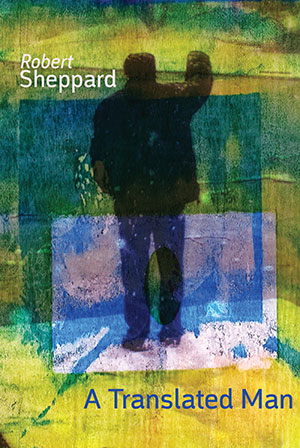
René Van Valckenborch is noted for writing in both Flemish and French. Publishing between the years 2000-10, his books (in French) include masks and other masks and glance poems. In Flemish, his projects include The Fuck Me Shoes Chronicles (though no parts of this are translated - yet) and the online European Union Of Imaginary Authors: 27 Translations. He was President of the EUOIA until 2010, when he was deposed by Hermes, and he disappeared (but not in a good way). A generous selection of his work, translated by Annemie Dupuis and Martin Krol, was published as A Translated Man (Shearsman, 2013) with an introduction by Erik Canderlinck and an authorial imprimatur from Robert Sheppard. 

Read a piece of Van Valckenborch’s critical prose (not included in A Translated Man), an account of the cinema of forgotten Belgian film-maker Paul Coppens Snr, father of the invention of Philip Terry and myself,  here.

Rene, a real troll, also Tweets here. There are three of his 'twitterodes' here! Most recently he has decided to adopt the middle name Pelikan for the length of 2018. More on him here at these links (which themselves contain further links): 


And here's me at The Other Room some years ago, where I read his Flemish poems.

Read an early account of Van Valckenborch here; the book is also available from Shearsman here:


Picture

Together Philip and I worked on the antonymic translations of Rene Van Valckenborch's quennets (which appear in A Translated Man) for the corpus of Rene's exegete and friend Paul Coppens. We wrote them two words at a time, a deliberately insane method that took six months to complete. They literally turn Van Valckenborch's poems inside out, and represent another of the links between these two books of fictional poems.
    
Here is Philip showing us what a quennet looks like on the page
I see these two books as the first two parts of a fictional poetry trilogy. So what will part three look like? One possibility is that Van Valckenborch returns in some way, like Bob McCorkle perhaps, in Peter Carey’s wonderful novel My Life as a Fake, and takes over again. Who knows? The unseen Fuck Me Shoes Chronicles might be entertaining to complete. Or would he write new poems? Would they be in Dutch or French? In any case, I have posited a possible (but quite different) continuing fiction here, but I am unsure how this may be used now (and whether it would involve Rene). I also re-read my short story 'Tropp' the other day. I'd forgotten that this story about a Czech Esperanto poet was a sort-of 'dry-run' for Rene, although I thought the story (which I'd not looked at for a while) was OK. It is published in my 44 pp volume of 3 stories The Only Life by KFS. You can still buy it here. 

20th July 2018: A vague apprehension, reading Erin Moure's fine selected poems, Planetary Noise (and the selection of poetry and poetics we made for Atlantic Drift), of how I might adapt her way of marshalling her fictional 'circus animals'. They re-appear at crucial points, as names, alter egos, (m)others, analogues (and the opposite of those four characteristics). They are part of a poetic and plastic polylogue, NOT bit-players in a fiction. (I've done that: twice). [list of free characters, not collaboratively composed - obviously I can't continue with any of those that are)] 13, plus 'Robert Sheppard' of Twitters, as Moure has an 'Erin Moure' or EM. Bad Prophets Err, in my anagrammic case.... To move away from the writing of fictional poems to the creation of a textual web which could incorporate many of the ideas I've been gathering with each of these 'national day' celebrations. Even this here, though it would become quite fragmented in this new guise. Let's leave that now. (August is time for my summer break from blogging. August might be your time for reading: see here for my take on some of Erin Moure's work, working notes for my chapter in The Meaning of Form on her exacting work.) 

You can read more about the European Union of Imaginary Authors here and here. All the collaborators I've worked with are accessible via links here; our resultant works are collected in Twitters for a Lark, published by Shearsman. Videos of The Other Room special EUOIA evening last August, which have only this week become available, may be accessed (variously) here:


More on Twitters here and here:


 And check out a review by Billy Mills, who thinks the EUOIA should hang up its multi-coloured Rimbaudian letters, here.

Thursday, July 19, 2018

Videos of the European Union of Imaginary Authors Other Room reading now online!

The videos from the EUOIA reading last August at The Other Room are now online. You can read my detailed account of the reading, with photos AND with the videos embedded in the castlist, setlist and playlist, here:

They are also accessible via The Other Room site (which lives on after the series of readings ended), here:


https://otherroom.org/videos/or70-euoia-robert-sheppard-patricia-farrell-jeff-hilson-alan-baker-allen-fisher-s-j-fowler-joanne-ashcroft-videos/

Or in two halves on YouTube here:


This reading occurred before the launch of Twitters for a Lark and is distinct from that event, also filmed, of course, and also held in Manchester. More on Twitters here and here.

Wednesday, July 18, 2018

Atlantic Drift: Review by Mary Jean Chan in Poetry London


There's a third review of Atlantic Review in the print journal Poetry London by the emerging poet Mary Jean Chan, which may be read online (or the part of the review that pertains to our book) here. It's on the ARC site, and you may also buy the book through that link!


Full reference: Mary Jean Chan, Review of Atlantic Drift: Poetry London, Summer 2018 (Issue 90): pp. 46-7.

Read the first review by Ian Brinton on the Tears in the Fence website here
Read the second response by Clark Allison on Stride here
Read an online review by Steven Waling here

We're pleased also to say our cover artist, Pete Clarke, was shortlisted for the John Moores Painting Prize and a painting is currently on display at the Walker Gallery, Liverpool, and other work in the biennial fringe. 

Links to much more about the anthology, the launches, etc, here.

Monday, July 16, 2018

Robert Sheppard: Poems from HAP in Blackbox Manifold 20

Alex Houen and Adam Piette are very pleased to be launching the twentieth issue of Blackbox Manifold, celebrating ten years! And I’m very pleased that I’m in it, along with:

Linda Anderson, Rowland Bagnall, Jack Belloli, Andrea Brady, Lee Ann Brown, Laynie Browne, Adrian Clarke, Emily Critchley and Eric Langley, Michael Farrell, Khaled Hakim, Rob Halpern, David Hawkins, Peter Hughes, Rich Ives, Lisa Kelly, Paul Muldoon, Daniel Morris, Jamie Osborn, Otto and Gisel, Tom Paine, Simon Perchik, Peter Riley, Peter Robinson, Dave Shortt, Jeffrey Thomson, Scott Thurston, Jonty Tiplady, Iain Twiddy, Lawrence Upton, with a review by Adam Piette of Barry MacSweeney, John James and Michael O’Neill.


Particularly glad also to be associating with long-term poetry comrades like Adrian, Lawrence and Scott, and newer ones like Andrea and the Peters (Robinson and Hughes).

My contribution


is from Hap:Understudies of Thomas Wyatt’s Petrarch (though the first, introductory, poem ‘Perhaps a Mishap’ is not a version of Wyatt’s versions of Petrarch). The whole lot will appear as a booklet from Knives, Forks and Spoons around September. It won’t take very long to see they are much concerned with Brexit (and were mainly written in early 2017, already history). 


This is also one part of a longer sequence of sequences of sonnets that I think I’m going to call The English Strain , and features ‘overdubs, understudies and fortuities’ of Petrarch, Milton, Surrey, Charlotte Smith and Elizabeth Barrett Browning, as well as Wyatt. A hundred poems, in fact.


I write about the completed 100 sonnets of The English Strain here. 
 
I write about my sonnets generally here, and here and see here and here for more on my Petrarch obsession, which set this thing off, including how to purchase Petrarch 3 from Crater press in its 'map' edition.This is the only part available until this autumn.  

The first review of Petrarch 3 by Alan Baker may be read on Litterbug, here. The second response, by Martin Palmer here. The third is by Peter Riley, who is also a Blackbox Manifold contributor. My response to it here includes a few remarks about the whole 'English Strain' project with links to other parts:

http://robertsheppard.blogspot.com/2018/03/peter-riley-on-my-petrarch-3-and-other.html


November 2018: My sonnets Hap:Understudies of Thomas Wyatt’s Petrarch is now published;

see here: https://robertsheppard.blogspot.com/2018/10/robert-sheppard-hap-understudies-of.html

and is available from Knives Forks and Spoons here:

https://www.knivesforksandspoonspress.co.uk/product-page/hap-understudies-of-thomas-wyatt-s-petrarch-by-robert-sheppard-26-pages

https://www.knivesforksandspoonspress.co.uk/new-titles

Saturday, July 14, 2018

France's National Day and EUOIA poet Carte-Vitale (presented by Sandeep Parmar and myself)


How Paris looks to Carte-Vitale

Remember France's National Day with European Union of Imaginary Authors poet Carte-Vitale. With Sandeep Parmar I created the poem of Carde-Vitale for Twitters for a Lark: Poetry of the European Union of Imaginary Authors. Nothing is known about this writer except that that he/she/e/they resides in Paris. The reader should investigate the poem, not consult the biographies, of course.

Sandeep reads the whole poem on a video of the Manchester launch of Twitters. You can read about the evening  here. But the video is here:


Speaking of videoes, the vids of The EUOIA Other Room reading from last August are now available here.

Read more about the European Union of Imaginary Authors here and here. All the collaborators are accessible via links here.

All the poets are collected in Twitters for a Lark, published by Shearsman. 


More on Twitters here and here.


I have posited a possible continuing fiction here, but I am unsure how I shall carry the plot forwards. Or even (as I think of it now) if I will. I have plans, but nothing I want to pursue. However, the whole project is a series of fragments, not in the sense that nothing is finished, but in the sense that the little that is offered to the reader (Carte-Vitale's single poem, for example) suggests all the other potential poems that the individual fictional poets might have written. 

Monday, July 02, 2018

Robert Sheppard: Petrarch 3: the semiotic translation removed from my sequence!

I have been revising (quite lightly) my translations of Petrarch's third sonnet (and the subsequent sonnets that will form a book, as yet, untititled) and have decided to remove the semiotic translation which I had placed as a 'semiotic fringe' at the bottom of my 'Semantic Poetry Translation' of the sonnet. (I think it detracts from my homage to Stefan Themerson's 'semantic poetry' method.) This is the sonnet, which describes the day he first saw Laura (depicted above).


Era 'l giorno ch'al sol si scoloraro
per la pietà del suo Factore i rai,
quando i' fui preso, et non me ne guardai,
ché i be' vostr'occhi, Donna, mi legaro.

Tempo non mi parea da far riparo
contra colpi d'Amor; però n'andai
secur, senza sospetto: onde i mei guai
nel comune dolor s'incominciaro.

Trovommi Amor del tutto disarmato,
et aperta la via per gli occhi al core,
che di lagrime son fatti uscio et varco.

Però, al mio parer, non li fu honore
ferir me de saetta in quello stato,
a voi armata non mostrar pur l'arco.

Here is the semiotic fringe translation, as a strip.

☼♂♂♀♂♥?♂         ↑♂♂↓♂█ ♂♂        →♀♂ !†♂         ♂†♂♂◙ !

But really it should not be a fringe but a sonnet in its own right:

☼♂♂♀♂♥?♂          

↑♂♂↓♂█ ♂♂        

 →♀♂ !†♂          

♂†♂♂◙ !


Read my first 'straight' translation and the Scouse doggie version here.


I write about my sonnets generally here, and here and see here and here for more on my Petrarch obsession/project, including how to purchase Petrarch 3 from Crater press in its 'map' edition.

The first review of Petrarch 3 by Alan Baker may be read on Litterbug, here. The second response, by Martin Palmer here. The third is by Peter Riley. My response to it here includes a few remarks about the whole project with links to other parts:

http://robertsheppard.blogspot.com/2018/03/peter-riley-on-my-petrarch-3-and-other.html


  takes you to excerpts from Hap:Understudies of Thomas Wyatt’s Petrarch (though the first, introductory, poem ‘Perhaps a Mishap’ is not a version of Wyatt’s versions of Petrarch. The rest are).