Saturday, August 01, 2009

Robert Sheppard: North American Poetics: A Sample

Jerome Rothenberg states rightly that a characteristic of poets ‘has been the push … to self-define their workings, often in a language that makes a continuity with how they speak within their poems’, and I shall be making some play of the variety of forms in the poetics discussed. (Rothenberg and Joris 1998: 405) Each of these North American poets, in the interests of economy, is represented by one work only, using the list of publications established in an earlier post, and I will comment only a little on each.

Amy Lowell’s ‘Poetry as a Spoken Art’ (1917) emphasises the audible qualities of poetry and offers an apologia for free verse as rhythmical utterance. (Cook 2004: 69-74) Ezra Pound’s ‘A Retrospect’ (1918) has been reprinted often, thus reinforcing my earlier contention that Pound operates, in this limited field only, as a kind of specific rather than a universal founder of discursivity. Pound, like Lowell, offers a justification of free verse or for particular rhythmical contours as analogues for certain emotions, but he adds his famous ‘Don’ts’, which additionally emphasise imagistic clarity and verbal economy. (Cook 2004: 83-90; Scully 1966: 30-43; Herbert and Hollis 2000: 17-25) T.S. Eliot’s ‘Tradition and the Individual Talent’ (1919), is a poetics for the writing that became The Waste Land, stressing how tradition impacts upon the present act of writing, and how modernist ‘impersonality’ is an escape from personality and false emotion, almost an escape into tradition, as the poem attempted to prove. (Cook 2004: 97-105) Hart Crane’s ‘General Aims and Theories’ (1925) suggests ways for the modern poet to incorporate the industrial and urban energies of the modern world into the creation of a new poetry of impersonal consciousness and spiritual illumination. (Cook 2004: 135-38) Wallace Stevens takes on the form of the aphorism in ‘Adagia’ (1934-40) to articulate a nuanced sense of a similar impersonality, testing out various metaphors for poetry as the supreme fiction. His contention that ‘The theory of poetry is the life of poetry’ expresses a commitment to poetics, a commitment felt throughout his poetry itself. (Herbert and Hollis 2000: 56-66; 66) Gertrude Stein likewise was given to ‘explanation’ of a peculiarly indirect kind. ‘Poetry and Grammar’ (1935) is one of her famous lectures which justifies her work to the baffled audience created by her unlikely celebrity; in her repetitive, apparently simple prose (not unlike the texture of the creative work itself) she presents the history of her writing as the struggle to find the difference between poetry and prose, only to find that nouns and an experimental mode of minimal naming are the constituents of her poetry. (Cook 2004: 208-214) William Carlos Williams’ ‘Introduction to The Wedge’ (1944) is a short passionate modernist definition of the poem as a machine, whose parts must all function. However, he rejects formal poetic artifice for this machine, while reminding his readership of the fact that poets make such machines rather than deliver utterances. (Allen and Tallman 1973: 137-139) Langston Hughes’ ‘How to Be a Bad Writer (in ten easy lessons)’ (1949/50) is a parody of the Creative Writing ‘how to’ book: an ironical list of mistakes aimed specifically at African American writers. One offence is to refuse to write about everyday experience; another is to use archaic diction. Slapdash work and bohemian dissipation are likewise satirised. (Herbert and Hollis 2000: 127-8)

Like Pound’s poetics, Charles Olson’s much anthologised essay ‘Projective Verse’ (1950) is often cited as a source of others’ poetics and, just as importantly, as a much imitated model for its writing, with its abrupt, demotic, fiercely intelligent but trenchantly non-academic tone. It presents a poetics of perceptual and scriptural kinetics, theorising the poem as a field of verbal energy, whose moments of creation gather the poem’s subject matter in an improvisatory sweep. (Cook 2004: 288-295; (Scully 1966: 271-282) (Allen and Tallman 1973: 147-158 (Herbert and Hollis 2000: 92-99) Louis Zukofsky’s already discussed Objectivist ‘A Statement for Poetry’ (1950), recasts Pound’s three types of poetry into the simpler categories of image, sound and concept, as components of a poem whose form will develop prosody during its composition, though not in the improvisatory manner of projective verse. (Allen and Tallman 1973: 143-6)

e.e. cummings’ preface ‘An Introduction’ (c. 1955) oddly works to delimit the impact of the poems they introduce: by denying their possible universality and their social engagement, for example, in favour of a private communion with the reader in the name of beauty. (Scully 1966: 124-125) The first half of Marianne Moore’s essay ‘Idiosyncrasy and Technique’ (c. 1956) opts for the efficacy of the technique of straight writing, that is, without obfuscatory diction or elaborate ornament; the second half, on ‘Idiosyncrasy’, concerns subject matter, particularly the elusive materials one can garner from literature (she quotes one of her allusive poems) and from life. (Scully 1966: 107-122)

Robert Duncan’s ‘Notes on Poetics Regarding Olson’s Maximus’ (1956) recapitulates and reaffirms the axioms of post-Poundian poetics. (Allen and Tallman 1973: 187-195) Olson’s ex-student, Edward Dorn, in his similarly entitled ‘What I See in The Maximus Poems’ (1961) looks not to history, but to geography, and finds in Olson’s work an investigation of the particularity of place, with which Dorn elsewhere makes his own poetic continuity. (Cook 2004: 361-366)

John Cage’s ‘Lecture on Nothing’ (1959) is a performance text that constitutes its own poetics (or vice versa) arranged in strict columns, across which a text about the making of itself (as poetry, as form) may be recited in fragments with unnatural silences to defamiliarise it for the contemplating audience. (Rothenberg and Joris 1998: 413-15)

Frank O’Hara’s ‘Personism: A Manifesto’ (1959) parodies the manifesto form to argue for a pragmatics of formal description and an ironical intimacy of address in the poetic exchange. (Allen and Tallman 1973: 353-355) Allen Ginsberg’s ‘When the Mode of the Music Changes the Walls of the City Shake’ (1961) begins with an attack on conventional forms for their inability to register the complexities of perception and consciousness (specifically Ginsberg’s own!) and ends by hailing a revolution in American letters. (Allen and Tallman 1973: 324-330) John Weiners’ ‘The Address of the Watchman to the Night’ (1963) rejects his earlier bohemianism of depraved excess in favour of a poetics of perpetual alertness to that which is close to hand. (Allen and Tallman 1973: 351-2) Amiri Baraka’s ‘Black Dada Nihilismus’ (1964) (Rothenberg and Joris 1998: 420-22) is a more public act of renunciation and realignment: a manifesto poem for black consciousness poetry, arguing the recognition of the symbolic power of black history and the actual power of black revolt. The appearance of this poem on disk, set to aggressive free jazz by The New York Art Quartet in 1965, propels poetics into a strictly performative context. Adrienne Rich’s ‘Poetry and Experience: Statement at a Poetry Reading’ (1964) was a publicly uttered renunciation of her former poetics, as her work became more militantly feminist. (Herbert and Hollis 2000: 141-2)

Denise Levertov’s ‘Notes on Organic Form’ (1965) melds her post-Olsonian inheritance with an older Romanticism, perhaps owing to her English poetic origins in the 1940s, so that Hopkins’ concept of the instress is re-functioned as the shape of an experience as that is negotiated by the shaping of the poem. (Allen and Tallman 1973: 312-317) In contrast, Jackson MacLow’s short ‘Statement’ (c. 1965) outlines his anarchist poetics of procedural technique, allowing minimal intentional interruptions by the authorial ego. (Allen and Tallman 1973: 384-5)

Jack Spicer’s ‘Excerpts from the Vancouver Lectures’ (1965) are transcriptions of extemporised remarks made at a poetry conference, and range from the mystical idea of writing as ‘dictation’ to the identification of the serial poem as way of structuring intermittent consciousness. (Allen and Tallman 1973: 227-234) As academic interest in the New American Poetry grew, the lecture room increasingly became a site for poetics. Both Robert Creeley’s lecture, ‘I’m Given to Write Poems’ (Allen and Tallman 1973: 263-273) and Lawrence Ferlinghetti’s account of the writing of a poem in his ‘Genesis of After the Cries of the Birds’ were delivered at the same conference in Berlin in 1967, thus also reminding us of both the public and the inter-authorial communication at such events at which poetics is disseminated. (Allen and Tallman 1973: 445-449) Creeley’s title recognises the pressure to write and the feeling that a poem is ‘being permitted to continue’ in its improvisatory unpredictable coming into being (to use his description that has been recast into a definition of poetics itself, in the hands of Rachel Blau DuPlessis. She calls poetics 'permission to continue'.). (Allen and Tallman 1973: 263)

Gary Snyder’s heady mix of Buddhism and ecology, ‘Poetry and the Primitive’ (1967), sees poetry as an essential ‘ecological survival technique’, a view that has recently become popular again, thus demonstrating that repressed poetics have the possibility of return in new situations. (Allen and Tallman 1973: 395-406; 395) John Ashbery’s ‘The Invisible Avant-Garde’ (1968) is a lecture to the Yale Art School on the concept of the avant-garde (the irony of the venue is not lost on Ashbery) in which he reflects upon a polito-poetical situation that he has surely experienced; when his or her avant-garde practice is assimilated to cultural taste, a truly vanguard artist must learn to escape this automatic acceptance. (Cook 2004: 393-398) This is ironical, given that as Ashbery was writing, a new avant-garde was just around the corner, ready to take up that challenge. Robert Grenier’s ‘On Speech’ (1971) is arguably the founding document of the poetics of the Language Poets, with its anti-Olsonian admonition ‘I HATE SPEECH’ that emphasises a primarily scriptural context for writing. (Silliman 1986: 496-7)

Ishmael Reed’s ‘Neo-Hoodoo Manifesto’ (c. 1972) is as playful as Reed’s novels in presenting a tricksterish pan-African diasporic energy manifesting in what he calls the ‘Now Locomotive’ of the moment. (Rothenberg and Joris 1998: 440-41)

Elizabeth Bishop’s ‘Letter to Miss Pierson’ (1975) takes the form of an answer to specific questions from a correspondent; Bishop advocates a course of exhaustive reading (but not reading ‘too much about poetry’) and balances the necessity of hard work (as is evident in her own case) against the mysterious and surprising aspects of writerly process. (Herbert and Hollis 2000:104-5; 101)

Between 1971-5, Bernadette Mayer and the Members of her St Mark’s Church Poetry Project Writing Workshop assembled their ‘Experiments’ (1978), a series of creative writing exercises that has proved authoritative and has been subsequently supplemented by Charles Bernstein and others. (Silliman 1986: 557-560) Clark Coolidge’s ‘from Arrangement’ (1978), an excerpt from a public class at the Naropa Institute, is a lesson in the practical reading of non-referential writing, such as his own. (Silliman 1986: 553-4)

Jerome Rothenberg’s ‘New Models, New Visions: Some Notes Toward a Poetics of Performance’ (1977) argues for the centrality of a paradigm-breaking poetic practice that combines ethnopoetics and the avant-garde, and combines performance strategies with those for the page alone. (Hoover 1994: 640-44) Likewise concerned with performance, but in a specific context, Steve McCaffery’s ‘Text-Sound, Energy and Performance’ (1978) praises the somatic excesses of sound poetry which arguably release repressed energies and (non-)meanings ordinarily latent in language. (Rothenberg and Joris 1998: 427) On the other hand, Edward Sanders’ ‘Investigative Poetry’ (1976) argues for a new genre of writing as radical historical recovery through a documentarist poetics. (Rothenberg and Joris 1998: 430-32)

Rae Armantrout’s ‘Why Don’t Women Do Language-Oriented Writing?’ (1978) deals with the sexual political question it asks, but also defines a poetry that is not ‘language-oriented’ at all, but one that, in her characteristic way of cutting to the chase, ‘sees itself as well as the world’, and brushes to one side a binary between text and experience that has both sustained and vitiated American poetry . (Silliman 1986: 544-546; 546) (Coincidentylally, it's a formulation I've recently reversed; let's see the world as well as the poem!) It is almost ironical, therefore, that this short piece, like many that follow from that rising avant-garde, appeared in the poetics journal L=A=N=G=U=A=G=E, in this case, in its founding issue. Ron Silliman’s ‘From The New Sentence’ (1979) furnishes the poetics of a collagist mode of poets’ prose influential with that grouping. (Silliman 1986: 561-575)

‘My Poetry’ (c. 1980), by David Bromige - a wonderful man, whose recent death was a great sadness - is a typically teasing and hyperbolic account of his past works, a parody of pseudo-poetics as an explanatory gesture, but he intermittently reveals an underlying yearning for authenticity. (Silliman 1986: 216-226)

Susan Howe’s ‘P. INMAN, Platin’ (1980) takes the form of a book review, but through it Howe presents her poetics of fractured and discontinuous surface. (Silliman 1986: 555-6) Similarly, Bruce Andrews’ ‘Misrepresentation’ (1980), subtitled ‘A text for The Tennis Court Oath of John Ashbery’, is also a reflection on a book, this time the early (and often rejected) avant-garde work Ashbery published in 1962. It is an effusive endorsement of the kinds of textual exuberance we find in Andrews’ own work (and in his poetics, of which he is a continual practitioner). (Silliman 1986: 520-529) The serial poetics statements of Language Poets Ron Silliman, Barrett Watten, Steve Benson, Lyn Hejinian, Charles Bernstein and Bob Perelman, ‘for Change’ (1982) are terse position-statements sent from one avant-garde to the central magazine of another, French, avant-garde, a mode of poetics exchange not common. (Silliman 1986: 484-490) Carla Harryman’s ‘Foreword’ (1980) is a piece of poet’s prose that resembles her ‘creative’ work, in a refusal of the division between discourses. (Silliman 1986: 483) Stephen Rodefer’s ‘Preface to Four Lectures’ (1981) stands back to explain how the collagist nature of urban experience determined the fractured surface of his serial poem: a musical and painterly structure resembling both a museum and reality beyond. (Silliman 1986: 515- 1981) Charles Bernstein, to whom reference is made throughout this work for his commitment to poetics, and who is the subject of my next chapter, is well represented by the essay ‘Writing and Method’ (1981) which hovers around its central axiom that creative work is itself already a kind of poetics: ‘All writing is a demonstration of method; it can assume a method or investigate it.’ (Silliman 1986: 590) This, in turn, might be thought of the central poetics statement of Bernstein as a poet. (Silliman 1986: 583-598) Barrett Watten’s ‘Method and L=A=N=G=U=A=G=E’ (1984) is part of Watten’s critical journey through several volumes to define the operational social contexts for the writings of the language group, in this case its central journal, and thus of himself; he often alarmingly uses his own works as exemplars, in a way that transgresses pure poetics. (Silliman 1986: 599-612) Lyn Hejinian’s 'The Rejection of Closure' (1984) argues for the ‘open text’ as against the closed, not metrically as in earlier poetics, but in terms of interpretive choices deliberately offered to the reader. (Hoover 1994: 653-658)

Rachel Blau DuPlessis’ ‘Otherhow, Feminist Poetics, Modernism, the Avant-Garde’ (1985) is an extract from her book The Pink Guitar, from which I have above quoted one of the most useful definitions of poetics; she theorises avant-garde practice as an investigation (jointly) of genre and gender. (Rothenberg and Joris 1998: 433-435) Canadian poet Lisa Robertson’s ‘How Pastoral: A Manifesto’ (1993) consists of a statement and a commentary that elaborates her list of ‘wants’ and ‘wishes’. Her desire for a ‘poetics of historical responsibility’ is fuelled by a need to haunt the interstices and absurdities of history. (Wallace and Marks 2002: 21-26; 26)

Dick Higgins’ ‘Intermedia Chart’ (1995) is a multiple Venn diagram showing the overlapping of intermedia experiments between elements such as concrete poetry and Fluxus; the gesture of poetics is enacted by the inclusion of circles marked simply with question-marks, reminding us that poetics is a self-generating activity oriented towards the future. (Rothenberg and Joris 1998: 428)

Harryette Mullen’s ‘Poetry and Identity’ (1996) considers her early work, immediately identified as ‘black’ writing, and her later identity as an avant-gardist, which challenges those (and other) identities. (Wallace and Marks 2002: 27-31) Kristin Prevallet’s ‘Investigating the Procedure: Poetry and the Source’ (2002) deals with the inheritance from earlier forms of documentarist poetics like Sanders’, to outline a processual practice she has made her own. (Wallace and Marks 2002: 115-129) Mark Wallace’s ‘Towards a Free Multiplicity of Form’ sees a similar, though wider, inheritance of forms for a post-Language poetry avant-garde, though it sees pitfalls in both automatically declaring some forms (politically) liberating and by delimiting the possibilities of ‘the lyric’, for example. (1996/2002) (Wallace and Marks 2002: 191-203) Elizabeth Willis’ ‘The Arena in the Garden: Some Thoughts on the Late Lyric’ (2002), offers more narrow evidence, around the late 1990s, of a return to lyric in experimental American writing. (Wallace and Marks 2002: 225-35)

A number of recent writers have adopted disconnected forms for poetics which make continuity with their modes of creative writing itself, but possibly reveal a limitation of these poetics. Reading these documents, I feel a need for a more definitive statement, a feeling that the discourse might risk becoming an evasion of poetics as a mode, perhaps has developed conventions and paradigms that – in the true spirit of poetics – need breaking. Andrew Levy’s ‘An Indispensable Coefficient of Esthetic Order’ (1996/2002) is a free and speculative meditation upon what the author’s relationship to (his) poetry might become, which he characterises as a form of silence in which (what he does not want to call) subject matter forms. (Wallace and Marks 2002: 381-394) Tan Lin’s ‘ambient stylistics’ (2002) is a sprawling piece of autobiographical poetics, dealing with the conditions of truth-telling in poetry and with poetry as a deliberate imprecise measure of that which cannot be measured (the world). (Wallace and Marks 2002: 339-365) Sianne Ngai’s ‘Raw Matter: A Poetics of Disgust’ (1998/2002), on the other hand, is anything but impressionistic. A traditional essay, owing to Bataille and other theorists, this piece rejects the ritualistic declarations of ‘desire’ as aesthetic aim or motivation in earlier poetics and replaces this with more negative excesses. But it does not turn to the lyric or any other repressed mode, but sees language itself as abjection: ‘A poetics of disgust, one that accommodates the subject’s negative potentiality in impotence or lack, can only emerge from poetry built from linguistic raw material.’ (Wallace and Marks 2002: 161-190; 180) Whatever one thinks of such abjection, the essay’s focus brings this history of (ongoing) American poetics to a convenient pause and reminds us that poetics is primarily about such ‘building’.

An obvious complementary source of poetics (and much else) is the literary interview. While the Paris Review interviews from the 1950s onwards are perhaps the best known and set the standard for its development, this type of recorded exchange is virtually an art form in its own right, with thousands of examples. Barbara Tomlinson’s Authors on Writing (2005), an analysis of metaphors used by writers to describe their processes, is drawn from such interviews; her representative corpus consists of 42 pages of references in small print. To focus on one writer alone, American poet Robert Creeley was a willing interviewee and, much to the delight of his interviewers (including myself) a garrulous and focussed talker. It is no wonder that there exist two volumes of some of these interviews with him, Contexts of Poetry: Interviews 1961-1971 (1973) and Tales Out of School: Selected Interviews (1993). One example, ‘Linda Wagner: An Interview with Robert Creeley 1965’, appears in both books in differing versions (and in yet another version, in the canonical Paris Review series in 1968). In this mutating text, among other things, Creeley characteristically ‘speak(s) personally’ of his method of writing as the articulation in language of a moment’s improvisatory occasion. (Allen and Tallman 1973: 273-292; 281)

The poetic colonising of cyberspace began early and Creeley was one of the earliest pioneers as his Day Book of a Virtual Poet evinces (Creeley 1998). As poet in (virtual) residence he muses on poets, poetry and poetics, such as Williams’ famous poetics sound-bites, ‘Only the imagination is real’ and its qualifying ‘No ideas but in things’, ironically refunctioned by Creeley with reference to contemporary property rights. (Creeley 1998: 24) The internet, with its email lists, websites, and blogs is in a state of constant technological and phenomenological development. Perhaps the most extraordinary blog is Ron Silliman’s www.ronsilliman.com, which has attracted over a million hits, and which is almost daily concerned afresh with poetry and poetics. Slightly more ephemeral, though archived, are the discussion lists, such the British & Irish Poets email list. The danger of online debate is that ‘spats over terminology sputter out into mutual frustration or continue into areas very remote from poetry and poetics’, as Kit Fryatt reminds us in his ‘“Norms and Forms”: 10 Years of the British & Irish Poets e-mail list’. I can confirm this, having been a ‘lurker’ since its inception; the quality of posts in 1996 was higher than it was a decade later. (Fryatt 2007: 88) Fryatt remarks: ‘It is the nature of online communities to mutate, and sometimes to die off altogether, but long before they do, they generate complaints of a nostalgic nature.’ (93) It seems that the poetics discussion list, on both sides of the Atlantic, and in cyberspace, has not lived up to its optimistic beginnings as a forum for discussing poetics as a speculative discourse.


The anthologies used to compile this U.S. and Canadian corpus are Jonathan Cook’s Poetry in Theory. Oxford: Blackwell, 2004, which offers other kinds of writing as well; James Scully’s pioneering Modern Poets on Modern Poetry. London and Glasgow: Fontana/Collins, 1966; Allen and Tallman’s The Poetics of the New American Poetry. New York: Grove Press, 1973, which is an invaluable source; Rothenberg and Joris’ Poems for the Millennium. Berkeley: The University of California Press, two volumes, 1995 and 1998, which contains a selection of avant-garde poetics; Ron Silliman’s In the American Tree. Orono: The National Poetry Foundation, 1986, which was a major poetry anthology of the Language school, and which included sizeable poetics statements; Paul Hoover’s teaching anthology Postmodern American Poetry. New York and London: Norton, 1994, proved useful; Wallace and Marks’ Telling It Slant: Avant-Garde Poetics of the 1990s. Tuscaloosa: The Univerity of Alabama Press, 2002, was invaluable for tracking post-Language Poetry poetics; Herbert and Hollis’ Strong Words: Modern Poets on Modern Poetry. Tarset: Bloodaxe Books, 2000, is a book of two halves, presenting a wide selection of avant-garde poetics of the first half of the twentieth century in its own first half. It is less useful for the poetics of recent work.

For poetics reaching into the 21st century I recommend ed. Craig Dworkin’s The Consequence of Innovation: 21st century poetics (New York: Roof, 2008), particularly for Kenneth Goldsmith’s conceptual poetics. This would have featured in the above if it had been to hand at the time I composed the above.


This post was part of an abandoned book on poetics (or rather, a re-distributed book; parts of it became When Bad Times Made for Good Poetry, and others await their day, such as this one.). Here are others:

Part One: Poetics and Proto-Poetics
Part Two: Through and after Modernism
Part Four: Some British Poetics
http://www.robertsheppard.blogspot.co.uk/2009/08/robert-sheppard-poetics-4-some-british.html

Thursday, July 23, 2009

Robert Sheppard: Poetics 2

Poetics through and after Modernism: Some TextsGiven the range of forms and functions, it is impossible to provide a comprehensive survey of post-1900 world poetics (even limiting itself to poetry), but such a survey might include some of the following documents (arranged here mostly in chronological order and excluding those from the North Atlantic Anglophone world, to be touched on in the next posting on this subject). They are drawn from four representative anthologies containing poetics amongst other kinds of writing; I attempt to describe the form as well as the function of each. (footnote 1) (I mostly limit myself to one item per writer for the sake of economy and they may not be the most famous examples of his or her poetics. For example, the letters of Rilke referred to next do not come from Rilke’s celebrated Letters to a Young Poet (written 1903-08) but from disparate sources.)

The high modernist period offers a rich range of poetics. Rainer Maria Rilke’s ‘Three Letters’ (1903, 1907, 1925) meditate on lessons he learnt from Rodin, the role of imagery in his verse, and on his particular modernity. (Cook 2004: 35-40) On the other hand, with manifestic ferocity, Filippo Marinetti’s Technical Manifesto of Futurist Literature (1912) offers a vectoral and energised poetics adequate to the coming century of total war. (Cook 2004: 56-60) Guillaume Apollinaire’s ‘The New Spirit and the Poets’ (1917) similarly bristles with confidence for a modernity that would embrace technology. (Cook 2004: 69-74) Tristan Tzara’s ‘Note on Poetry’ (1919) mimes, in its non-rational style, in its jumps from polemic to poetry, the irrational poetics that is gestured towards in the ‘note’ itself, in favour of unbridled, non-academic creative imaginative force. (Cook 2004: 91-3) Fernando Pessoa’s ‘Toward Explaining Heteronymy’ (1915-1935) is a composite text of manuscript fragments and an abandoned ‘preface’, which explains not only his use of heteronyms – a word he coined to account for his invention of authors – but his sense of essential selflessness that enabled him to single-handedly concoct a modernist Portuguese literature. (Gibbons 1989: 5-15)

In Russia, Velimir Klebnikov’s ‘On Poetry’ and ‘On Contemporary Poetry’ (1919, 1920) offer accounts of the symbolic sonic qualities possible in non-semantic poetry (Cook 2004: 94-6), while Vladimir Mayakovsky’s How Are Verses Made? (1926) sketches the poetics of the industrialised post-Revolutionary free verse poetry that he was exploring. (Cook 2004: 144-151) Against this, Osip Mandelstam, in ‘The Word & Culture’ (1921), specifically rejects the ‘invention’ of a poetics, recognising instead the radicality of classical and Christian tradition, while paradoxically taking the unlikely model of Verlaine as the modern synthetic poet. (Gibbons 2004: 16-22) Boris Pasternak’s blandly entitled ‘Some Statements’ (1922) is a collection of seven autonomous vignettes, ranging from reflections on art as an absorptive sponge not as an effusive fountain, through to thoughts on the miraculous trans-historical transference of experience effected via literary translation. (Gibbons: 23-27) Marina Tsvetaeva’s ‘Poets with History and Poets without History’ (1935) compares lyric poets who evolve and those who do not. (Cook 2004: 215-222)

Away from its famous ‘loud’ manifestos - manifestos may contain poetics but there are not in themselves poetics - Surrealism’s poets were still vocal about their practice. Paul Éluard’s ‘Poetry’s Evidence’ (1932) argues for Surrealist imagery as evidence of an irrational imagination; André Breton’s ‘The Automatic Message’ (1933) is more polemical and attempts to define the central Surrealist technique of automatic writing. (Cook 2004: 182-191) Federico García Lorca’s ‘Play and Theory of the Duende’ (1933) is his famous account of the indefinable quality and performative attitude found in spirited flamenco song and dance which is not one of technique but of primal creativity, not to be feigned or counterfeited, taught or learned. (Cook 2004: 201-7) Antonio Machado’s ‘Notes on Poetry’, is an assemblage of notes, probably made in 1924, to which he appends an introduction that confirms their conjectural and tentative nature, before he considers issues such as his distrust of the use of metaphor and the deceptions and illuminations of ‘images’ in poetry to define a poet’s inner state, as well as arguments for the abolition of the anecdotal in favour of the necessary inter-subjectivity of lyric. (Gibbons 1989: 161-9) Luis Cernuda’s public pronouncement, ‘Words Before a Reading’ (1935) sees poetry as fixing the ephemerality of beauty but this does not preclude the exercise of the daemonic, the very power that called Lorca called ‘duende’. (Gibbons 1989: 42-7)

Paul Valéry, late in his career, was elected a Professor of Poetics; his misleadingly entitled ‘Poetry and Abstract Thought’ (1939) actually contrasts poetic language and ordinary language, the pedestrian qualities of prose, the Terpsichorean qualities of verse. (Cook 2004: 237-243) Fellow Frenchman, René Char’s ‘The Formal Share’ (1943-4) is a series of elliptical numbered paragraphs that it is not possible to paraphrase, since they (deliberately) approach the condition of poetry, perhaps even reach the condition of prose poetry, although it is clear that writing is an anxious activity that nevertheless causes joy. (Gibbons 1989: 59-64)

Post war stirrings in the Francophone West Indies produced not only Aimé Césaire’s ‘Poetry and Knowledge’ (1945), which exceeded his earlier apologia for the poetry of ‘negritude’, and argues for poetry as a particular form of knowledge in contrast to scientific knowledge, but whose vocabulary is still tinged with the vocabulary of surrealism (Cook 2004: 275-287), but also Edouard Glissant’s ‘Earth’ (late 1950s), which argues for an oppositional post-negritude poetry. (Rothenberg and Joris 1998: 416-17) However, Derek Walcott’s ‘The Muse of History’ (1974) rejects the oppositional stance of earlier Caribbean writers, in favour of using the literary resources of the great traditions of the colonisers. (Cook 2004: 420-436)

Eugenio Montale’s ‘Intentions’ (1946) is an ‘Imaginary Interview’, a form that risks insincerity, but is actually a free-ranging enquiry into the development of this Italian poet, which he sees as an escape from a ‘bell-jar’ into a poetry of contingency, with a restrained, even inelegant, diction, a quest precisely to find what the subject of poetry might be. (Gibbons 1989: 65-70) Written in the shadow of the Second World War, as was Montale’s piece, the Greek poet George Seferis’ ‘A Poet’s Journal’, written in 1946 and 47, traces his resurgence, after long wartime silence, to re-engage the contract between the human body and nature. In part a recounting of the writing of his poem ‘Thrush’, he emphasises what he calls leaving the poem to dry, a strategy to avoid over-editing. (Gibbons 1989: 71-81) Paul Celan’s ‘The Meridian Speech’ (1960) considers the spectral human presence that there might be in a difficult Jewish post-Holocaust poetry, i.e., Celan’s own, as a lonely turning of the breath of utterance towards otherness and newness, as Celan effected within his adopted language German. (Rothenberg and Joris 1998: 408-9; Celan 1999: 37-55) Nicanor Parra’s ‘Test’ (c.1964-66) considers the anti-poem written by the revolutionary anti-poet. (Rothenberg and Joris 1998: 423-24)

French poet Henri Chopin’s ‘Poésie Sonore’ (1969) is an appropriately slender statement about sound poetry, predicting the triumph of a non-semantic poetry of pure sound, (Rothenberg and Joris 1998: 427), while Denis Roche’s ‘Le Mécrit’ (1972) articulates the experimentalism of the Tel Quel group in an obscene contention of the world of convention. (Rothenberg and Joris 1998: 429-430)

The East German poet Günter Kunert wrote a short piece ‘Why Write’ (1972) which answered its own question (although the title lacks a question mark): ‘to bear the world as it steadily crumbles into nothingness’. (Gibbons 1989: 136-8; 138) West German Hans Magnus Enzensberger’s ‘A Modest Proposal for the Protection of Young People from the Products of Poetry’ (1976) is a Swiftian attack upon the standardised school and university curricula that teach correct interpretations of poetry to the young. (Cook 2004: 447-455) Czeslaw Milosz’ ‘On Hope’ (1983) builds out of an apocalyptic literary history an unfashionable theory about the possibility of poetry as part of a developing positive human consciousness. (Cook 2004: 494-502)

Recent non-European perspectives are evinced in Jeremy Cronin’s ‘“Even under the Rine of Terror…”: Insurgent South African Poetry’ (1988) which is a study of oral poetics under South African apartied. (Cook 2004: 523-532) Sujata Bhatt’s ‘Search for My Tongue’ (1988) is a bilingual poem about inter-linguistic identity. (Rothenberg and Joris 1998: 443-446) On the other hand, Adonis’ ‘Preface’ (1992) expounds his sense of exile within his own language, Arabic, but nevertheless argues for an Arabic modernism. (Rothenberg and Joris 1998: 441-443) If these examples are supplemented by the fin-de-siècle statements collected in 99 Poets/1999: An International Poetics Symposium, a special issue of Boundary 2, edited by Charles Bernstein, which features poets domiciled variously at locations ranging from Martinique to China, Finland to Argentina, Croatia to Morocco, one can acquire a general sense of the international impact of poetics since modernism. It includes one of the documents of Pierre Joris’ millennial ‘nomadic’ poetics.

However, the prolific Australian poet John Kinsella’s ‘Almost a Dialogue with Lyn Hejinian: Quotations and Phantom Limbs…’ (2000), while drawn from another source, serves as a reminder of the limitations even of inclusive but straightforward multi-nationalism and of the advantages of a trans-nationalist approach, which is to be expected of a poet who divides his time between Australia, Britain and the USA (a nomadic poetics in its own right). This hybrid prose document quotes a poem he sent to American poet Lyn Hejinian which he describes as ‘a kind of poetics’ itself, a re-membering of Hejinian’s account of her visit to an autopsy. (Herbert and Matthews 2000: 204) Kinsella’s obsession with the corporeal and the psychosomatic is textual (‘I know that the field of the page is the map of my body, of our bodies’) but the lasting impression is of his commitment to dialogic hybridity, exemplified by the ‘almost dialogue’ of his title, his various ‘quotations’ throughout, his excerpts from email discussion lists and statements, and of his instigating and collecting collaborative post-national creative writing over the world wide web: a perspective that leads from body to world, but by-passes the boundaries of both genre and geo-political territories. (Herbert and Matthews 2000: 206) This recent example of deterritorialised transnational cyberpoetics demonstrates how poetics as a mode of speculative thought is moving into new kinds of territory in the twenty-first century. Kinsella’s fascinating MUP volume of 2007, Disclosed Poetics: Beyond Landscape and Lyricism is a book-length collection of Kinsella’s poetics.


1. The anthologies used for this post are: Jerome Rothenberg and Pierre Joris’ Poems from the Millennium, Volume Two: Post-War to Millennium. Berkeley: University of California Press, 1998, which contains a short section called ‘The Art of the Manifesto’; Jon Cook’s Poetry in Theory. Oxford: Blackwell, 2004; Reginald Gibbons’ The Poet’s Work. Chicago and London: The University of Chicago Press, 1989, a useful book of writerly descriptions of poetics and process, and I'd like to thank my colleague Daniele Pantano for introducing it to me (and to our students), and W.N. Herbert and Matthew Hollis’ Strong Words. Tarset: Bloodaxe Books, 2000, which is also one of my core books for my third poetics posting. The emphasis upon representative anthologies necessarily means the exclusion of important works of poetics, such as Vicente Huidobro’s collection of statements and essays, Manifesto Manifest. København and Los Angeles: Green Integer, 1999, or Jacques Roubaud’s playful Poetry, etcetera: Cleaning House. København and Los Angeles: Green Integer, 2006, but I felt it important to concentrate not only on readily-available volumes, but upon volumes which collect a range of poetics and demonstrate thereby its many forms in one collegiate publication.


This post was part of an abandoned book on poetics (or rather, a re-distributed book; parts of it became When Bad Times Made for Good Poetry, and others await their day, such as this one.). Here are others:

Part One: Poetics and Proto-Poetics
Part Three: North American Poetics
Part Four: Some British Poetics
http://www.robertsheppard.blogspot.co.uk/2009/08/robert-sheppard-poetics-4-some-british.html

Tuesday, June 30, 2009

Robert Sheppard: Poetics 1: Poetics and Proto-Poetics

Poetics and Proto-Poetics from Aristophanes to Yeats
The habit of reading the discourses of the past in the light of present practices and pressures is perhaps a part of identifying a discourse in the first place. The use of a term like ‘classical literary criticism’ for certain ancient texts is an anachronism that D.A. Russell, for one, regards as both ‘convenient’ and ‘inaccurate’ (Russell 1981: 169). The simple re-definition of many of these – and later – historical documents as ‘poetics’ risks the danger of the same ambivalent construction, in whatever way the perspectival constellation is assembled. However, poetics’ very impulse, the need to discuss how writing is (to be) made, may be found articulated intermittently among some of the same past ‘literary critical’ documents, and others. Therefore it is necessary to read them differently, with a different focus, and the emphasis is at times entirely at variance with what a survey of literary criticism would find of interest in their strictures. To sketch a loose adventure for what I am proposing cautiously to call proto-poetics is worth attempting, to show the historical continuity of its impulse, along with the discontinuity of its self-awareness as a discourse, although I have no claims to be comprehensive in this account. I am not attempting to develop universals by my selective paraphrasing of the often lesser-read parts of these great treatises and texts. I limit myself to the poetics of poetry, though in the earliest examples current divisions of literary genre do not apply, and my sense of poetics as a speculative writerly discourse - in my work as a teacher of creative writing, for example - extends to all genres and sub-genres.

In the ancient world, Aristotle, though the author of the first text called ‘Poetics’, was neither the founder of a discourse upon writing nor the first person to discuss how writing is made. For example, the plays of Aristophanes (c.450-385 B.C.), bristle with asides on the art of Euripides, and in the fragment Poetry, Aristophanes emphasises the difficulties of writing both tragedy and epic. (1981: 10.) Aristotle (384-322 B.C.) wrote his Poetics to define the role of mimesis more thoroughly, and to offer to posterity influential concepts on the evocation of fear and pity in tragic writing, but it is worth stressing that the text is addressed to those wishing to write creatively. (It is not clear that Aristotle was a creative writer, thus making him a possible exception to my rule about writerly poetics.) (Aristotle et al. 1965: 31-75) Certainly, a poet such as Philodemus (110-30 B.C.) wrote his treatise On Poetry from experience, and promulgated a surprisingly formalist doctrine arguing the indivisibility of good content from good form. (Russell 1981: 43). Horace (65-8 B.C.) wrote Ars Poetica as a verse-epistle (poem-essay we might say) to a young Roman writer, offering practical advice (recommending iambics as the best metre for a dramatic poet to make sure his words are heard over a noisy crowd) but promising much toil, as well as offering his better-known exhortation to instruct through delight. (Aristotle et al. 1965: 79-95) (A non-Western viewpoint may be found in the Chinese ‘rhyming prose’ of Lui Chi (261-303), whose ‘On Literature’ gives a vivid account of creative struggle, wisely contrasting occasional serendipitous spontaneity with the wilful forcing of effect. (Birch 1967: 221-232))

For a glimpse of the medieval world shaking off classical models established by Aristotle and Horace, amongst others, Dante (1265-1321), in La Vita Nuova, offers paraphrases between arrangements of his early poems, descriptions of their novel forms (like the sonnet), along with a plea for the vernacular as an appropriate vehicle for amatory verse. (Dante 1969) This is one (late) version of the razo, a form invented by the Troubadours, a series of widely read prose expositions of their verses.

Turning to the proto-poetics of the Renaissance and Enlightenment, but limiting ourselves to English-speaking poetics, the contrast between the two earliest volumes we find is instructive of alternative foci. George Puttenham’s digressive The Arte of English Poesie (1589), is addressed to the decorous writer (and courtier) and concentrates on formal descriptions of figures of speech and upon varieties of poetic form, including one of the earliest considerations of visual poetics (for which he is often derided). (Puttenham 1936) On the other hand, the more focussed essay of Philip Sidney, An Apology for Poetry (1595), is a defence of fiction as a mode of knowledge, even of poetry as an autonomous discourse, against the claims of history and philosophy. (Enright and De Chickera 1962: 3-49)

Poet and composer Thomas Campion’s comprehensively entitled Observations in the Art of English Poesie. Wherein it is demonstratively proved, and by example confirmed, that the English toong will receive eight severall kinds of numbers, proper to it selfe, which are all in this booke set forth, and were never before this time by any man attempted (1602) argues for the use of classical quantitative metres and for the abandonment of rhyme in English. (Daniel and Campion 1966: 1-43, first numbering) The title of Samuel Daniel’s reply indicates that he took the opposite view. It advanced A Defence of Rhyme: Against a Pamphlet entitled: Observations in the Art of English Poesie. Wherein is demonstratively proved, that Rhyme is the fittest harmonie of words that comportes with our Language. (1603) (Daniel and Campion 1966: 1-45, second numbering). Robert Lloyd’s poem ‘On Rhyme’ (1762) reminds us that this was a still a live issue in the following century. (Hopkins 1990: 46-7) Amid the pages of Ben Jonson’s Timber: or, Discoveries (1641), one finds a practitioner’s notebook reflections upon his writing, ranging from his insistence upon ‘right imitation’ of classical models to his cutting criticisms of Shakespeare’s prolixity and unintentional comic passages. (extracts in Mahl 1968: 113-130; Hopkins 1990: 26-7).

Unlike Jonson, Shakespeare himself did not commit an act of poetics, formally speaking, beyond the sense that his body of creative work is an inimitable model (or series of models) for itself. At once both a pragmatic man of the theatre (in which he acted and which he part owned) and an enigmatic poet possessed of protean ‘negative capability’, he seems not to have had time to publicly reflect on his practice. In the plays there are numerous references to writers and writing – the love-struck inept rhetorical sonneteers of Love’s Labour’s Lost, the two hapless and ineffectual poets of Julius Caesar, the sycophantic bard of Timon of Athens - but these present deliberately negative views of the craft. Pistol’s satirical spouting of quotations from earlier, out of date plays, as well as Shakespeare’s own intertextual debt to both his sources and his rivals, like Marlowe, hardly amount to poetics; neither does the meta-poetry of the Sonnets.

John Milton’s ‘The Verse’, the preface to Paradise Lost (1668), justifies his use of blank verse, its avoidance of ‘the jingling sound of like endings’ suitable for a poem of ‘ancient liberty’, liberated itself ‘from the troublesome and modern bondage of rhyming’ as both following classical precedent and (near) contemporary dramatic blank verse. (Milton 1969: 211) John Dryden was a prolific critic, produced a body of theory that nonetheless derives from practice, as when he justifies his poem ‘Annus Mirabilis’, in his ‘Account’ (1667), particularly of his choice of quatrains at the dawn of the age of the heroic couplet. (Dryden 1970: 7-15) His ‘Of Dramatic Poesy: An Essay’ (1668) derives from his experience as the foremost writer for the stage, and is a fictional symposium focussed upon historical and contemporary drama, including a positive discussion of rhyme in dramatic verse. (Dryden 1970: 16-76; Enright and De Chickera 1962: 50-110) When his modern editor, George Parfitt, notes, ‘Dryden is a critic in the tradition of Horace, a figure whose energies and interests are balanced between creation and criticism, not a critic like Arnold who became more critic than creator, or like Leavis whose creation is his criticism’, he is situating Dryden as one of the first poet-critics, and acknowledging a pre-figuration of the future divergence of writerly poetics and professional criticism. (Dryden 1970: xiv)

A number of feminist proto-poetics are to be found in the writings of women around this time. Anne Bradstreet’s ‘The Prologue’ (1652?) argues – in verse – for the specificity of women’s writing, and her own. (Pritchard 1990: 51-3) Anne Killigrew’s ‘Upon the saying that my verses were made by another’ (1686) (Pritchard 1990: 97-8) and the similarly entitled ‘To one who persuades me to leave the Muses’ (1739?) by Elizabeth Singer Rowe, argue against, firstly, the common incredulity at women’s poetry, and then against attempts to stop women writing altogether. (Pritchard 1990: 116-117) There is an invocation to the Muses in Mary Collier’s harsh The Womans Labour: an epistle to Mr. Stephen Duck, in answer to his late poem, called ‘The Thresher’s Labour’ (1739), which passionately pleads for the work and poetry of female labourers to be acknowledged. (Pritchard 1990: 129-136) At the other end of the social scale, certain of Lord Chesterfield’s Letters to his Son (1774) offer a charming account of a child’s education, which includes lessons on the writing of Latin and English verse, and the encouragement of sensitivity towards poetic artifice. (Stanhope 1774:134-167)

Alexander Pope’s ‘An Essay on Criticism’ (1711) offers a full-blown Augustan poetics of satire, including brilliant couplets on versification that mime the effects of the writing described. (Enright and De Chickera 1962: 111-130; Pope 1970: 45-67; excerpts on versification in Hopkins 1990: 38-9) Written in 1733, Lady Mary Wortley Montagu’s ‘Verses Address’d to the Imitator of Horace’, that is, to Pope himself, posit a cruel antithesis to Pope’s poise, and attempt to define literary qualities not found in its addressee. (Fairer and Gerrard 1999: 188-191) Samuel Johnson describes the poet’s task in his novel Rasselas (1759) as being to dwell not on particular details but on generalities. The poet should be equal to this task by acquiring knowledge and judgement, but also by ‘incessant practice’, to become a subtle and adaptable stylist. (Hopkins 1990: 42-3). George Crabbe, in a passage of The Village (1783), that David Hopkins calls ‘Crabbe’s dissatisfaction with pastoral’, recognises the socio-poetical revolution of Duck (and possibly Collier) in the invention of an ‘authentic’ mode of realism that he could use, in contrast to the prevailing and increasingly hackneyed artifice of eighteenth century poetics. (Hopkins 2000: 204)

The poetics of the Romantic and Victorian periods continue that dissatisfaction, of course, and we enter a period when many of the documents, although still primarily thought of as works of literary criticism, are read as kinds of poetics, to the limited extent that they are recognised as manifestic position-statements by poets, but are perhaps not read with enough sensitivity towards the exploratory, conjectural and provocative nature of the discourse in its developing forms. What perhaps masks this aspect, is the growth of the role of the critic, so that, although Coleridge and Arnold are both poets, their criticism extends well beyond the literary, or even merely the cultural, into the social and political realms, and while the scope of their speculations ambitiously expand (for good or ill), the possibility of thinking of their work – a part of it – as proto-poetics or poetics becomes difficult, or looks like a mean reduction of their catholic thought. The separation of critic and poet (particularly without the development of anything like a Coleridgean clerisy to hold these professions together within a purposeful national structure) also accelerated the development of literary criticism as an autonomous discourse, out of the bodies of philology and philosophy, that has in turn tended to mute the conjectural and mercurial tones of poetics that still can be detected in these great works.

William Wordsworth’s Preface to Lyrical Ballads (1800/1802) offers revolutionary reflections upon his experiments in poetic diction and form, as well as a commitment to the faculty of imagination. (Wordsworth 1969: 734-743, with ‘Essay, Supplementary to the Preface’ (1815). 743-751. Enright and De Chickera 1962: 162-186.) Samuel Taylor Coleridge’s suggestively unsystematic Biographia Literaria (1817) opens a whole poet’s writerly life to inspection; reflections arising out of Wordsworth’s ‘Preface’ rub shoulders with scraps of autobiography and accounts of publishing ventures, advice to young writers and considerations of poetic metre. Most influential have proved his theorising of, and discrimination between, the shaping faculty of the imagination and the lesser faculty of fancy, which also domesticated advanced continental aesthetics. (Coleridge 2000: 155-482; Chapters XIV, XVII and part of XVIII (on Wordsworth and metre) in Enright and De Chickera 1962: 190-224.)

By contrast, John Keats, in passages of certain letters written between 1817-1820, defines a poet’s ‘negative capability’ against Coleridge’s synthetic philosophising, preferring an image of the poet as essentially selfless and disinterested in his reception of the world. (excerpts in Enright and De Chickera 1962: 256-259; excerpts in Hopkins 2000: 61 and 114.) William Blake likewise was not given to extended prose, but his ‘Of the measure in which the following poem is written’, which is a preface to Jerusalem: The Emanation of The Giant Albion (1818-20?), is an argument for further loosening of the Miltonic blank verse line, one which promulgates a politics of poetic form: ‘Poetry fetter’d fetters the human race.’ (Blake 1971: 629; Allen and Tallman 1973: vii) No less political is Percy Bysshe Shelley’s The Defence of Poetry (1821), which concludes hyperbolically that poets are ‘the unacknowledged legislators of the world’, but also saw poetry as effecting a defamiliarisation of ordinary perception. His analogy for the mind in the creative act, as a rapidly fading coal, balances the philosophical with his intimate knowledge of creative process. (Shelley 1970: 164-197; Enright and De Chickera 1962: 225-255; excerpts in Hopkins 2000: 56-60.)

The creative coals were long faded when Edgar Allan Poe wrote ‘The Philosophy of Composition’ (1846) since it offers an unconvincing retrospective account of the writing of his poem ‘The Raven’. While I use his essay’s authoritative title as a synonym for poetics, the essay itself is best thought of as one more exemplar to demonstrate that writers cannot ‘read’ (in the sense of ‘explaining’) their own work. The fragmentary ‘The Poetic Principle’ (1850) is more successful, conjecturally questioning Poe’s poetic practice, and speculating, for example, that all long poems break down into smaller ones. (Poe 1967: 480-492 and 499-513) Walt Whitman’s ‘To Ralph Waldo Emerson’ (1856), with which he opened the first edition of Leaves of Grass, is an impassioned credo for his free verse American epic. (Allen and Tallman 1973: 3-12. Murphy 1969: 46-55.) Gerard Manley Hopkins was another writer, like Whitman, who felt the need to outline his perceptual and metrical experiments. In his Journal for December 12, 1870 he defined the qualities of ‘inscape’ and ‘instress’, God’s presence in nature imprinted on the observant human (poetic) mind (Hopkins 1953: 129); in his ‘Author’s Preface’, he details the flexible but complex metrical principles of sprung rhythm. (Hopkins 1953: 7-11; Scully 1966: 75-79) Due to the conservatism of Robert Bridges, Hopkins’ executor, these innovations and their poetics remained a guarded secret until the twentieth century. Equally neglected until this century, Elizabeth Barrett Browning’s novel in verse Aurora Leigh (1857) contains many passages where its author speculates about the role of the (woman) poet. (Browning 1978). (Particularly excerpts in Pritchard 1990: 202 and Hopkins 2000: 63)

Matthew Arnold’s poem ‘Austerity of Poetry’ (1867) paves the way for his critical pronouncements. In the poem, poetic artifice is seen as deceptively beguiling; the Muse is figured as outwardly gaudy but secretly wearing the hair shirt of moral penitence. In famously calling poetry ‘a criticism of life’ in his essay ‘Wordsworth’ (1879), he may not just be wearing the hair shirt of anti-aestheticism, but inflating the function of criticism so that it is ripe to tear itself free of creative writing. (Hopkins 2000: 65-66) ‘Austerity of Poetry’ is concerned with moral judgement in relation to text; it is difficult to see either Arnold’s poetry or prose as poetics; it is literary criticism. By the early twentieth century, literary criticism became a confident autonomous discourse, aiming at scientific exactitude in the hands of I.A. Richards and at a moralistic anti-Technologico-Benthamitism in the work of F.R. Leavis. Ironically, poetics would be free, not only of criticism, which was increasingly becoming the legitimate discourse of literary discussion, but also dissociated from possible institutions to ground and define it as a discourse, in contradiction to literary criticism, which found a home in the early twentieth century academy of the new English schools at Oxford and Cambridge and elsewhere.

At the turn of the century, W.B. Yeats’ ‘The Symbolism of Poetry’ (1900) tries to wed past and present, by aligning his traditional Irish mysticism with the progressive continental school of Symbolism. (Cook 2004: 29-34) To borrow a term of Mary Ann Caws, Yeats’ synthesis indicates that the ‘century of Isms’ had dawned.


A bibliography of books used to compile this list

Bibliography for this instalment and the next (on Poetics After Modernism)

Aristotle, (trans. Else, G.F.), 1970, Poetics: Michigan: The University of Michigan.
Aristotle, Horace, Longinus. Trans. T.S. Dorsch. Classical Literary Criticism, Harmondsworth: Penguin, 1965.
Bate, Jonathan. 1997. The Genius of Shakespeare. London, Basingstoke and Oxford: Picador.
Birch, Cyril. Ed. Anthology of Chinese Literature. Harmondsworth: Penguin, 1967.
Blake, William. The Complete Poems. London and New York: Longman and Norton, 1971.
Browning, Elizabeth Barrett. Aurora Leigh and Other Poems. London: The Women’s Press, 1978.
Caws, Many Ann. Ed. Manifesto: A Century of Isms. Lincoln and London: University of Nebraska Press, 2001
Celan, Paul. Collected Prose. Manchester: Carcanet, 1999.
Coleridge, Samuel Taylor. The Major Works. Oxford and New York: Oxford University Press, 2000.
Cook, Jon. Ed. Poetry in Theory: An Anthology 1900-2000. Oxford: Blackwell, 2004.
Daniel, Samuel, and Campion, Thomas. A Defence of Rhyme and Observations in the Art of English Poesie. Edinburgh: Edinburgh University Press, 1966.
Dante. La Vita Nuova. Trans. Reynolds, Barbara, Harmondsworth: Penguin, 1969.
Dryden, John. Selected Criticism. Oxford: Oxford University Press, 1970.
Dudley, D.R., and Lang, D.M. The Penguin Companion to Literature 4: Classical and Byzantine, Oriental and African Literature. Harmondsworth: Penguin, 1969.
Eliot, T.S., 1975, Selected Prose, London: Faber and Faber.
Enright, D.J., and De Chickera, E. Eds. English Critical Texts. Oxford: Oxford University Press, 1962.
Fairer, David, and Gerrard, Christine. Eds. Eighteenth Century Poetry. Oxford: Blackwell, 1999.
Hopkins, Gerard Manley. A Selection of his Poems and Prose. Harmondsworth: Penguin, 1953.
Hopkins. David. The Routledge Anthology of Poets on Poets. London: Routledge, 1990.
MacGann, J, 1983, The Romantic Ideology, Chicago:University of Chicago Press
Mahl, Mary R. Ed. Seventeenth Century Prose. Philadelphia and New York: Lippincott, 1968.
Milton, John. Poetical Works. Oxford: Oxford University Press, 1966.
Murphy, Francis. Ed. Walt Whitman. Harmondsworth: Penguin, 1969.
Plato, The Republic. Trans. Benjamin Jowett. New York: Airmount Classic, 1968.
Pope, Alexander. Selected Poetry. New York: Signet Classic, 1970.
Pritchard, R.E. Ed. Poetry by English Women. Manchester: Carcanet, 1990.
Puttenham, George. The Arte of English Poesie. Cambridge: Cambridge University Press, 1936.
Russell, D.A. Criticism in Antiquity. London, Duckworth, 1981.
Scully, James. Ed. Modern Poets on Modern Poetry. London and Glasgow: Fontana/Collins, 1966.
Shelley, Percy Bysshe. Political Writings. New York: Appleton-Century-Crofts, 1970.
Stanhope, Philip Dormer, Earl of Chesterfield. Letters Written by …to his Son, Philip Stanhope, Esq. London: Printed for J. Dodsley in Pall-Mall, 1774.
Wordsworth, William, Poetical Works. Oxford: Oxford University Press, 1969.


This post was part of an abandoned book on poetics (or rather, a re-distributed book; parts of it became When Bad Times Made for Good Poetry, and others await their day, such as this one.). Here are others:

Part Two: Through and after Modernism
Part Three: North American Poetics
Part Four: Some British Poetics
http://www.robertsheppard.blogspot.co.uk/2009/08/robert-sheppard-poetics-4-some-british.html

Thursday, June 18, 2009

Bill Griffiths at Edge Hill


Bill Griffiths read at Edge Hill about six months before he died. Here, in Andrew Taylor's photograph, you can see Robert Sheppard introducing Bill before his reading at the Rose Theatre, to entertain us with tales of faregrounds and travels to Hungary. He read a couple of times at Edge Hill and was a favourite with members of the group. Member Alice Lenkiewicz organised a reading for him and her magazine Neon Highway contains an interview with him (read here). He is missed. (Remember his uncollected 'Ghost Strories' are serialised in earlier postings of 'Pages', one a month, from October 2005 onwards.)

Thursday, June 04, 2009

Cliff Yates: The Poetry of Saying

Cliff Yates recording his contribution to the PPRG CD: Points of Reference (photo: Andrew Taylor)

Above I posted a review of my Poetry of Saying by David Kennedy. Here is another by Poetry and Poetics Research Group founder member Cliff Yates. I thought it would make a good transition from the last series to this. It was previously published in The North, 38, 2006.


Robert Sheppard, The Poetry of Saying: British Poetry and its Discontents, 1950-2000, £50. Liverpool University Press, 4 Cambridge Street, Liverpool L69 7ZU


The Poetry of Saying traces the history and social development of the British Poetry Revival 1960 -1978, which first became widely available in Children of Albion: Poetry of the Underground in Britain (1969), and Linguistically Innovative Poetry 1978-2000. Sheppard, active as a poet and editor in this area since the 1970s, discusses the work of over twenty poets including Roy Fisher, Tom Raworth, Lee Harwood, Bob Cobbing, Maggie O’Sullivan, Allen Fisher, J. H. Prynne, and Barry MacSweeney. The work is discussed with reference to a ‘poetry of saying’, an ethical poetics developed from the work of Levinas and Bakhtin, which avoids closure and makes use of ‘discontinuity and indeterminacy’ in order to keep the work open to interpretation, thereby necessitating a radically different relationship to the reader compared with other work. A strength of the book is in the way in which Sheppard discusses the poems, relating them to the writers’ own influences, sources and preoccupations, as well as to the poetry of saying, in such a way as to do justice to the openness of the work and to the book’s central concept. For Lee Harwood, for instance, a poem is ‘an object made by the writer, that he gives to the reader’, not an ideal reader, but, Sheppard says, ‘the multiplicity of readers who actually do read and use these texts’. He quotes from ‘Linen’:

touching you like the
and soft as
like the scent of flowers and
like an approaching festival
whose promise is failed through carelessness

According to Sheppard: ‘The open work is not simply what anyone reads into it…The gaps are not actually for filling (I have been reading this text for a quarter of a century and have never felt implored to utter an extemporized response or scribble on the text). What the reader actually acknowledges is a textual act of respect…on the part of the author to the inevitable authoring of the reader….[Harwood] imposes a reciprocal responsibility on the reader, to maintain an openness of reading to match his gesture of hospitality.’


In discussing Tom Raworth’s later work (specifically ‘Eternal Sections’), Sheppard refers to the letter published in Joe Soap’s Canoe 14 in which Raworth explains his method of producing a particular poem by narrating his flâneur-like wanderings around Marseilles, accumulating jottings which he later assembled:

sitting there watching
air decay
between the levels
of white tiles
he saw
tangles of wire
a polished petrol tank
hoardings jutted out
by the side of numbers
to hold on to
far away breathing
ejected from the real
gloved fingers meshing
toppling her to the ground

(in memoriam Patrizia Vicinelli)

Comparing this poem with the letter that accompanies it, it is clear that Raworth’s intention is not to reconstruct an experience. The poem’s indeterminacy characterises a poetry of saying. Sheppard says of Raworth’s later work: ‘The poems cohere more by a reading of their formal means than by attempting to chart the semantics of a supposed context, even as readers are drawn into dialogue. The discourses are powerfully questioned and defamiliarized; indeed, the poems may never read the same way twice…They are both empty and full. They turn content into form and turn form into the content that is read… They do not have designs on us. We must make designs with them.’


Sheppard contrasts a poetry of saying with that of the ‘Movement Orthodoxy’, a poetry of the ‘said’: ‘of closure, narrative coherence and grammatical and syntactic cohesion…an empirical lyricism of discrete moments of experience’. He locates Larkin’s heritage in anthologies including New Lines (1956), Alvarez’s The New Poetry (1966), The Penguin Book of Contemporary Poetry (1982) and The New Poetry (1993). It’s a provocative account, illuminating the neglect of alternative poetry in influential anthologies and at the same time questioning the assumptions of ‘mainstream’ poetry from Larkin to Armitage. The Poetry of Saying is an important book. As well as the individual chapters on Raworth and Harwood, the chapter on Roy Fisher (an earlier version of which appeared in L.U.P.’s The Thing About Roy Fisher: Critical Studies), taking in the experimental work including The Cut Pages, is particularly good.


Visit Cliff's website here.

Thursday, May 21, 2009

Introduction to Fifth Series The Edge Hill University Poetry and Poetics Group

Andrew Taylor and Angela Keaton reading at Edge Hill (photo: Andrew Taylor)

This fifth series of Pages is dedicated to ‘poetry and the difficult thinking that surrounds poetry’ (Badiou) that comes from a group I coordinate at Edge Hill University: the Poetry and Poetics Research Group. We first met on 21 October 1999 and have been meeting, growing, contracting, branching out, ever since.

Our aim has been to discuss both our work and our poetics, sometimes connected with specific projects (several PhDs, finished and currently underway), and sometimes not. Several members have not been officially affiliated to the University, so we don’t see ourselves as an exclusively academic group. We have given readings together at the Rose Theatre at Edge Hill, at the Walker Gallery in Liverpool and at the Tate Gallery (the last two being under the auspices of member Alice Lenkiewicz’ Neon Highway imprint. We have published alongside one another (chiefly in Emergency Rations, an A4 pamphlet from Peggy’s Blue Skylight). We have recorded a CD (Points of Reference, copies still available £4). Many of us published in the People’s Poet special Edge Hill edition. As individuals, of course, the group has been active in many fields and I will leave it to members to introduce themselves in the subsequent Pages. They are, Cliff Yates, Andrew Taylor, Alice Lenkiewicz, Scott Thurston, Neil Addison, Dee McMahon (Click onto February 2005 for some of her work), Matt Fallaize, Daniele Pantano, Steve Van Hagen, Michael Egan, Colin Harris, Patricia Farrell, Angela Keaton, Tony Cullen and myself.

Apart from our monthly meetings I have been also coordinating the Open meetings, at which I have invited poets to speak about their poets; speakers to date in clued: Ian Davidson (on his ‘Riga Poems’), Allen Fisher on his poetics ‘imperfect fit’, (Click onto Feb 2005 for his work), Cath Nichols on her poetry film Tales of Boy Nancy, John Seed (Click onto Feb 2005 for his work) on his use of Mayhew’s work, Matthew Welton’s post-Oulipean processes in The Book of Matthew, and Jeff Hilson on Stretchers, Bird Bird and The Reality Street Book of Sonnets. (Click onto Sept 2005 for his work).

I notice John Seed wrote the following on his page for Shearsman: ‘In 1983 he moved to London and has taught History at Roehampton University since. Here for several years he was lucky enough to have Allen Fisher as a colleague. He was also lucky enough to find in the mid-80s, moving through the shabby upstairs rooms of various West End London pubs, the Subvoicive readings—and to be part of a discussion group which met for several years at the Tooting house of Robert Sheppard and Patricia Farrell.’ That discussion group was actually the blueprint for the current Edge Hill group, but this has developed into a different form.

GOING PUBLIC
This year is the tenth anniversary of the Edge Hill University Poetry and Poetics Research Group. There are plans for a series of events to mark this occasion during autumn 2009.

There are three founder members still active in the group – Robert Sheppard, Cliff Yates and Andrew Taylor. Cliff has a book forthcoming from Salt, Frank Freeman’s Dancing School, which will be launched at the Rose Theatre on Wednesday 11th November. The support will come from other members of the Poedtry and Poetics Research Group.

There will be a series of ‘open meetings’ where members of the group will discuss their poetics. A former member of the group, Scott Thurston, will also hold an open meeting.

Pages will be featuring work from members past and present. There will also be a special edition of erbacce (eds. Alan Corkish and Andrew Taylor) featuring members and former members, alongside an interview with Robert Sheppard in his capacity as chairman of the group.

There will also be an event to mark the publication of Troubles Swapped for Something Fresh: Manifestos and Unmanifestos, ed. Rupert Loydell, (Salt) which features poetics by Robert Sheppard, Cliff Yates, Scott Thurston and Andrew Taylor alongside others such as Jackson Mac Low, Sheila E. Murphy, Ira Lightman and Geoff Stevens.
To anticipate and accompany these events we will be posting work by the group and its associates between now and the end of the year.
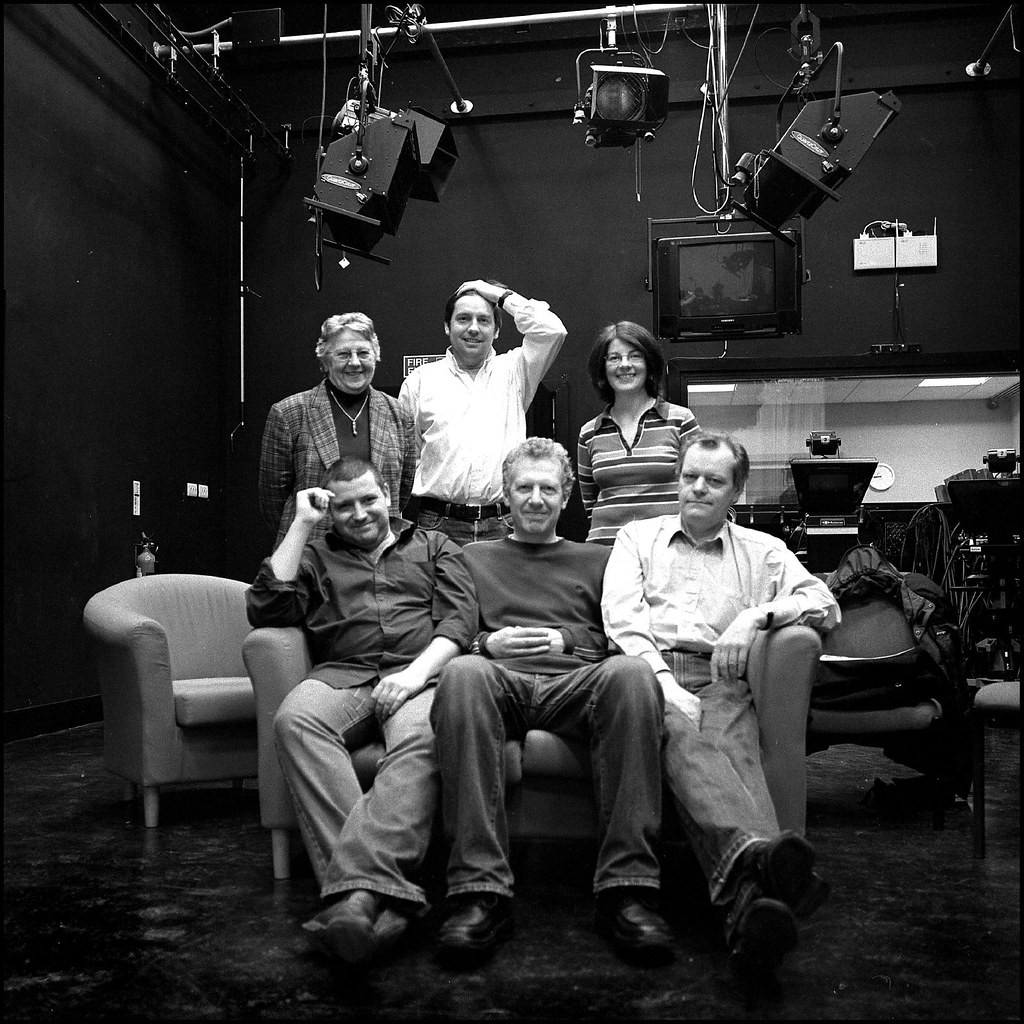
We can be seen (some of us) in a group photograph taken by Peter Griffiths, while he was producing our CD:

Tuesday, April 28, 2009

Robert Sheppard: End of Fourth Series and a Note on Copyright

I have been asked by the British Library to allow them to archive Pages. As I think this little enterprise seems to reach a few more people than I originally imagined, and I think – having just written a piece looking back as ‘under-reported poetries’ of the 1980s - I am very pleased that this should happen on the grounds of making something temporary visible in years to come.


However this blogzine carries material that remains the copyright of those who appear on its pages. I am proposed therefore that this should be the case:

a. For work already posted on the blogzine before the date of this posting; unless I hear otherwise I will assume consent to the work being both here and archived after, but I will remove any work if requested by the author(s) and/or copyright holders.

b. For work to be posted on this blogzine after the date of this posting: I am assuming consent to the work being used here (as is already the case, stated in my first posting) and also archived by the British Library after. See

I have been amused by the visibility of Pages online and indeed would like to record that an interview with myself, partly about Pages, ‘Literary Netscapes: Web Poetry and Blogging’, conducted by Graeme Harper, is about to appear in the book Authors at Work: the Creative Environment (Melton: Boydell and Brewer, 2009). Most people think I’m a technophobe, but obviously not. Check the book out here; I guess I'm the 'poet blogger' not the 'Poet Laureate' mentioned in the list of contributors, but you never know. My sister in law voted for me online, apparently.

The second series of Pages has been digitalised HERE. 

Wednesday, April 15, 2009

David Kennedy: Open and Shut

ROBERT SHEPPARD, The Poetry of Saying: British Poetry and Its Discontents, 1950-2000 (Liverpool University Press) £50.00


Readers of Robert Sheppard’s previous critical book Far Language will know how well he can communicate a reader’s excitement about challenging poetries. His new book will also bring those poetries new readers. It is structured around a confident juxtaposition of ‘Movement orthodoxy’ and a linguistically innovative poetry of saying. The poetry of saying, derived largely from Emmanuel Levinas, is more useful than the usual ‘builders’ yards are more fun to live in than finished houses’ critical approach to experimental poetry. Levinas’s ‘Language as saying’ assumes ‘an ethical openness to the other’. So the poetry that Sheppard arranges into a parallel history is open because its authors regard poems that, in Larkin’s words, ‘preserve [the poet’s experience] by setting it off in other people’ as ethically irresponsible. Sheppard gives a convincing outline of this parallel history in two chapters: ‘The British Poetry Revival 1960-1978’ and ‘Linguistically Innovative Poetry 1978-2000’. There also are good accounts of J. H. Prynne, Allen Fisher, Roy Fisher, Tom Raworth, Maggie O’Sullivan and Bob Cobbing.

The problem is that while the book promises an overview, Sheppard rarely strays from his specific interests and therefore takes limited, often prejudiced, views. For example, London publishers have set the bar for orthodox poetry lower and lower each year recently but this doesn’t mean that all poems that nod towards regular metre, fixed forms and closure necessarily have less to say than those that don’t. The Movement has had much less influence and longevity than Sheppard thinks but insisting on Movement influence avoids having to admit that the so-called orthodoxy is actually much more diverse and that some of it might be worth reading. It means he can dismiss Hughes and avoid discussing hard to fit figures like Geoffrey Hill, Peter Redgrove, and Thom Gunn altogether. It leads him astray about Plath whose late work is much closer to his poetry of saying than he can bear to admit. In fact, he takes little account of how women poets—orthodox or not—have generally shown little interest in dominant orthodoxies throughout his period. Similarly, a harder look at the Sixties would reveal that differences between orthodox and open were much less distinct. Sheppard is acute on Heaney but claims not to believe what he terms the concluding irony of ‘the disconnected number I still call’ in Tony Harrison’s ‘Long Distance II’ and ‘wonders what the motivation for such a discourse is’. It’s not irony, it’s the work of mourning. Motivation? 500 years of English elegy. One can only assume Sheppard is being satirical.

Sheppard can be equally unfair to the poetry he values. He quickly discusses a huge range of activity in terms of anthologies and under the headings ‘Cambridge’, ‘Crusty Revenants & Uppity Newcomers’ and ‘Being a Woman Poet’. In terms of the poetry of saying’s internal politics, he clearly favours what might be termed London innovators. Combined with his ‘ethical openness’ / ‘paraphrasable closure’ binary, this means that he privileges political and social critique and poets with one recognisable practice. This misses one of the fascinations and pleasures of innovative poets: in contrast to many of their orthodox contemporaries, one never knows what they’re going to do next. Sheppard’s preference means that a lot of the poetry he quotes looks just as inconsequential as most orthodox poems. Yes, once you’ve decoded Craig Raine’s Martian metaphors you’re not left with very much but the same is true once you know Barry MacSweeney is quoting the 16-year-old William Hague. This makes innovative poets seem more tied to the moment and more disposable than orthodox ones. What’s the point of reading Tom Raworth’s ‘West Wind’ now that ‘a handbag’—Margaret Thatcher—is no longer Prime Minister? This may seem harsh but Sheppard often locates the value of such poems more in their politics than in the inexhaustible originality of their procedures.

Sheppard pre-empts criticism: his book is ‘only a beginning’ and his ‘omissions are testimony’ to a ‘multifarious and complex’ poetry. Leaving aside the mystery of why only poetry critics keep complaining their subject is too much for them, taking his omissions with his inclusions seems to reveal a lack of generosity and sympathy. For all that, I would still recommend Sheppard’s book before Andrew Duncan’s highly eccentric coverage of the same period in The Failure of Conservatism in Modern British Poetry. But a book that wants to ‘feed…poetry’s histories and its futures’ needs a much greater willingness to engage with the inconvenient and dirty actualities of post war British poetry. To adapt Heaney’s comment about the English lyric, this means making poetry’s history eat stuff it has never eaten before. The violently polarized reception of Barry MacSweeny’s posthumous Wolf Tongue shows both how difficult this is and how badly needed. It’s a filthy job and somebody really has got to do it.


AUTHOR’S NOTE

The review above was written in December 2005 and published in P. N. Review 168 (Volume 32 Number 4) March-April 2006.

Wednesday, March 18, 2009

Aidan Semmens: a reponse to the Fourth Series

Chris Hamilton-Emery writes: "A great deal of innovative writing that comes my way is using tools and techniques which are actually rather hackneyed. Disrupted syntax, linguistic borrowings, indeterminacy, hypo-contextualising, hyper-contextualising, heteroglossia, discontinuous texts, types of spatial arrangement." Well, stone me. What does this prove except that a great deal of people who submit to Salt bother to look at what kind of thing they are likely to publish? If he were an editor for Faber or Hallmark Cards he'd presumably get a very different impression of what people are writing. To suggest that the 'innovative' - or pseudo-innovative - is actually now the 'mainstream' is to overlook everything that passes for 'poetry' in the world beyond our particular cloister, our scriptorium. Roy Fisher might just have made it over the wall into the high street, Denise Riley perhaps - but who else? Is there even one worthwhile poet who makes a living at it in Britain, except by teaching? Even one worthwhile contemporary poem to be found in your local Waterstone's or WH Smith's? {editor's note: of course a large number of Salt collections can be found in Waterstones, many of them quite demanding, Peter Jaeger's book, for instance, and I, for one, am pleased it's there. My own Twentieth Century Blues among them. For me the issue is whether they stay there, i.e., whether they are bought. Sorry, I shouldn't have interrupted.}

Having said that, the techniques and stylistic tics Chris lists have now been around long enough and copied enough for ‘hackneyed’ to seem right, which indeed begs the question whether ‘innovative’ is any longer an appropriate description. It happens to be the stylistic water you and I were brought up in, which makes it a more comfortable and rewarding place (for us) to swim than, say, leftover Augustan, Romantic or Metaphysical pools (and I cannot imagine why anyone would choose to immerse themselves in the stagnant bilge of the Movement, which is still, incredibly and scandalously, the dominant ooze of the high street gutter, malgré Chris Hamilton-Emery). But there is surely little innovative left to do within our kind of poetry (what the hell do you call it? Chris is right about the historical nature of ‘avant-garde’ and to me ‘post-avant’ just sounds silly), which brings the whole business down to where it surely should be – to whit, what is said and how well, not the manner of the saying. I dare say most of the submissions to Salt (or any publisher, in whatever mode of writing) are pure kitsch, merely imitating a manner – part of the challenge for any writer must be to avoid either producing or seeming to produce such empty stuff.

Friday, March 13, 2009

Afterword to Fourth Series

This series of Pages has been slightly disappointing in terms of the volume of traffic in answer to my deliberately naïve question concerning recent poetries. But I haven’t been disappointed by the individual responses I’ve had so far. (I will post more, if there are more, of course, and Scott Thurston promised one last night.)

Clark Allison’s ‘Plural Locutions’ (Feb 27 2008) is probably the best place to start reading because he presents the background and history of the poetries discussed. His final sentence, hailing the plural culture that is potentially coming into being, attempts the rallying-tone of the manifesto, but knows that the era is not receptive to that tone. Chris Hamilton-Emery (Oct 29 2007) poses some heretical questions: is linguistic innovation so innovative? Is it now a mainstream? Is Cambridge poetry dead? Do we now have Allison’s multiplicity of approaches, with perhaps our perspective developing a more European dimension than a trans-Atlantic one? Adrian Clarke (March 1 2008) agrees about the demise of the old ‘schools’ in recent years, recognises the recent growth of compromised centres within Higher Education (Birkbeck, Southampton, and you could add the Universities of Plymouth, Falmouth and Bedfordshire and Royal Holloway and – I’d like to think - Edge Hill). He rejects entirely the output of the ‘mainstream’ and denies the value of bothering with any oppositional stance towards it. He is baffled by Hamilton-Emery’s variable sense of innovation (perhaps there are only innovations). He too looks towards European poetry (as do I, incidentally; it’s a large part of my self-instruction in World Poetry these days). His final assertion that ‘here and now it’s the practice of outside’ points both to the oppositional stance that Clarke values and to the sense of neglect shown towards the most vital poetries in this country. We have to ask: can you have the former without the latter? David Kennedy also wonders whether the innovative is not the new mainstream, an assertion that Clarke’s calls to ‘outsideness’ remind us should be tempered, as they are by Kennedy’s surprise that minor irruptions of innovation still unsettle the mainstream disproportionately. (After all, in the post-democracy of the millennial anthologies that claimed the end of the poetry divisions it is precisely the practices of a writer like Adrian Clarke that are not admitted to the supposedly inclusive consensus.) But Kennedy steps back and, assisted by Ziarek’s analysis, which I recommend (and have used elsewhere), he is astonished by the performative aspects of recent ‘alternative’ poetries, by poetic eventness made flesh. Todd Swift (Oct 15 2008) agrees with Clarke that the practices of innovation and those of the experiential poem are divergent still, and that the former is distrusted, particularly by editors who evince an ignorance of the actual history of this radicalism (send them off to read Allison’s piece and its links). As one who practices the ‘outside’ – though maybe not in Clarke’s terms, exactly – Swift mistrusts careerism that envelopes both Faber, the traditional enemy, and the newcomer Salt (Hamilton-Emery’s press), and the numerous self-regarding small cliques. Tom Jenks (June 26 2008) is a young writer – I saw a great little blue pamphlet of his in Scott Thurston’s office one day – associated with the Openned Poets and The Other Room, based between London and Manchester, a radical groupiscule that raises the spirits and is not at all one of Swift’s small cliques. Although he publishes the magazine Parameter on paper (including the silver paper it is wrapped in; it’s difficult to know whether to read it or put it in the micro-wave!) his piece is mainly a hymn of praise to the internet as the global technology of local activity (such as his own; check out www.otherroom.org).


Personally, I am still uneasy about new technologies, and there is encoded in this project a certain resistance to its very medium. I am most amused to find that this blogzine and my part in it forms the whole of an interview with myself conducted by Graeme Harper to be published as the chapter on ‘literary blogging’ in a book about 'creative environments' (more of that when it appears). Pages was also listed – against my wishes – as part of Edge Hill’s Research Academic Exercise for ‘English’. I hope the assessors found the discussion about recent poetries to their liking. To that we shall return.

David Kennedy raises the question of overview. I’m sorry that he finds my own endeavours as a critic too ‘insider’, for I have tried to document this poetry faithfully, and to facilitate discussion of this poetry. What I am less interested in doing these days is to write about the poetry I don’t admire (though I am open to admiring ‘mainstream’ poetry when I encounter its positive aspects). Indeed, what is ringing in my ears as I churn these terms over again are the words of Michael Palmer, from his recent Active Boundaries. Of Oppen, Celan and Aygi, he writes: ‘What has been little noted critically, is that in each instance, such poetic thought involves stepping away from vanguardist experiment per se… In all three poets, listening and attending take primacy over systematized artistic construction. However resistant it may appear, and may be, poetry becomes a form of encounter, or conversation, a way of being with others.’ Perhaps innovation, taken up as a rallying cry, is not the issue (but perhaps it is simply a label for certain practices). And perhapsd it's about what Badiou says about Mandleshtam, his concern for 'poetry and the very subtle thinking that surrounds poetry', which would include, but is not limited to, poetics. But it is clear that while such language may invigorate someone like me, such a way of conceiving lyric and non-lyric poetry is way beyond the pencil-chewing editors in Swift’s cross-hairs.

I thought contributors would name (new) names. Between them they have turned up Sascha Akhtar, Ronnie McGrath, Trevor Joyce, Elena Rivera, Frances Kruk, Emily Critchley, Keston Sutherland, and Sean Bonney. I noted with interest that the Wikipedia entry on The British Poetry Revival ends with an account of recent years (though not very recent years). It’s worth a look (and perhaps somebody could get in there and spell ‘Sheppard’ correctly) and because it can be altered, I’d like to reproduce it as it stands at the moment and to suggest its named names as a provisional syllabus of the now. (If we can have the excellent Archive of the Now, we can surely have that.)

The current entry on the 'British Poetry Revival' on Wikipedia (I have copied it because it could be modified any time), ends with a concentrated account on the last 19 years, and also gives a link to Piers Hugill’s more capacious account on www.fucine.com which contains some of the same names, though both accounts are perhaps too London based and miss the activities in Liverpool, Manchester and Sheffield at least. It reads:

‘Into the 1990s and beyond poets such as Sean Bonney, Jeff Hilson, and Piers Hugill have surfaced after direct involvement in the Cobbing-led Writers Forum workshop. An interesting sub-development of the workshop was the instigation of the Foro De Escritores workshop, in Santiago Chile, run on similar aesthetic principles. This workshop has contributed to the development of Martin Gubbins, Andreas Aandwandter, and Martin Bakero, to name but few. Those associated with the Barque Press (most obviously Andrea Brady and Keston Sutherland), and more recently Bad Press (in particular, Marianne Morris and Jow Lindsay), have made a similarly important impact via the Cambridge scene. From Scotland, Peter Manson, who had co-edited the magazine Object Permanence in the mid-1990s, Drew Milne, editor of Parataxis, David Kinloch and Richard Price (previously editors of Verse and Southfields) also emerged more fully as poets in their own right. New writings have arisen from the involvement of cris cheek, Bridgid Mcleer, and Alaric Sumner, under the direction of Caroline Bergvall and John Hall through the Performance Writing programme at Dartington College of Arts including Kirsten Lavers, Andy Smith, and Chris Paul; and Keith Jebb at University of Bedfordshire's Creative Writing programme, including Alyson Torns, Kevin Doran, Allison Boast. Redell Olsen's Poetic Practice programme at Royal Holloway, University of London (which includes Frances Kruk, Sophie Robinson, John Sparrow and Stephen Willey) continue to offer a fresh and vigorous challenge to the confessional mainstream.’

Talking of PiersHugil, I’d like to alert you to the academic journal he, Scott Thurston and I are editing.

Journal of British and Irish Innovative Poetry

editors: Professor Robert Sheppard (shepparr@edgehill.ac.uk Edge Hill University)
Dr. Scott Thurston (S.Thurston@salford.ac.uk University of Salford)

Reviews editor: Piers Hugill (phugill@soton.ac.uk University of Southampton)

Publisher: Gylphi: Arts and Humanities Publisher (www.gylphi.co.uk)


We are currently looking for both academic articles and reviews for our first issue and beyond.
The journal is focused upon the poetic writings that have been written in Britain and Ireland since the late 1950s that appear under various names. Peter Middleton, writing on ‘Poetry Since 1970’ for the Cambridge History of Twentieth-Century English Literature, writes, ‘These poets … have difficulty naming themselves. Are they “avant-garde” (an adjective not much liked by anyone), or “underground” (even more disliked), “linguistically innovative” or “second-wave Modernist”?’ he asks. Other names have included: non-mainstream, the British Poetry Revival, the parallel tradition, formally innovative, Neo-modernist or experimental poetry. Particular areas of the field have been known as the Cambridge School, the London School, concrete poetry, and performance writing.

While the equivalent North American work is well-represented in academic work, researchers on this British and Irish poetry have no dedicated referred journal, although a number of important books have been published lately.

The Journal aims to answer a lack in the academic market, by proposing to provide a home for critical articles on the history, context, close reading and poetics of this work, generally of 5,000-8,000 but with a maximum 10,000 words, and to carry short reviews (up to 2,000 words) of the stream of monographs and edited volumes in the area. It is intended to appear twice a year.


Meanwhile, the Fifth Series of Pages is going to celebrate the tenth anniversary of the Edge Hill University Poetry and Poetics Group on October 21st 2009. Watch this space leading up, and away from, that date.