Showing posts with label Erin Moure. Show all posts

Friday, March 06, 2020

Robert Sheppard: in memoriam Lawrence Upton


My memoir of attendances at Bob Cobbing’s Writers Forum workshops carries a pertinent memory of fellow attendee, Lawrence Upton, extemporising a text, while leafing at speed through a paper: ‘Lawrence Upton improvising a marvellous, irrecoverable text from that day’s newspaper photos; a sly smile of success as he sits down: June 19 1994 .’ (See section 5 of the following http://jacketmagazine.com/09/shep-cobb.html.) That’s it. It was gone forever. And that, the smile suggests, is success. Instant ekphrasis.


Now Lawrence has gone. There is some fear that his work, his archive, his place in literary and performance history, might be gone with him. Just like that, as Tommy Cooper would have said. (Lawrence would have liked that.)


There is an online petition to save his archive. There are friends. There is a posthumous ghoulish Twitter feed. (I realise I am aping Lawrence’s expository prose style, by the way.)


I am amiss, I know, at leaving it so long to respond to this bad news. I have two personal resources with which to respond, my memories and his performances and publications. As my opening gambit suggests, these overlap. But I’ll try to keep them apart.


I have many memories of Lawrence, of his general affability (who else could suggest to our son, when he was only about 14, that all the brothels of England should be regulated by an organisation called Offuck?) and of his intransigent neo-Stalinist poetry warrior positions, which he would explain in meticulous detail. I can hear him now. I’d rather mute that second side. At least I managed to get him to talk to Bob Cobbing after a 20 year hiatus, over a dispute about … what?... nobody can remember. Or was it the other way round, I can’t remember? At any rate, I told one of them to go upstairs to speak to the other in the empty workshop room. When we returned, they were chatting merrily – and began to work together again on Domestic Ambient Noise, their 300 pamphlet epic …. (See here about that.)


I helped him run Subvoicive readings in my last couple of years in London. He made all the decisions. I collected the door money.


I have a large cardboard folder bulging with Lawrence’s publications, some ephemeral beyond the usual meaning of that word, others (his Reality Street book, say) less so. There is a beautiful visual poetry volume published in Canada. (Jennifer Cobbing called it, slightly un-loyally, the best book of visual poetry ever! Lawrence told me that, with some glee – or was it pride?) There never was a selected poems, though there ought to be. Still. I always thought people never quite realised how good he was. Part of the reason is that the work is so varied: the MacDiarmid-like ‘Letters’ to various folk, weird narratives, visual texts (who else would use Marmite in a concrete poem?), conceptual pieces, posters (his ‘All England is Alarmed’ hung over our front door in Tooting). I’m NOT going to open that folder now, because it will distract me from my task, and I shall never finish.


Lawrence appeared on this blog when it was more of a blogzine. See here for two wonderful texts:  http://robertsheppard.blogspot.com/2005/08/lawrence-upton-two-texts.html. He came to visit us in Liverpool, but after that he spent so much time in Cornwall that our paths never crossed much. The last time may have been Jennifer Cobbing’s 90th birthday reading. He performed a brilliant vocal piece with a violinist. I know he studied at Goldsmith and collaborated with a multitude of his equals.


Oh yes, I first met him in the mid 1970s at the Poetry Society. We had already corresponded and I'd sent poems (which he wisely never published) to his early magazine Good Elf. But it was many years until we met again and we became friends, late 1980s. ‘Good ’elf!’ seems a good way to conclude this all too brief note.     


The twitter feed is here:

https://twitter.com/LawrenceJUpton

  
A detailed website is here:

http://lawrenceupton.org/


See Robert Hampson 's obit in The Guardian here. 


Saturday, July 21, 2018

Celebrate Belgium’s Independence Day with European Union of Imaginary Authors poet Paul Coppens and with Rene Van Valckenborch

I've been celebrating the National Days of the countries whose poets I have swelled the numbers of by inventing new ones! This is a special one, and the last. (And may well be the last of my special EUOIA posts too, and it includes possible plans for the future.)

Celebrate Belgium’s Independence Day with European Union of Imaginary Authors poet Paul Coppens, who was co-created by myself and Philip Terry, and with Rene Van Valckenborch, my original Belgian invention! So a bit of a double, or a treble, if you include Philip!

Me and Rene in Brussels?

See here for more on Philip Terry.

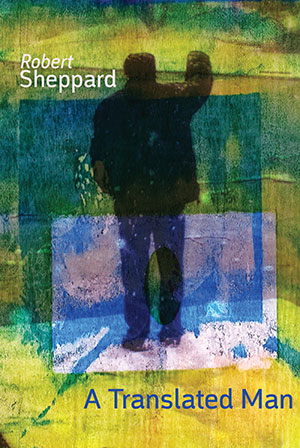
René Van Valckenborch is noted for writing in both Flemish and French. Publishing between the years 2000-10, his books (in French) include masks and other masks and glance poems. In Flemish, his projects include The Fuck Me Shoes Chronicles (though no parts of this are translated - yet) and the online European Union Of Imaginary Authors: 27 Translations. He was President of the EUOIA until 2010, when he was deposed by Hermes, and he disappeared (but not in a good way). A generous selection of his work, translated by Annemie Dupuis and Martin Krol, was published as A Translated Man (Shearsman, 2013) with an introduction by Erik Canderlinck and an authorial imprimatur from Robert Sheppard. 

Read a piece of Van Valckenborch’s critical prose (not included in A Translated Man), an account of the cinema of forgotten Belgian film-maker Paul Coppens Snr, father of the invention of Philip Terry and myself,  here.

Rene, a real troll, also Tweets here. There are three of his 'twitterodes' here! Most recently he has decided to adopt the middle name Pelikan for the length of 2018. More on him here at these links (which themselves contain further links): 


And here's me at The Other Room some years ago, where I read his Flemish poems.

Read an early account of Van Valckenborch here; the book is also available from Shearsman here:


Picture

Together Philip and I worked on the antonymic translations of Rene Van Valckenborch's quennets (which appear in A Translated Man) for the corpus of Rene's exegete and friend Paul Coppens. We wrote them two words at a time, a deliberately insane method that took six months to complete. They literally turn Van Valckenborch's poems inside out, and represent another of the links between these two books of fictional poems.
    
Here is Philip showing us what a quennet looks like on the page
I see these two books as the first two parts of a fictional poetry trilogy. So what will part three look like? One possibility is that Van Valckenborch returns in some way, like Bob McCorkle perhaps, in Peter Carey’s wonderful novel My Life as a Fake, and takes over again. Who knows? The unseen Fuck Me Shoes Chronicles might be entertaining to complete. Or would he write new poems? Would they be in Dutch or French? In any case, I have posited a possible (but quite different) continuing fiction here, but I am unsure how this may be used now (and whether it would involve Rene). I also re-read my short story 'Tropp' the other day. I'd forgotten that this story about a Czech Esperanto poet was a sort-of 'dry-run' for Rene, although I thought the story (which I'd not looked at for a while) was OK. It is published in my 44 pp volume of 3 stories The Only Life by KFS. You can still buy it here. 

20th July 2018: A vague apprehension, reading Erin Moure's fine selected poems, Planetary Noise (and the selection of poetry and poetics we made for Atlantic Drift), of how I might adapt her way of marshalling her fictional 'circus animals'. They re-appear at crucial points, as names, alter egos, (m)others, analogues (and the opposite of those four characteristics). They are part of a poetic and plastic polylogue, NOT bit-players in a fiction. (I've done that: twice). [list of free characters, not collaboratively composed - obviously I can't continue with any of those that are)] 13, plus 'Robert Sheppard' of Twitters, as Moure has an 'Erin Moure' or EM. Bad Prophets Err, in my anagrammic case.... To move away from the writing of fictional poems to the creation of a textual web which could incorporate many of the ideas I've been gathering with each of these 'national day' celebrations. Even this here, though it would become quite fragmented in this new guise. Let's leave that now. (August is time for my summer break from blogging. August might be your time for reading: see here for my take on some of Erin Moure's work, working notes for my chapter in The Meaning of Form on her exacting work.) 

You can read more about the European Union of Imaginary Authors here and here. All the collaborators I've worked with are accessible via links here; our resultant works are collected in Twitters for a Lark, published by Shearsman. Videos of The Other Room special EUOIA evening last August, which have only this week become available, may be accessed (variously) here:


More on Twitters here and here:


 And check out a review by Billy Mills, who thinks the EUOIA should hang up its multi-coloured Rimbaudian letters, here.

Sunday, September 25, 2016

Robert Sheppard: The Meaning of Form Bergvall and Moure


Chapter 5. Meddling the Medieval: Caroline Bergvall and Erín Moure

Both Caroline Bergvall and Erín Moure produce contemporary innovative texts that re-frame medieval ones. Bergvall’s take on (‘meddling’ with) Chaucer, Meddle English, involves a recognition of the fluidity of Chaucer’s language that matches a contemporary slipperiness in linguistic matters. Humorous and performative, Bergvall negotiates contemporary issues of gender through transformation, and through an interlineal gloss on the original text within her poems. Moure, in O Cadoiro, plunges into the archive of medieval Portuguese troubadours with relish, but Derrida’s essay ‘Archive Fever’ serves as a minatory intertext. Moure recognizes that the incomplete archive is capable of generating philosophical questions about self and truth, as well as being the occasion for stunning innovative love lyrics and visual play (as in the book’s photographic plates of her treated texts).   

For those who can buy the book, or order it for libraries, here are the places


For further posts on the project as it lead up to the book see here.  


Monday, June 16, 2014

Robert Sheppard The Meaning of Form: forms and forming in contemporary innovative poetry (Summary and Weblinks)


‘Poetry is the investigation of complex contemporary realities through the means (meanings) of form.’


For those who can buy the book, or order it for libraries, here are the places


And here is the hub-post to the research that went into the book:

I have been writing a study of the forms of recent innovative poetries (mainly British but with some international poets), which is underlined by a conception of form itself, that emphasises form not as a vessel to contain its contents, but as a readerly process of forming which is already meaningful, and which brings the text into existence. I have been using this blog as a machine for thinking through some of the implications of this, by posting early thoughts, dry-runs, practice-led spin-offs, some recovered earlier texts, some discarded passages, and even a few completed fragments of the book. Here’s a summary of the main argument which lies behind many of the existing posts. 

Instrumentalist studies of literature abound, which offer readings in terms of socio-historical, contextual issues, ‘issues’ of gender, sexuality, space, place, spectrality, etc. However, to successfully engage in the reading of poetry – and particularly the reading of ‘difficult’ contemporary poetry – means to necessarily engage with the forms of the artifice employed and (at a level of some remove) with the notion of ‘form’ itself. There are, of course, readings of poetic form, but they either tend to cling to the vestigial decencies of New Critical practice or are technical, as in most work on prosody, which seems a descendent of even older philological scholarship. 

The study of what has come to be called ‘linguistically innovative poetry’ has not been given to instrumentalist readings, as it happens, but there has yet to be a study which combines the already close textual reading common within this field with the work of the so-called New Formalist critics, who have spearheaded a cleansing operation within the field of Romantic Studies, where New Historicist and other contextual methods, once held sway over the corpus. The leading theorist of this group, Susan J. Wolfson, states: ‘My deepest claim is that language shaped by poetic form is not simply conscriptable as information for other frameworks of analysis; the forms themselves demand a specific kind of critical attention.’

My approach derives from my axiomatic contention that poetry is the investigation of complex contemporary realities through the means (meanings) of form. Instead of an historical reading of the kinds of alternative British poetries under the label ‘linguistically innovative’ (my previous volumes The Poetry of Saying (Liverpool University Press, 2005; access its main thesis here) and When Bad Times Made for Good Poetry (Shearsman, 2011) offered this and more), this investigation argues that the attention of any formal study of contemporary poetry must be dual. It must focus on form in the technical sense, on identifiable forms in play (enjambment, line, rhythm, rhyme, etc.), and on form in a general, more performative sense, that prioritises acts of forming and our apprehension of their coming to form. Forms and forming I call this pair for ease. Associating one with the other, Derek Attridge in The Singularity of Literature argues that form is the force that stages a performance of any text: we need to apprehend ‘the eventness of the literary work, which means that form needs to be understood verbally – as ‘taking form”, of “forming”, or even “loosing form”’,  but he insists that the devices of artifice ‘are precisely what call forth the performative response’ of any engaged reader, directly connected to the event of singularity which is the irruption of an inventive otherness in our productive reading.

Both types of form are capable of carrying a semantic or cognitive charge, demonstrating that forms think. They contain or envelop meaning(s) of knowledge(s) and might show how new meaning and (non-propositional) knowledge might be formed and formulated. As such, aesthetic form carries a force operating on the individual (or collective) reader or viewer, which – in the case of poetry – means that the reader is the site where such meanings are staged by form, so that reading is formulating form, and formulating it into fluxing semantic and cognitive forms as a ‘performed mobility’. Wolfson even writes that literature lovers ‘respond to forms as a kind of content’. Formal considerations of both kinds (forms and forming) are engaged by active reading and enact meanings that moderate, exacerbate, subvert (and on rare occasions reinforce) the kind of extractable meaning that Forrest-Thomson and Attridge both decry as ‘paraphrase’. If apprehension of form is not, or not only, a matter of collecting the devices of poetic artifice, of forms, but a question of entering into the process by which the text finds form in our reading, as forming, there can be, strictly, no paraphrase; indeed, paraphrase, a mode by which meaning is supposedly skimmed off the surface of reading as a residue or even an essence, or worse, a ‘political’ slogan, is a violation of the processes of forms forming. Paraphrase is amnesia of form.

Although ‘the vitality of reading for form is freedom from program and manifesto, from any uniform discipline,’ as Wolfson has it, this volume will demonstrate how ‘issues’ may be read in literary works, ‘through’ form and not as an avoidance of it. ‘Formalist’ has a bad press when it seems to imply autonomist or aestheticist remove, but a poem is opened up to the world only through its form. While there will be some contextual information presented, thinking about poems and thinking about form, particularly through its evanescent cognitive content, will be the main focus.

My previous studies have taken historical and ethical approaches to these writers and my criticism has always been informed (tacitly) by my own work as a poet, and by my interest in poetics as a speculative writerly discourse. I have a particular interest in the wily and even self-deceptive way writers talk to themselves through poetics, and this requires a reading that does not reduce its conjectural nature and function to intentional statements or ersatz literary criticism. Poetics arises as an incidental activity of poets throughout and will be addressed directly as text in several parts. Theorised close reading might be a thumbnail description of my method. I have decided to extend the range of my coverage of British poets and have not pursued some writers (Tom Raworth and Iain Sinclair, for example) whose work I have analysed in previous books and articles. Another aim of the book is to demonstrate the formal range of linguistically innovative poetry.

Readers of this book (and these posts) will find a challenging thesis about form (taken dually as identifiable devices of form and processes of forming) that may well influence their reading-processes on a permanent basis. This will be combined with discussions of important British (and some other) poets, most of whom are relatively well-known, others of whom are still emerging. The originality and marketability of the book is that it combines a summary of formalist and aestheticist thinking that is currently fashionable in one area of literary studies (Romanticism) and applies it to another (contemporary poetry) which has not hitherto been overly invaded by this mode of enquiry. It will therefore be of interest to those studying literary theory as well as those studying contemporary poetry. Its interest in form will draw in readers who are following theorists as various as Derek Attridge, T.W. Adorno, as well as the New Formalists and other aesthetic theorists, particularly those who argue the case increasingly for a cognitive function in formal elements.  

What follows is a list of contents with raw links (and references to a number of offline and print sources) to relevant pages on Pages. The final book will differ considerably from these passages, but you could read through the posts to get a glimpse of the rough thinking. Or scroll back through Pages’ pages until you reach August 2013. Or dip and sample. Or even follow a link and lose yourself. (Indeed, scroll through later posts, such as this one here, which offers the final list of contents which differs, mainly in its ordering of chapters, from the one below.)


The Meaning of Form
Introduction: Form’s Mordant Eye

See the above text and the first paragraph or two of this essay on John Seed:


Here are some posts grappling with the question of the cognitive function of form (some of which are linked to later chapters as well since this is a matter of conclusions as well as introductions):


http://www.robertsheppard.blogspot.co.uk/2014/06/robert-sheppard-tight-little-paragraph.html
 
http://robertsheppard.blogspot.co.uk/2014/09/torque-1-mindlanguage-technology.html

http://robertsheppard.blogspot.co.uk/2014/07/robert-sheppard-joan-retallack.html

Here's a later post on Derek Attridge's The Work of Literature (2015) and its relevance to the theory of this project (ie, the content of the posts above).

Here's my first footnote to this chapter (and the last to the book).

Here's a footnote harking back to some 1981 meditations on 'formalist-humanism'.

Here's a mini-lecture and handout on 'form' that I use with literature and creative writing students.


See review of On Form by Angela Leighton, Journal of British and Irish Innovative Poetry, Vol 3: No 1, March 2011: 63-66.

Chapter One: Convention and Constraint: Form in the Innovative Sonnet Sequence

See the 14 posts under that title that deliberately mime the structure of the sonnet. Very early thinking, very playful. Here’s a sonnet made of links:


There is a post on the shift from the temporal to the spatial here. (This includes thoughts on Kamau Brathwaite included, about whose work I was considering writing about in this project.)

Chapter 2 Artifice, Artifact and Artificer: Veronica Forrest-Thomson and Christopher Middleton

See ‘Linguistically Wounded: The Poetical Scholarship of Veronica Forrest-Thomson’ in ed. Turley, Richard Margraf, The Writer in the Academy: Creative Interfrictions, Essays and Studies 2011. Cambridge: D.S. Brewer, 2011: 133-55. [article, published] and parts of ‘Poetics as Conjecture and Provocation: an inaugural lecture delivered on 13 March 2007 at Edge Hill University’, New Writing. Vol 5: 1 (2008): 3-26. The 'Christopher Middleton' part of this chapter (to be removed from the final book) appears in the latest edition of The Wolf. It may be read here:

http://www.wolfmagazine.co.uk/images/RobertSheppardonChristopherMiddleton.pdf

Chapter 3. Rosmarie Waldrop: Form, what one can work on

Some introductory remarks about her poetics:


Chapter 4. The Trace of Poetry and the Non-Poetic: Conceptual Writing and Appropriation in Kenneth Goldsmith, Vanessa Place and John Seed


Chapter 5. Stefan Themerson: Iconopoeia and Thought-Experiments in the Theatre of Semantic Poetry

See ‘Stefan Themerson and the Theatre of Semantic Poetry’. in eds. Blaim, Ludmiły Gruszewskiej, and David, Malcolm (eds.), Eseje o Współczesnej Poezji Brytyjskiej i Irlandzkiej, Volume 5: Gdańsk: Wydawnictwo Uniwersytetu Gdańskiego,Ludmi: 245-262.

An aside on Themerson's philosophy of  'aims of means' appears here.
Chapter 6. Translation as Transformation: Tim Atkins’ and Peter Hughes’ Petrarch

Thoughts on ‘Petrarch 3’ (and some attention to my later many versions of this one sonnet):

Further thoughts, after both of the Petrarch projects had been published in full: Here.

Chapter 7. Geraldine Monk’s poetics and performance: Catching Form in the Act

Read these posts on Monk’s poetics text Transubstantiation of the Text:


These posts are on music (and on an abandoned project on poetry and jazz) and on Monk’s collaborations with Martin Archer and Julie Tippetts:


Chapter 8. Meddling the Medieval: Caroline Bergvall and Erín Moire

A game of two halves:


Here's a one sentence quotation from Robert Kaufman on the cognitive aspects of lyric that arose of the discussion of Moure!

Chapter 9. The Making of the Book: Bill Griffiths and Allen Fisher

On small presses (part of my Keynote Talk to the Small Press conference in Salford, which does not survive into the book):


On Bill Griffiths’ The Book of the Boat:

On Fisher’s Proposals:


Chapter 10. Translation as Occupation: Simon Perril and Sean Bonney

A game of three halves it seems:


Chapter 11 and Conclusion: Form, Forms and Forming and the Antagonisms of Reality: Barry MacSweeney’s Sin Signs

The Theory of Form, Autonomy and Art:


http://robertsheppard.blogspot.co.uk/2014/06/robert-sheppard-if-form-knows-if-forms.html

Here's a footnote on interruption, disjunction, rupture, and possible distinctions between them.

On Barry MacSweeney’s works of the 1970s:


Here's the final footnote to this chapter and to the book (as well as the first footnote to the Introduction.)

Blurbs for the book: read them here: http://www.robertsheppard.blogspot.co.uk/2016/03/robert-sheppard-meaning-of-form-its.html

And here is the final ordering of the chapters, which differs from the above.

And finally...

Some of the thoughts that emerged from writing the book were channeled into Pulse: All a Rhythm. See part of that here.


For a piece on the nature of POETICS read an early version of The Necessity of Poetics at


or at


There is additionally a History of Poetics (in four parts) which was an abandoned part of an earlier project:

Part One: Poetics and Proto-Poetics


Part Two: Through and after Modernism


Part Three: North American Poetics


 Part Four: Some British Poetics


My own work in form as a poet may be checked out here. And here. And about this blog(zine) here.

*

Locating Robert Sheppard 2023: email: robertsheppard39@gmail.com  website: www.robertsheppard.weebly.com Follow on Twitter: Robert Sheppard (@microbius) / Twitter  latest blogpost: www.robertsheppard.blogspot.com


Friday, March 14, 2014

Robert Sheppard: Simon Perril’s Archilochus on the Moon


Simon Perril is the author of several books, including his investigation of early film Nitrate. (See here for one of those poems on Pages when it was more strictly a blogzine, a condition to which it might return in time, I hope.) He is also an astute critic, with one of the finest pieces on Iain Sinclair tucked away in an academic journal, and (more publicly) the necessary and well-edited Salt Companion to John James to his name.

And here comes Archilochus on the Moon, published in 2013 by Shearsman Books. It is an excellent book, as I hope to show.

First Archilochus. Archilochus is the first named classical Greek lyric poet, so this exploration could be regarded as a return to a poetic origin (as, in its analogous way, could Erin Moure’s exploration of the troubadour archives). But it doesn’t feel like that, since he is invented anew and the epigraph of the book takes (whether the prophecy is Perril’s fanciful invention or not) the words of the Delphic Oracle (an instrument of much Greek colonial expansionism, either as permission or excuse) quite literally: ‘Announce to the Parians, Archilochus, that I bid you found a conspicuous city on the moon.’ (Perril 2013: 6) This book shows Archilochus – the lyrics hint at the absent epic beyond – doing just that, though it feels immediately more like exile (the mood reminds me of the Tristia of Ovid, texts I used, or rather my fictional poet, René Van Valckenborch, used, in A Translated Man, in a way I recognise here). However, the little that is know about the historical Archilochus is summed up neatly in Perril’s ‘Grapsing a Nettle Tongue: An Afterward(s)’: ‘He was a soldier, part slave part aristocrat, who took part in the earliest colonial expeditions. His father, Telesicles, after consulting the oracle at Delphi, led the first colonising mission from Paros to Thasos…. His companion was Lycambes, who later agreed to the engagement of Archilochus and his eldest daughter Neobulé – and later, for reasons unknown, broke that arrangement.’ (Perril 2013: 91)

What attracted Perril was (apart from qualities of the verse itself, though received in translation) ‘this ancient foundational moment of conjunction between lyric and colonization’, and that is as fascinating to him as Moure’s discovery of the troubadours, a work he refers to. (Perrril 2013: 91) ‘Lyric is territorial,’ Perril argues: ‘it desires to occupy, it forms an erotics of coercion.’ (Perril 2013: 91) However, Perril provides Archilochus with an Ovidian exile: ‘The exile I have established for this soldier-poet is steeped in the myths that surround him,’ we are told, and chief among these is that ‘when Lycambes broke off the poet’s engagement to Neobulé … Archilochus wrote such scurrilous poems about the affair, that the entire family committed suicide’. (Perril 2013: 92) Perril weaves another legend from this: ‘The basic premise of this book,’ he explains, ‘is that Archilocus has been sent – partly as punishment for the havoc his poems have wreaked upon Lycambes’ family – into exile to colonise the moon’. (Perril 2013: 92) There is some historical evidence that – unlike the later case of Ovid – colonisation followed exile, so we can surmise that Archilochus was ‘sent’ ‘partly’ also to colonise (in reality Thasos). Carol Dougherty, in a book Perril footnotes, deals with what she describes as ‘how the Greeks “emplotted” their memory of archaic colonization’. She notes: ‘The basic narrative pattern that emerges can be summarized as follows: crisis, Delphic consultation, colonial foundation, resolution’. (Dougherty 1993: 8). Perril’s book balances upon the indeterminacies of the third stage. ‘The foundation of a new city’, which Dougherty calls ‘the solution to the civic crisis’ is deferred. (Dougherty 1993: 9) Resolution feels as though it is unattainable; indeed, dissolution is its, or Archilochus’, final state. However she does note that in his poetry, Archilochus ‘overlooks the prosperous and fruitful nature of Thasos and describes the island, the site of Paros’ colonial expedition, as the bare back of an ass.’(Dougherty 1993: 22). Specifically, uncultivated timber is compared to the bristles on an ass’s back.

                                    Here the island stands
            stiff with wild timber like a donkey’s bristling back.
            This is no place of beauty, nor desirable
            nor lovely like the plains where the River Siris runs. (Lattimore 1960: 4)

The moon is even less fruitful for its new ‘selenite citizens’: (Perril 2013: 57)

before sailing
for lunar seas,
these moon-bound men

signed an oath
will bind them
to ashen coasts, (Perril 2013: 22)

the assonance of the word ‘oath’ binding them to such ‘coasts’. Archilochus bemoans his lack of fecundity. The civic crisis of antiquity is partly translated into the sexual anxieties of the twenty-first century by Perril, the rhyme of ‘bit’ and ‘it’ indicating the penis without naming it:

For my bit,
I have planted seed
and watered it
with the same instrument (Perril 2013: 40)

Doughtery reminds us of the original anxiety underlying Archilochus’ disparaging description of Thasos: ‘Archilochus’ poetry reveals what might lie behind this rhetorical strategy – concerns about settling foreign territory, questions about the nature of the land and of the people who live there.’ (Dougherty 1993: 22) Perril’s man has no problems concerning the latter, though ‘salt mines/ on the moon’ suggests not natural resources but imprisonment. (Perril 2013: 82)

The other legend about Archilochus is poetic, his formal preference for the iambic, which was not just a metrical choice, conventionally speaking, but a preference for verse ‘for ritual invective, obscenity, abuse and blame’, as Perril puts it in his ‘Afterward(s)’,(Perril 2013: 92) (or more bluntly in the poems themselves: ‘iambic stock:/ the broth of blame’), which is revealed in the image of the ass’s back and is reflected in the excerpts from Perril above. (Perril 2013: 71) As another poem has it:

expelled,
I act in kind
and spew (Perril 2013: 23)

The fragmented nature of the sequence is appropriate formally to the condition of the poems handed down to us. No Archilochus poem survives intact. Nevertheless, Perril isolates qualities in the translations he has received (chiefly Guy Davenport’s). ‘His is a nuanced voice, full of many tones and timbres…; it has the viscosity of semen. It can argue and cajole, it can caress and curse’. (Perril 2013: 91)

I only have to hand, as yet, Greek Lyrics translated by Richmond Lattimore, an anthology that opens, naturally enough, with Archilochus. One fragment runs: ‘If it only were my fortune just to touch Neoboule’s hand’, longingly, caressingly, as it were; (Lattimore 1960: 5) another is directed at her father; this, in Perril’s words, curses:

            Father Lykámbes, whatever were you thinking of?
            And who seduced the common sense
            in which you were once so secure? How things are changed!
            Your neighbours giggle in your face. (Lattimore 1960: 6)

Our lunar poet invokes Neobulé in one poem which reads, complete:

Neobulé, somehow
your space was deeper

full
as the promise of moisture

on the moon (Perril 2013: 86)

The colonial space is clearly associated with corporeal space, and is a source of disappointment (both promises proving false). In another poem addressed to Neobulé, he laments:

I … found my body
a parchment map. Territory
of all you ever touched.

These marks
are the colonies I value
where you landed’ . (Perril 2013: 77)

He figures himself as occupied territory at this point, ‘an ex-citizen recast/ as a bastard’. (Perril 2013: 77) Lycambes is also addressed post-mortem by Perril’s Archilochus:

Lycambes’ ghost
visits most amongst
Mnemosyne’s folk [;]

that is to say, around those who are devotees of the muses, the offspring or ‘folk’ of the Titan goddess, but this is not a respectful memorialization, given Perril’s Archilochus’ complicity in the familial suicide:

and the self-righteous prick
has a point
to accompany the ruff of weals
a noose makes; (Perril 2013: 29)

Archilochus does not pause to link this suicide by hanging with poetry. (It is linked: Archilochus’ poems caused the family to self-slaughter, though in some versions of the legend it is only the shamed daughters): ‘but he misunderstands/the crux of song’. (Perril 2014: 29) Poetry, this poem seems to suggest, is not about shame but guilt, by formally patterning (‘assembled, reassembled’) ‘the wrong’:

this riot-rhythm
is what I bottle
and the poems flutter and buzz
with the life-scuzz (Perril 2013: 29)

‘Bottle’ suggests the bottling up of repressive content, but it also suggests the distillation provided by form and acts of forming. ‘Life-scuzz’ is transmuted into the rhythmic and sonic ‘flutter and buzz’ of poetry (the rhyme almost demonstrating this relation, while holding them apart; the scuzz is not buzz). (Perril 2013: 29)

Perril translates the whole legend of Archilochus and his fragmented oeuvre into his own fragmented (lyric) epic, although perhaps it is best to think of Perril’s poems as narrative nodes from an incomplete colonial narrative. (Indeed, Richmond Lattimore speculates whether some of Archilochus’ own ‘fragments’ are not, in fact, complete epigrams.) (Lattimore 1960: 1)  He ‘occupies’ the ‘foundational moment’ of lyric and its colonial ambitions (thwarted by Delphic diversion to the moon). Perril says, quite clearly: ‘These poems are not translations… They are occupations,’ which is yet another territorial metaphor, of course. (Perril 2103: 92) Archilochus on the Moon is a book-length sequence of 80 short-lined lyrics; like those above, few of them reach a second page, and they employ frequent but light rhyme, some end-stopped, but quite often internal, a device which lifts the otherwise demotic, even earthy, language and content into a register we recognise as lyrical. Unlike his previous work, which has eschewed the lyrical (in this sense), this sequence wishes to embrace that possibility (or fate) openly, recognising the power of tradition and effects of ‘lyric resistance’, as Perril calls it. (Perril 2013: 92) One poem, number 56, addresses this resistance, announces a formal (and ethical) question:

for what manner of shield
is a lyre: to what office
does it aspire

it opens, neatly and internally rhyming ‘lyre’ (the instrument of lyric) with hope, while semantically rhyming lyre with a shield, an appropriate pairing for this soldier-poet, and one dictated by the resemblance of curves in their physical designs and in their aspiration, which is

to protect
all prospects, sound
them in sinew and strum;

Both instrument and weapon are held, one to the muscles of war, the lyre to the gentle rhythmic harmony accompanying the poet in recitation. Both instruments are again equated in an elaborate metaphor (which, slightly clumsily, as though to offset the neatness of the poem’s identifications, requires the reading of ‘bags’ as a verb). Shield (made of animal skin?) and lyre (strung with animal gut?) ‘bag’ in a fashion that is emphatically, if not disgustingly, corporeal (as a reader might expect by now):

handle them
as a body bags jellied goods
in its skin-pouch

then wastes
through its holes what
it cannot keep

This image of digestion and excretion is also an image of poetic excess (the shield seems less important, though it may leak a soldier’s blood through the knife stabs and sword thrusts through it). There something lyric cannot keep. Or keep hold of, contain, long enough. The poem is syntactically ambiguous around the double but elusive use of the word ‘it’. So that on a second reading, the poem re-forms, the isolated ‘what’ holding the ‘it’ to the hostage of conclusion: ‘What/ it cannot keep

sings it out:
for song is a form
of passing (Perril 2013: 64)

‘Passing’ is wonderfully ambiguous. It is another word for excretion, the process described, but lyric is also a ‘form’ for requiem and remembrance, ‘passing’ being one of the oddest euphemisms for dying (often in battle, to return to the martial associations of the shield). This is one reading, of course, but the poem is insistent, the sentence re-lineated in prose by me simply to emphasise its teasing oddness: ‘What it cannot keep sings it out’. What escapes in lyric is not the interiority. This is not even a parodic image of fecundity of seeding and watering. This process ‘wastes’ (another word that can connote dying in other contexts) into song (into actual form and content) something it would otherwise prefer to retain. The best parts of the ‘jellied goods’ of lyric are transformed into exterior existence, passing, passing over, as transformed. The ‘waste’ of lyric is what the poet cannot keep, his essence spilling like a soldier’s vital blood. The ‘yelp/ and yearn’ of Archilochus’ poetry leaves him neither outburst nor passion. (Perril 2013: 87) By the end of the sequence, ‘my songs fall old’, he declares, ‘mind-dark’, the poet a husk, emptied of what must be surrendered beyond himself.  (Perril 2013: 88) The ‘erotics of coercion’ are at an end. (Perril 2013: 91)


Works Cited

Dougherty, Carol. The Poetics of Colonization: From City to Text in Archaic Greece. Oxford: Oxford University Press, 1993.
Lattimore, Richmond. Tr. Greek Lyrics. Chicago and London: Phoenix Books, The University of Chicago Press, 1960.
Perril, Simon. Archilochus on the Moon. Bristol: Shearsman Books, 2013.

See here for links to all further parts of my The Meaning of Form project. And there is mention of the sequence to Archilochus on the Moon, Beneath here.


Update September 2016: For those who can buy The Meaning of Form in Contemporary Innovative Poetry, or order it for libraries, here are the places