Monday, January 16, 2017

Juliet Troy answers questions about her new KFS book MOTHERBOARD


This academic year, I taught Motherboard  by Juliet Troy, a new Knives Forks and Spoons book I’d liked since before publication (I’d been asked to write a blurb for it but I was pushed for time) as the so-called 'Reading as a Writer' text to my ‘Poetry and Landscape’ poetry writing group. Following last year's practice (when I asked Alan Baker to submit to email interrogation about his book, Whether, see here) I asked Juliet if she would answer questions supplied by the class as a whole. Her generous responses to questions are reproduced below. Details of the book here


  1. Why do you ultilise space rather than conventional punctuation in these poems? I’ve used these ‘breathing spaces’ in most of the poems because I was thinking that as endangerment of species, cultures and ecosystems is to a great extent a result of the world’s consumerist culture, rhetoric, languages and the conventional grammatical constrictions utilised, then I should be experimenting with changes in form that could make the work somehow more organic and alive, more connected to and more like nature.

  1. Two questions about the poem ‘And Other Cetaceans’:
    1. Some of us were baffled by some of the jumps within the poem. What has the boy in the rain get to do with the whales ‘and other cetaceans’ later in the poem? Basically all the seemingly disconnected facets of the poem were all flying at me at once. I was in a department store café in Hemel Hempstead on the top floor – large glass windows, torrential rain, a series of massive billboards on the roundabout below, a child running about the café and two newspapers in front of me, one with the picture of dead herring with a story about beaching of Cetaceans. With the noise of the rain, I felt as if I was in a storm at sea. Everything got collaged down onto the page at once. Later when revising the poem, the child, the advertising billboards, the cetaceans, all seemed essential components of the ecosystem of the poem each representing different facets of endangerment of species, culture and climate.
    2. ‘From periphery to periphery’: is the emphasis on impaired vision a reference to human blindness to ecological ‘relational connections’? Yes in a way I was referencing edges of the billboard or the way advertising distorts our ability to see ourselves and our culture as part of the ecosystem.  
  1. Are you pessimistic about the survival of ecosystems? I would like to think that engendering ecological change through an improved connection with nature is not impossible. It may be somewhat optimistic to consider the possibility of an Ecopoem’s ability to change our perceptions of nature, but it is something I think an ecopoetic work should aspire to. Together with input from other disciplines and creative practices, I think culture evolves hopefully in way that our natural environment and ecosystems can be not only sustained, but regenerated. 

4.  We noticed a lot of names of species, for example, lists sometimes of animals and plants we don’t know and of scientific terms which are not familiar. Is the purpose of that to suggest how little we do understand about the ecosystem?

It was not really my aim to suggest how little we know about the ecosystem but rather to  incorporate a linguistic diversity in the landscape of the poem. Not only by including the names of different species but also to include a diversity using words from different languages and disciplines, again, as a kind of escape from the confines of the monolingual strictures imposed by globalisation that result in loss of species and language. In practicality this meant that on occasions when writing, I would prefer the sound of words translated from other languages  to their equivalents in English and so I used them as part of the poems mixed in with other languages.   The use  of ‘Feldlerche’  (German for Field lark)  - in the poem  ‘Rate/ Rhythm of Furrow’ on page 18 is one example.  


5.     Is a poem like an ecosystem? If so, how?
I think a poem or a collection of poems can attempt to in some way echo the multiplicity and connectivity of an ecosystem. Perhaps by including  a diversity of language and by enacting some of the processes of an ecosystem in its construction. In this collection I have tried to enact  the eco-process of recycling by recycling and collaging text from a diversity of sources.  My daily practice for this collection was to fill notebooks with experience of my environment, both my habitat and ranging wider, this included snippets of conversation, interesting or relevant words from exhibitions, significant or resonant news stories and sounds. Text from the notebooks was then re-appropriated and combined with new text on the page to form these poems.  I usually had a specific theme in mind when each poem was written which at times was suggested by a line or a phrase from the notebooks.


6 .We like the cover! Did you choose it/make it and how does it relate to the themes of the book.

I’m glad you like the cover. In my attempt to enact eco processes while writing many of these poems I also made a series of rather peculiar objects with materials recycled from nature. The one on the cover with its feathers  and some what bird-like stance  bounded by wire and with a small chips of computer motherboard at the base seemed to complement the collection as an attempt to remind us of our abuse of nature and the natural, while also being a play on the title ( at least in my mind!) as it has elements that suggest a ‘Motherbird’.


7. We like the title, particularly as it comes from computing. How does that relate to your insistence on the organic (and even, in your last answers, to your sense that the poem is organic).

 The title  came from my feeling that the earth is becoming  like a giant motherboard, You look down a hole in the pavement where repairs are being done and see a confusion of multi-coloured wires. Massive phone towers are appearing everywhere in the countryside everywhere is becoming electric. I suppose that all the electric interconnectivity of our culture in its own way apes the organic interconnectivities of nature. But the installation of so much technology comes at a price for there is with little thought of how it affects the local wildlife and environment and the health of people living nearby.  So my title ‘Motherboard’ very much incorporates my concerns for habitat and environment.

Another inference of the title for me as well as its main eco theme and  play on ‘Motherbird’ was the fact that while I wrote this collection, underlying all of this,  my mother, who died earlier this year, was  very ill in a hospital bed (a kind of Mother-board)with Parkinson’s disease.   This for me tied in with traditional organic resonances of ‘mother nature’ for the title as well the cultural interconnectedness of a vast computer board.

Juliet Troy and the communal voices of WRI 2010 students from Edge

Saturday, January 14, 2017

Robert Sheppard: Review of Rosmarie Waldrop in THE WOLF 34

I have a review of Waldrop's recent Selected Poems, Gap Gardening in The Wolf 34.


Thanks to James and Sandeep for asking me. 

Read an earlier piece on Waldrop's poetics here.

And an account of the chapter it fed into in The Meaning of Form here.

See all the links to The Meaning of Form here.  

For those who can buy The Meaning of Form in Contemporary Innovative Poetry, or order it for libraries, here are the places

Wednesday, January 11, 2017

Robert Sheppard: Petrarch 3 published NOW by CRATER Press number 36

'They look fantastic, a great wonderful folding pleasure!' I told the publisher on receiving the package and discovering the unfolding 'map' format.

Crater Press's Richard Parker hits the bullseye: 'Robert Sheppard's spotted a gap in the market—the insatiable need for loads of versions of Petrarch 3!' 
 

Petrarch 3 is Crater 36: buy here

The Complete Petrarchs of our time and poetics are splendid, but what happens if you dig down and realise version after version of just one sonnet (Petrarch’s third in this case), stuttering in repetition, re-staging it for voice and situation, from a Scouse dog at Christmas (see below) to Jimmy Savile beyond the grave; a twittersonnet or a lengthy semantic poetry translation; a French Symbolist version or a Middle English sonnet? Robert Sheppard’s pamphlet is what happens, leaving a performance of humour, excess, variation, and an uncanny undersong courtesy of Petrarch himself.

These poems came about writing a chapter on Peter Hughes’ and Tim Atkins’ Petrarch collecteds.See here (and read my notes on the Petrarch variations by Peter Hughes and Tim Atkins here, ).

Read the 'original' translation (if you see what I mean) and the doggie version here.
There’s even one in the style of Wayne Pratt here. (I also explain who Wayne Pratt was/is!) 


And you can watch me read some of my 'Petrarch' variations during a reading here

BUT you’ll need to buy the new unfolding/folding 'pamphlet' to access the additional delights of the BDSM Petrarch (see below), the mysterious 1401 sonnet (before Wyatt!), a semantic poetry translation in the style of Stefan Themerson, a twittersonnet, ‘Empty Diary 1327’, Jimmy Savile’s last love poem, a sonnet for a Babestation Babe, not 1, not 2, not 3, but 4 French Symboliste versions, and even a National Poetry Day poem. Versioning gone mad.
BIG THANKS to Richard Parker. Remember Crater published Tim Atkins’ COMPLETE PETRARCH' so he's the one who spotted a 'gap in the market'. I knew this derivative derive (as I call it) was asking for the very trouble it provides! It's dated 'January 2016' but it's out, now, January 2017! Read the first review here.
 
'Why don't they leave me alone?'
I have a post with some links about my sonnet writing here, both the past and the unpublished (untitled: 'The Song Nets' is not a great title, and 'First Sight; Last Look' is too Ian McEwan).

I have written in detail about the writing of Petrarch 3 (see https://robertsheppard.blogspot.com/2020/09/practice-led-piece-on-petrarch-3-from.html )

Sunday, January 08, 2017

Robert Sheppard: Roy Bayfield’s new book Desire Paths: Real Walks to Nonreal Places

Edge Hill colleague Roy Bayfield’s new book Desire Paths: Real Walks to Nonreal Places (Axminster: Triarchy Press, 2016) is a glorious exploration of Nonreal Places. As the publishers say: 'Among the book’s many characters and diversions are Wetherspoons, Capt. Picard, the Navy Cut sailor, the buried ‘Spirit of Brighton’, Wendy Craig, Harrods, Buddhism’s Six Realms of Desire, ‘Things to Do...’ tourist brochures, Argleton redux, the abyss, strip-lynchets, punk residues, Milton Keynes, multiple identities and an inkling of what the future may hold for thoughtful walkers.' - See more here and here.


 He has had a little influence on my EUOIA project of nonreal poets in that his discovery of Argleton (see here) fed into my borrowing his Argleton University as a place for the Frislandic poet Hróbjartur Ríkeyjarson af Dvala to work for a while (Frisland, like Argleton, turned up on maps in the past) and in the name of the nonreal Edge Hill student Jason Argleton. (For the EUIOA, see here).

Roy comes from Portslade (in Sussex on the South Coast). In one bit he quotes me and explains the Southwick/Portslade conflict thus:

‘I don’t remember seeing Portslade on the radar screen…’ wrote Robert Sheppard in his chapbook The Given – a moment forgotten by the writer but remembered in a journal entry from an earlier decade. Robert was raised in Southwick, the town next to Portslade, and such dismissal is perhaps to be expected from the rival place, across the border in West Sussex. Admittedly, Portslade may not be on many people’s radars, at least not consciously so. (Bayfield 2016: 25)

Later after explaining that the face on John Player’s cigarettes was a man from Portslade (so what! we in Southwick say, John Cowper Powys lived here; actually they don’t, nobody cares!) he explains further:

As a child, the border between East and West Sussex, Portslade and Southwick, running at the back of our garden, defined by a footpath and a row of electricity pylons, seemed like such a line. Merely by virtue of being on the other side of the line, Southwick seemed slightly uncanny. (28)

Perhaps I could write, ‘As a child I remembered that the East seemed like East Germany because it meant stepping back into an older generation by visiting grandparents as we crossed the border in the bus.’ But I like the idea of Southwick being uncanny. I do my best: here's the full passage Roy quotes from:


I don’t remember seeing Portslade on the radar screen, don’t remember the visit to HMS Collingwood. Inside the cupboard there are scribbled weather-charts. I don’t remember writing a list of stories I’d written. I don’t remember being shot at by somebody from a van. I don’t remember the good programme about Lenin on the radio. I don’t remember debating nuclear warfare in English. I don’t remember Kathy getting too close for comfort. I don’t remember the day Frank Sinatra retired. I remember the Ruby wine at the Romans, the way the barman would loll his tongue from the side of his mouth as he poured the soupy chemical liquid into Tony’s bottles. I don’t remember Doll and Arthur’s caravan at Selsey. I don’t remember witnessing Hitler’s last will and testament. I don’t remember arguing about Fats Waller. I don’t remember trying to define a book. I don’t remember writing a history of the avant-garde. I don’t remember recording Son House off the radio. I don’t remember thinking the prints of Blake ugly when I saw them at the British Museum. I don’t remember when I started writing poetry. I don’t remember getting a harmonica with Green Shield stamps. Or sea and sand with nothing familiar, perhaps a tent of evangelists.           
            I don’t remember David’s bottled fish.... 
The Given is reprinted and only available as part of my autrebiography Words Out of Time: see here and here. Read my account of writing The Given here.

Where I write about space, place and ambulation is in my prose piece, 'In Adopted Space' in Unfinish. Details here. Its first review from Steve Waling here

Here's Roy's response

Wednesday, December 28, 2016

Friday, December 23, 2016

Merry Xmas 2016

Ah, the Christmasses of Yore!
May you chill this Yule!

Tuesday, December 20, 2016

Carl Hunter : A Winter's Tale

My Edge Hill colleague, Carl Hunter (also of The Farm fame), produced this short based on The Winter's Tale with a text by Frank Cotrell-Boyce. It takes a central VISUAL metaphor of the play and runs with it ... up the Crosby coast to another place. That's Gormley's 'Another Place'. Something to watch over Christmas! Great work Carl. 

Monday, December 19, 2016

Patricia Farrell Sixtieth: the concluding POST: December 1956 Moving on to 1957

This is the last of the posts for Patricia Farrell's sixtieth birthday. If you have missed the posts, they are available via links at the introductory hubpost here. Patricia was most surprised that I assembled such a wide range of tributes (and others were delivered by hand at the party we held on 10th December), and I searched out some of her oldest friends. It was a shame Geraldine and Alan didn't get over for the party, but we wish Geraldine a speedy recovery from injury. Joanna was ill too, which was a shame. As was Patricia's sister, Sheila, though her brother and sister-in-law, Michael and (a different) Joanna made it. It was a classic Sheppard-Farrell party, running from 4.00 pm to 5.00 am! Then I was ill (again) and this delayed some of the blogging. But do follow it through. Robert


Sunday, December 18, 2016

Patricia Farrell: A BIG THANK YOU to contributors to my celebration!


Thank you very (very) much to all the extremely kind and inventive people who sent poems and other works of art to Robert’s blog to mark my 60th birthday. Thanks also to Robert for organising this. I have enjoyed these pieces immensely – because they are wonderful in themselves – and I have been very touched by everyone’s generosity to me in sending them. I intend in the next couple of weeks to make a proper Thank You card to send in the post. (I may need to email a few people to get their snail mail addresses.)

Thanks xx

Patricia 

Visit the Patricia Farrell Celebrations Hub Post (with links to all the rest) here


Friday, December 16, 2016

Robert Sheppard: A Petrarchan Sonnet in the Style of Wayne Pratt for Patricia Farrell


VE Day 1985
                                                after Wayne Pratt

At the VE Night piss up, the gloom of the Blitz, the chill
Of V2s, Goering’s capture, Berlin scorched, were recalled.
Then forgotten, the old girls squawking along with Al Bowly.
On our first rendezvous we’d landed on this lot.

But this wasn’t the time for cockney triumphalism;
The cheeky young man in the SS glad-rags
Tickled the dollies’ flab. They all roared
Till they pissed their bloomers, pickled in gin.

They fondled me and petted me and Love had to wait…
We sat up all night lost in the depths of each other’s eyes,
My hand just inside your blouse. My excuse was scabies,

And you were under orders to declare your bunch of grapes.
At dawn, we walked around the railings, Clissold Park.
Inside we could hear the parakeets sounding the all clear.


This ‘version’ of Petrarch’s 3rd poem relates the events of the fortieth anniversary of Victory in Europe Day 1985; however, the poem is signalled as ‘after Wayne Pratt’, a fictional poet I invented in the 1980s to parody the mainstream poetry of the time, and so the tone is distorted though the story is true, and both are of their time, as it were. ‘It didn’t seem the time for shields and armour,’ in my translation authorizes a sense of inappropriateness registered in some of my versions; ‘But this wasn’t the time for cockney triumphalism’, the VE Day poem continues, though the (genuine) martial details are indeed surprising, a guy in an SS uniform (pre-Prince Harry Fancy Dress scandal). (Retrospectively, I detect the tone of Eliot’s Four Quartets here among the Pratt tropes and the ambiguity on the medical and military uses of ‘all clear’; the narrator’s ‘excuse’ to not make love is his ‘scabies’.) This is indeed how Patricia and I got together as transmitted via Petrarch and Wayne Pratt. See here and here for other ‘versions’ and here for other versions of Petrarch.

Visit the Patricia Farrell Celebrations Hub Post (with links to all the rest) here.


Read the original and the dog version:


Here are 4 French Symboliste versions


'Petrarch 3' is now in print, see here and here. It is the first part of The ‘English Strain’ Book One, The English Strain, which will be published late 2020; read about it here .

Thursday, December 15, 2016

Robert Sheppard Empty Diary 1956 (True Crime December 1956)

Empty Diary 1956

(no pictures please we’re history our confessions
flame at his lips: blank office block
smiles stiletto eyebrows: tank gun rotates over
mobs touching its armour for luck: hearts

torn out of daily re-animated flags: our
guts a vertical drop down the lift
shaft: dust caked the entire city: podium
imposters: panegyrics: helicopters circle dodging ancient rifles:

so much flesh flinches and hunches: sponges
for their own blood: two men sharing
cigarette kisses: flung as casually as empty
packets from trains (the Empire’s oceanic sperm:

Robert Sheppard

Visit the Patricia Farrell Celebrations Hub Post (with links to all the rest) here.

Wednesday, December 14, 2016

Bill Bulloch: Depth Gauge (for Patricia Farrell)

Visit the Patricia Farrell Celebrations Hub Post (with links to all the rest) here. Bill has appeared on Pages before, here.

Tuesday, December 13, 2016

Patricia Farrell's birthday : all 4 courses at Chez Jules, Chester

Yesterday we went to Chester, to Chez Jules, the restaurant mentioned in my poem 'With You', here. Needless to say it was very good! You can trace the encroaching darkness of our afternoon dining.

Moules for entrees
Salmon for main course
The pleasure that is the cheeseboard
Double espresso
Visit the Patricia Farrell Celebrations Hub Post (with links to all the rest) here.

Clive and Anne Fencott: KNITTED cakes and Parkin wrapped in avant-garde paper! for Patricia!

Visit the Patricia Farrell Celebrations Hub Post (with links to all the rest) here.

Patricia Farrell Opening Presents!

Visit the Patricia Farrell Celebrations Hub Post (with links to all the rest) here.

Robert Sheppard: four poems for Patricia (from Warrant Error)

Warrant Error (still available here) doesn’t quite do what it says on the tin; it isn’t entirely my work about the war on terror. Of course you can cut the cloth to make that the focus, as I did here, when the US Senate Select Committee released its account of the 'War on Terror'. But as notions of human unfinish came to the fore, during its composition, as resistances to the absolutism of Neo-Con and terrorist alike, the need for positive human unfinished values grew. So here, to celebrate Patricia’s birthday are four poems for her (two of them dedicated to her, two of them not, but she's in there).


for Patricia

We slide the week ahead, pause it trembling
at a future instant, somewhere in extensive
time that underwrites each moment.
All our actions are staged on this surface

We’ll rest upon it during this event, as he
makes a world, augmenting his resentments.
The person who is absent will constitute his day,
a series of evasions to bind him to all he’ll miss.
Everything will curl around the nothing of it

It’s a new game, somehow like faulty traffic lights
guarding a hole in the road, blinking like an idiot.
But the sunflower now you place for me in sunlight

is staged on the other side of sense, making love
happen, firing me with its fiery compound eye


*

His breath takes her beauty away, deep
in his body where language measures the world

One breath it takes to be no longer winning a war.
They cup warm palms over each other’s cold knees.
Wind shoulders against the flanks of their house;
windows shiver.
They stand in front of it to stand for themselves

It chimes into rhythm that celebrates itself,
this looking at tomorrow, guiding the eye back
to the time of their looking, a swoon into cracks
between history and memory. She dressed in black

from frisking ponytail to stabbing boot toe. Out-
stretching her impossible heels, he buries himself,
moulding her sighs, in soft mammalian heat


*

The English sky wipes itself clean
And wind turbines thrash themselves
Like national champs in training

I put my arms around you and stop myself
Writing tales of backyard cargo cults
You nestle into the hollow of my dream
Which I want to write out but my eyes are full
Of rusty girders over soupy canals

You frown in your sleep that lulls the jargon
And crackle of newsprint with its fleet score
The trim roofs of shopping palaces steam
Over canopic jars full of carbonised laurel stalks

The painted masks bear no relation
Household gods composted with household goods

*

for Patricia

The young couples in the crushed Amsterdam bar
dance to Barry White in the old-fashioned way

Later, aloft on Belgian beer, I murmur that I
love you, but then slip away, like the dancers,
into the night, knocking over bicycles chained
to bollards, and singing; into my reverie so far
in which we sit again drinking under the wooden ape

Almost human it grins at us both with more teeth
than the accordion it fumbles. This is all times
becoming a new time which is a now time
becoming all, a swoon through cracks in the paving

where vanished children crouch over hidden play.
Next day, a narrow canal house lips at its reflection;
we stand in front of it to stand for ourselves


Visit the Patricia Farrell Celebrations Hub Post (with links to all the rest) here.

Monday, December 12, 2016

Rupert Loydell: Tabletop Telepathy (for Patricia)


TABLETOP TELEPATHY

for Patricia


A long white piece of fabric

A black and white photo
of a broken violin

Unfinished paintings
(aspiring ghosts)

One idea layered
over another

Eyes pulled sideways

© Rupert M Loydell


 Visit the Patricia Farrell Celebrations Hub Post (with links to all the rest) here.

Report of the Select Committee 12th December 1956


Visit the Patricia Farrell Celebrations Hub Post (with links to all the rest) here.

Robert Sheppard: The Dexion Pavilion for Patricia Farrell

The Dexion Pavilion: Burnt Journal 1956

                        for Patricia, December 2016


destruction-frenzy sports
her wifely duties
making her eyes pop
at his imagined failures

the sweater girl stages it
negotiates the typing pool
only the disappointed point
to what is actually a love song

falsies and earrings and the playboy
achieve
fingertips for the groom testing sponge
tenor rather than vehicle

and the lady dream-lit her flesh
recorded monthly
a literal elephant sandwich in the sour smog
so she may see herself

a glowering glow the Vulcan bomber
deep in the bell of the machine
pickles arranged on the bridal bed
project a phantom

and the magnifying glass held up to
a gas tank on low pressure is a flounce
cream parting his lurid
shadow falling from the wire

rocks
of rouge and an ounce of gold
with black blasts of his kazoo
he’s frozen before her

gracekelly beaches and purple
foxy eyes winking and glinting the
Dexion Pavilion stands four-square
dumbstruck

full and unyielding she models
the bikini-girl’s baubled promises
this late in her career
between the bolted metal floors


October-November 2016 (shorter version 2019)


Visit the Patricia Farrell Celebrations Hub Post (with links to all the rest) here.

Robert Sheppard: Poem With You for Patricia Farrell


A Poem With You

Soft thighs open the spring day to sunlight,
sexual thrill in the quality of morning,
the frisson of travel: the Amphitheatre glimpsed
from the Wall, the Deva, the shell of the Civil War hall,

its sky-blue oval windows. We stand on charity,
buying clothes and CDs, catching up on popular music
45 years late. We dine at a restaurant conspicuously French
but covertly Slavic with caraway seeds thrown onto trout.

Workaday grievances rise in the holiday talk
like granite, come and go unscheduled as
women’s legs under tables, seducing no one.

Reading mixed metaphors on the train home,
I’m wary of them. Part of me is still in bed,
as it should be, in such a poem, with you.

(for Patricia)


Robert

This is from the sequence 'It's Nothing'. Another poem, the last, called 'Last Look', from that sequence may be read here.

Sunday, December 11, 2016

Peter Hughes: Plenum for Patricia Farrell


Plenum

for Patricia Farrell

& so you danced
in these new spaces
drawn & then transformed
by thought through vistas
ruled & etched
rotated swerves
inhabited considered
how it’s never how
it all looks back at us
shimmering & stirred
by your attentions
the gratifying surfaces
hovers in heat haze
registers horizons
as they take a few
steps back & bow

Peter Hughes

 Visit the Patricia Farrell Celebrations Hub Post (with links to all the rest) here. And see Peter's own celebrations for his significant birthday here.

Graham Lovatt's Mixtieth for Patricia's Sixtieth playlist now available

Now Patricia has heard the mixey I can publish the full playlist, here. It's a great and varied 60 minutes of sound and music selected and presented by Graham Lovatt. We listened to it preparing for Patricia's party last night, 10th December .... 

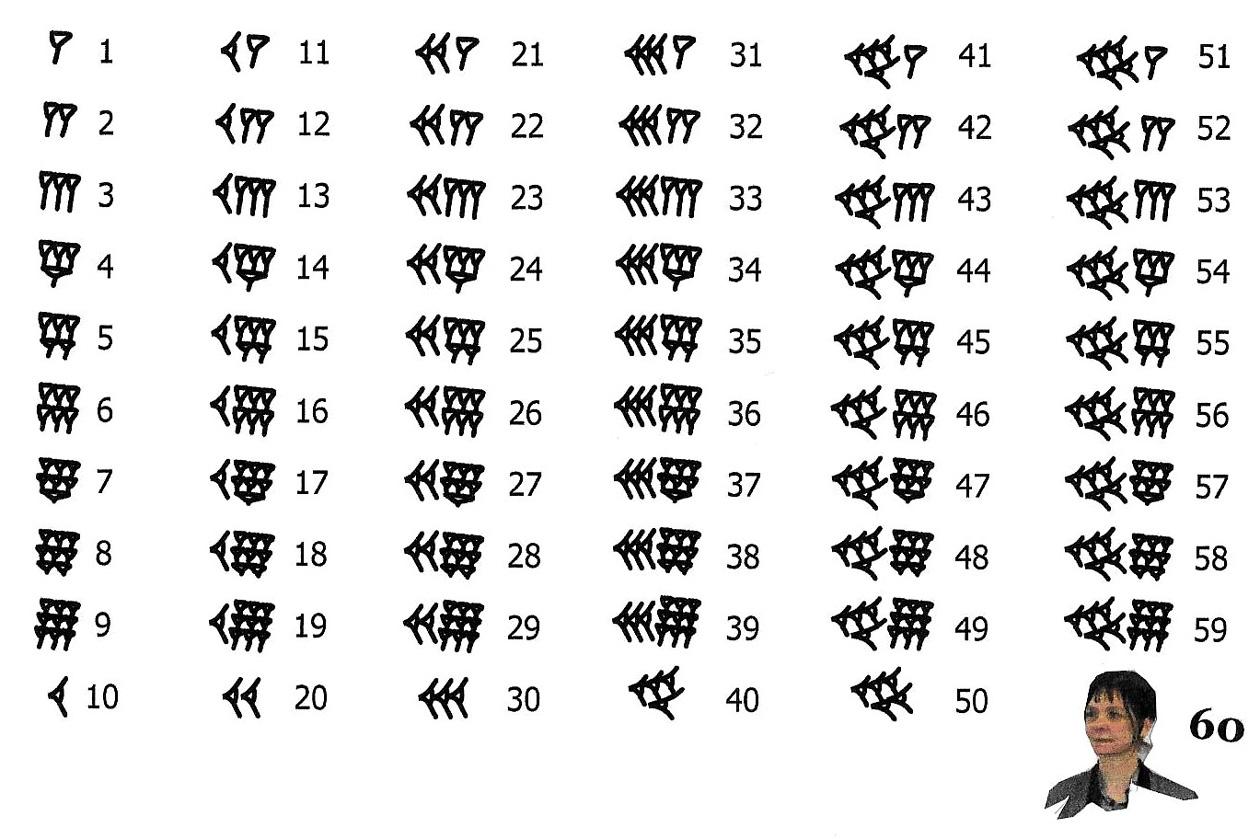
Geraldine Monk: SEXAGESIMAL PATRICIA! From Babylon and Geraldine with Love

Alan Halsey: Those acrobats A and Z put on a show for Patricia's 60th

Visit the Patricia Farrell Celebrations Hub Post (with links to all the rest) here.

Saturday, December 10, 2016

James Byrne: Conversational Seedcake (for Patricia)

Conversational seedcake
for Patricia, on her 60th Birthday


Guinness delivers at The Old Post Office. 
Half LION bisects Friday’s vermillion. 

Reverse-charge call to the red telephone.
Fragmentum (re)construes family’s sticky business.

On Bold Street, with a headpaint of canvas,
conversation diptychs us, separable from flesh.

A face to colour any Stanley. Pink anchor in vintage
green heels. Scuttles me claw to lobster.

Happy 40th to you, to you. Numerology is false alarm,
like the eyeball-juicy mass who count on salvation.

Think of the uppers with their Beaujolais noses,
they who would hologram every class plan and feed us

to the Warholian machine. Who cannot see you,
Zechsteinian lantern, bettering this light.

James Byrne


Editor, The Wolf magazine

International Editor, Arc Publications

James' new collection, Everything Broken Up Dances, is published in the United States by Tupelo: 

White Coins, James Byrne's poetry collection from Arc is available. http://www.arcpublications.co.uk/books/james-byrne-white-coins-533  

 Visit the Patricia Farrell Celebrations Hub Post (with links to all the rest) here.