Showing posts with label Bob Cobbing. Show all posts

Thursday, June 26, 2025

Dream Diary Thursday 26 June 1975

Thursday 26 June 1975 

Sort of bus. Deirdre Burton (the concrete poet) gets on. Goes to top [deck]. I’m trapped on the lower deck by something/somebody I don’t like. Finally when I get up, Bob Cobbing has finished performing.

            I fly across Horsham field on an umbrella. When I finally reach ground Nora is on a platform above me with friends, saying ‘I’m worried, I’m worried’ over and over again.

[Deirdre Burton was a concrete poet and lecturer in linguistics at UEA at the time. I did go to talk to her about sound poetry. There's almost a month's gap now until the next installment.] 

Tuesday, December 03, 2024

Remembering The Smallest Poetry Festival in the World 3rd December 1994

Saturday 3rd December 1994: The Smallest Poetry Festival in the World

It’s 30 years ago today that Patricia and I (with Stephen advertised as ‘domestic ambient noise’) held The Smallest Poetry Festival in the World at our tiny house in Lessingham Ave in Tooting. We were famed for holding ridiculously large parties in this confined space (on one occasion the patio doors burst), but in 1994 we wanted to hold a lengthy poetry reading as the focus for the party. The South Bank that year were holding what they were pleased to call The Biggest Poetry Festival in the World. Unable to compete, we decided to go the other way. Stephen drew a version of the big festival image for our image. Patricia silk-screened t-shirts and this remains the only ‘record’ of the event. (See below.) Nobody was photographed; nothing was audio or video recorded. We also assembled a booklet from pages provided by (most) of the participants (cover again being Stephen’s image in black and white). Copies of that are probably floating around. (I have one at least.)

Although the centrepoint of the festival was the Cobbing-Upton performance to end it, it is worth recalling and recording all the poets who read (note the paucity of women readers, typical of the era). My diary entry reads:

 ‘

The event was a great success, I feel, too much so: I fear there have been smaller.

Reading. Part 1: Me (reading The Lores book one), Harry Gilonis, Lawrence Upton, John Seed, speedy Miles Champion, Patricia Farrell, John Cayley, A.W. Kindness.

Part 2: Bob Cobbing, Johan DeWit, John Welch, Scott Thurston, Martha Kapos, Ian Robinson, Robert Vas Dias, Out to Lunch (Ben Watson).

Part 3: Gavin Selerie, , Robert Hampson, Ken Edwards, Adrian Clarke, Simon Smith, Ulli Freer, and – Lawrence Upton and Bob Cobbing, with the unforgettable mid-performance (anti)dedication, ‘This is for Andrew Duncan!’ who was there. (He’d written something negative about Bob.)

Went on until [w, x, y, z, and an unknown lady] were thrown out.

A good time was had by all, or most, I hope and suspect.

’

The Upton/Cobbing piece took up the warning about ‘domestic ambient noise’ (I think Stephen did try to MC the event at one point!) as the title of their collaboration, their first for some years. They'd fallen out and I forced them to talk to one another at a Writers Forum workshop. (I sent Bob upstairs where I knew Lawrence was alone - or the other way round, I can't remember - and when we all re-ascended after a refuelling break, they were chatting away!) Nobody knew at this point that this collaborative project would extend to 300 booklets! Commonly known later as DAN, it's one of the wonders of concrete and sound poetry.

‘The Smallest Poetry Festival in the World’, by the way, is slated to be the final line of my new work on Dante’s Divine Comedy.

(This is an image of two houses in Lessingham Avenue, possibly ours the one on the left.) 

Completely coincidentally the anthology Arcadian Rustbelt edited by Andrew Duncan and John Goodby has been published, and I will post about it when the book is on the publisher's website (Waterloo Press). (But until then check out the blog of that name on my Blogroll.) In response to my contributor's copies, I wrote to the editors something which is relevant to this post: 'I have a post coming up about the Smallest Poetry In the World (which Andrew, you attended). Such a gesture of rejection (the South Bank was holding the BIGGEST at the time) now seems of a piece with your chronology: December 3rd 1994 being pretty much the end of the 'period' of the book [1980-1994!] (Some of the contributors read.) It also coincides with my The Necessity of Poetics, which in its third part, reprints a number of hidden 'poetics pieces' (not critical texts) from the period (and a little after).' (On The Necessity see here: Pages: The Necessity of Poetics - out now!)

Here are some internal links to posts that contain references to some of the participants in the Festival. Presence or absence doesn’t constitute a value judgement, simply a check on what’s posted.

Part 1: Me (reading The Lores from Twentieth Century Blues) Pages: Robert Sheppard: thirty years since Twentieth Century Blues was begun, 20 since it ended, and future plans), Harry Gilonis, Pages: Ten Years of Pages: The Best Bits Lawrence Upton, Pages: Robert Sheppard: in memoriam Lawrence Upton John Seed, Pages: Robert Sheppard: Punctum, Punctuation and the Poetics of Space in John Seed’s Objectivism, Patricia Farrell: Pages: Patricia Farrell: Links to some visual work, John Cayley (right at the end:) Pages: Robert Sheppard: A History of the Other (final installment).

Part 2: Bob Cobbing, Pages: Robert Sheppard: My Bob Cobbing 'Archive',  Scott Thurston Pages: Scott Thurston's Inaugural Lecture: KINEPOETICS March 2024 (video + my introduction), Robert Vas Dias, Pages: Robert Sheppard: article in CLASP: late modernist poetry in London in the 1970s (my part in its downfall).

Part 3: Gavin Selerie, Pages: Remembering Gavin Selerie and his laugh, Robert Hampson, Pages: Meet the EUOIA Collaborators: Robert Hampson, Adrian Clarke Pages: Robert Sheppard: My review of Adrian Clarke's Austerity Measures on Stride plus further notes, thoughts and links, Ulli Freer Pages: Robert Sheppard: Far Language: Adhesive Hymns (Ulli Freer) , and – Lawrence Upton and Bob Cobbing’s Domestic Ambient Noise: Pages: Robert Sheppard: Bob Cobbing: Two Sequences.  

This post, also on John Seed, has a little about Lessingham Avenue and John’s poem written after another of our famous parties: Pages: Robert Sheppard: John Seed: England’s derelict archive circa 1990. At the end of the post.  

Tuesday, October 01, 2024

Details of Readings this Autumn (set lists and comments)

Readings this Autumn (set lists and comments)

During this autumn I have had, to my delight, six readings to perform, some full readings, others short contributions to larger events. (There were some earlier in the year too, bucking the post-Covid trend of fewer reading opportunities, though two of them were online, as was one earlier this year.) They are all quite different, with different work read, often from different books, or from no books (yet)! Sometimes with, or alongside Patricia Farrell, sometimes not.

As they 'passed', I converted my announcements of them on this post into 'set lists' and commentaries. I must admit it's rather taken up more of my time preparing than I expected, and time away from writing. I'm sure Taylor Swift thought the same about the Eras Tour!  

*

1. Liverpool 24th October 2024: for Liverpool Poetry Space hosted by The Open Eye Gallery (on the dockside). 

I read with Mandy Coe (I don't know how I haven't met her before) and Maria Isakova-Bennett (who I have seen develop as a poet over the the last decade into a fine writer who always keeps the analogy of her visual art practice to the fore). Eleanor Rees was ill, unfortunately. So we had to add an extra 5 minutes to our readings. 

I decided to launch British Standards (the first of two launches) and I read a bunch of Wordsworth 'transpositions', including this one:


. Then my version of Southey's 'Poem on the Slave Trade', which led, the slavery theme continuing, onto my versions of Mary Robinson, a few verses of 'Tabitha and Thunderer' (there was to be more of her at my November 12th London reading, see below); a bunch of John Clare; and the final final poem of the book, 'After Shelley' as I called it, slightly shortening its title.  

This seemed to go down well. Lots of laughter I was informed by some friends in the sizeable audience. However, the set was designed for sudden swings of mood, so that we were suddenly thinking about slavery or Covid deaths amid the capering of Bo, as the hubris of Brexit hit the mismanagement of public health during the Pandemic.  


2. London: Friday, 25th October 2024 

The Cock Tavern, 23 Phoenix Rd, London NW1


Friday night, it was great to see so many old friends and comrades of our London days, all still thrusting and vital. Here's a brief itinerary of the evening, mainly launches. 


Part One


Bob Cobbing/Robert Sheppard, Collaborations (Veer/Writers Forum): performed by Patricia Farrell and me. We read 'Blatent Blather/Virulent Whoops', my 2001 collaboration with Cobbing. Thanks to Patricia for all the rehearsing and hoarse throats!  


Karen MacCormack, Quaquaversal (Veer): a fascinating unwriting of an earlier text into non-existent words, which were then discovered (mostly) to mean something in other languages. 

Steve McCaffery, Alice through the Working Class (Blazevox) (What a great title!) A wonderful or outwonderlandish version of Alice.

Break


Ulli Freer, Transition Pulse (Veer): Ulli pulsed this way through this new text, somewhat bucolic in places, excellent as ever.


Adrian Clarke, Walhalla (Veer): a few sequences from this excellent new book, plus a new sequence inspired by Bob Cobbing's decaying photocopier, now in Hugh Metcalfe's garden! This was in part an introduction to another 2 books relaunched that evening: Bob Cobbing, the five vowels & Third ABC in Sound (Veer/Writers Forum), two of his major works back in print. Get on the Veer website and find all these books (and more): Veer Books. (I wrote about the 'Third ABC' some 19 years ago on these pages: here: Pages: Robert Sheppard: Bob Cobbing: Two Sequences )

Although my Collaborations with Bob Cobbing was published by Veer in 2021, there wasn’t a launch (Covid, again) of this splendid box of pamphlets, reprints of Codes and Diodes and Blatent Blather/Virulent Whoops from 1991 and 2001, respectively. On the box: Pages: COLLABORATIONS (Bob Cobbing - Robert Sheppard) published in a box by Veer - out now. There is an earlier performance on video here (somewhere in this Cobbing tribute: OR 35 | Bob Cobbing: a celebration | Videos | 


Here's a very short video of me demonstrating how the 'box' of Collaborations is constituted. (The new Third ABC of Sound is similarly in a box.)  

Saturday morning, bag pretty heavy with all the new Veer publications, Patricia and I walked to the Wallace Collection. They have 3 portraits of Mary Robinson:


Romney, Reynolds and Gainsborough (the latter a huge canvas). This was connected to my editing of her work in Mary Robinson Selected Poems and my transposing of it in British Standards. Other specialities: a wonderful Poussin, two Rembrandts, some Boningtons, and an Icelandic drinking horn! Back to Euston... Liverpool ... home.

3. Wednesday November 6th: 7.30. An ONLINE reading from Aquifer Books

I read one part of my finely-designed Aquifer volume, Doubly Stolen Fire, introducing 'Malcolm Lowry's Land' with these words: ‘My book, Doubly Stolen Fire, which I’m so pleased Lyndon has published, is an exploration of various modes of authorship: actual and fictional. The last part, though, collects my contributions to the Liverpool celebrations of the Merseyside born author of Under the Volcano, Malcolm Lowry, [like this one 2024: Pages: The Lowry Lounge 2024 - an account and links] and I’m going to read most of one of these. It tracks a 1979 notebook which itself tracks my visit to Lowry’s grave in Sussex. [Holds it up]. It mimics Lowry’s own writerly methods as it re-narrates the notes for a long-abandoned poem.’

Details of the whole book: Pages: Reviews of my book DOUBLY STOLEN FIRE (robertsheppard.blogspot.com)

This Zoom reading was of new and forthcoming collections by Sarah Crewe, Mélisande Fitzsimons, Allen Fisher as well as myself. More info at: Glasfryn Project. It was good to hear the other readers, and I had Sarah's book to hand, to follow her reading. 


4. London 12th November 2024: 7.30: A Shearsman launch of 4 new Shearsman books. 

This reading took place at the Swedenborg Hall, 20/21 Bloomsbury Way, London WC1A 2TH, hosted by Tony Frazer, publisher of Shearsman Books. The building has a painting of the religious sage painted by P. Louthenburg (the subject of one of Mary Robinson's finer earlier poems, and the designer of 'light shows' from when she was an actor). I noticed too late to tell the audience!

I read from British Standards but pointed to The Necessity of Poetics AND to my edition of the Selected Poems of Mary Robinson.

My notes and set list

I’m very greedy – but very grateful (to Tony) for Shearsman publishing three books this year. I will only read from one of them, but I’ll sketch links between them. The Necessity of Poetics, which collects various works on, of, about and around ‘poetics’ as a speculative and anticipatory writerly discourse, also contains a treatise on poetic rhythm, an inaugural lecture, notes on the meaning of form, and some ancient documents which stretch back to the 1980s and 90s, but it comes up to date with a couple of pieces on the poetics of the book I will be reading from, British Standards.

British Standards, book three of ‘The English Strain’ project, was completed in September 2022. Brexit was originally the continuing theme of the project, but in early 2020 the Pandemic intervened to alter its trajectory, although the government's enthusiasm for the former contributed to its tardiness in the face of the latter, as celebratory hubris collided with the failure of Johnson’s government (he’s called Bo in my poems) to take sensible public health measures. Formally speaking, these are transpositions of sonnets of the Romantic period (Wordsworth, Keats and Shelley, but also Mary Robinson and Hartley Coleridge, and others, as you’ll hear), and I’m paying faithless homage to it.

I read three 'Wordsworth' poems. This one below (shown here from the pages of Shearsman magazine), and on video.


Then 'O Friend I know not which way I must look'. (See the other video above for a reading of it.) Followed by 'Vanguard of Liberty, Ye Men of Kent.' 

Then a shift to Robert Southey and his 'Poem on the Slave Trade'.

After that, I said (more or less): 

The third book launching today is my edition of the poems of Mary Robinson, which might seem a surprising departure for me, until it’s realised that I first came to her work through writing a transposition of her 1796 sonnet sequence ‘Sappho and Phaon’, an extraordinary work that (even at the time) was read as analogical of her relationship with Banastre Tarleton, Liverpool slaver referenced in the street name of the previous poem. I call them Tabitha and Thunderer, but Thunderer seems to become Boris Johnson at several points. Mary called herself ‘The English Sappho’ on occasions. My sequence is a corona, 14 sonnets, with a volta at which I’ll pause, to change the hapless narrative, to allow her, in Brexit-speak, to ‘take back control’. Sappho is hetereosexual in Ovid’s version of her life that Mary followed, though she has a troupe of women following her: they become the weather girls, registry girls and Mamas of this poem, written just after the first lockdown, summer 2020. Here is a video of me reading one of the sonnet-verses, the one which refers to Mary-Tabitha-Sappho having read Coleridge's 'Kubla Khan' long before it was published.


I finished with one of the 'final' final poems to the book: 'After Shelley, After Sheppard, which I wrote about when I wrote it, here: Pages: Robert Sheppard: A final final poem for British Standards! With pictures of some of the poem's weird contents.


Details of all three books: Pages: British Standards published by Shearsman - out now (robertsheppard.blogspot.com) and Pages: Selecting for a Selected: The Poems of Mary Robinson 1 (robertsheppard.blogspot.com).

Details of two of the books: Pages: British Standards and The Necessity of Poetics published simultaneously (robertsheppard.blogspot.com)


I was reading with Elaine Randell, which was very exciting. I'm never ceased to be moved by her accounts of working with children, AND by her affective lyricism. She was launching her Collected Poems. 

It was good to see some old friends, including those not associated with the poetry world.

5. Patricia and I had a very small part in From the Grooves of Vinyl at the Bluecoat on Saturday 16th November 2024 (Nobody said, but 15th November was Phil's birthday!)

As a tribute to Philip Jeck who died in 2022, the Bluecoat presented an evening of film and performance in celebration of the life and work of this remarkable composer and artist who wrought exquisite sounds from the worn grooves of old records. [I'm quoting the copy for the evening, and amending it.] An internationally renowned pioneer of experimental ‘turntablism’, he brought old record players and vinyl together with electronic effects to create expansive sonic landscapes.

Throughout his career Philip worked with dance and theatre makers, visual artists and musicians and composers across the musical spectrum and toured internationally. He was also a lover of poetry (he came to a lot of the readings I organised or gave.) Over three decades, his work was released and promoted by the experimental electronic music label, Touch.

Philip also had a long association with the Bluecoat and this special tribute included a screening of an excellent film by Gina Czarnecki of him performing in the intimate surroundings of a friend’s kitchen. (This was fascinating, not least of all because I was there, and have my own memories of that performance.)

There was also the launch of a double CD tribute to Philip collated by Touch, and performances from experimental composers Chandra Shukla (US), excellent sitar and electronics work, Benjamin Duvall and Andrew Hunt (Liverpool), who (Ben told me) have a complete album of work improvised with Phil in preparation. (They are half of the band Ex-Easter Island Head. Poets Patricia Farrell and Robert Sheppard briefly read (although Patricia ‘appeared’ via tape). The bar was open till 11pm, with a disco-banger DJ set from Bryan Biggs (and then off with Bryan to the Grapes for a last two).

Click here for further information on Touch, its work with Philip and his releases.

This was a moving evening, particularly when Bryan and Mary Prestidge introduced the event, and later, when Jon Wozencroft and Mike Harding from Touch introduced the new album (which I have bought and am much looking forward to). The music was inspiring, whether on film, tape or live. 

Patricia’s poem was written especially for the event, and was untitled.

I introduced my piece, ‘Spectres of Breath’ with something like these words:

‘I’m going to read a text I wrote for Phil’s birthday in 2012. It comes out of a conversation we had about writing about music, music journalism in particular. About that time I was subscribing to The Wire – and I was particularly taken by the short reviews which tried to describe the nature and quality of certain musics in very few words. Partly mimicking this facility, possibly purloining the odd phrase here and there, and condensing descriptions and coining the odd neologism, I proceeded to compose a compilation album in words. It is not – even in the passage that mentions ‘styluses scraped’ – an attempt to describe Phil’s own music. After all it is a ‘compilation’, though the imaginary musicians of this imagined music are unnamed. As we reach side B (how could this not be a vinyl record?) the descriptions become more synaesthetic, relating to more senses than sound. I’m not being entirely serious, which is fitting since Phil was the funniest man I’ve ever known, as well as a musical genius.’

It seemed to go down well, particularly with the two guys from Touch, for whom such language is a constant torture! The poem may be read here, after my memoir of Philip: Pages: Philip Jeck 2022. When I said ‘genius’ (Bryan also used the word) I mean ‘genius’. 

6: 2nd December : Online Reading by Paul Robert Mullen with Guests:


a landmark celebration of Paul Robert Mullen’s work as we launch it’s all come down to this, a powerful retrospective spanning 25 years of poetry and prose from one of contemporary and independent literature’s most distinctive voices. This special online event will bring together readers, writers, and fans for an unforgettable evening of live readings, conversation, and community.

Hosted by: Alan Parry, Editor-in-Chief, The Broken Spine

  • Readings by Paul Robert Mullen: Experience selected works from it’s all come down to this as Paul takes us through his journey from 1999 to 2024, offering insights and reflections on his evolution as a poet. This he did through short poems and a long extract from a long poem 'Vinyl Redux'. 
  • Open Mic with Special Guests: specially invited readers offered an intimate chance to hear voices that resonate with Paul’s own approach to life and poetry. In my case, I decided (as I did when I last read 'with' Paul, pre-Covid, see here: Pages: Robert Sheppard: The Broken Spine reading, Southport (set list)) to read poems about music (possibly amassing towards a collection), and (I'm certain) influenced by his 'Vinyl Redux'. I read a few sections from 'Tone Poem: Starlight and Stardust', the sections relating to recent albums by Fred Hirsch, James Brandon Lewis, Brad Mehldau, Donny McCaslin, Shakti, and Miho Hazama's m_unit.    

A fine ending to a mini-tour!

Locating Robert Sheppard: email: robertsheppard39@gmail.com; website: www.robertsheppard.weebly.com NEW, note: follow me on Bluesky not on X , at https://bsky.app/profile/robertsheppard.bsky.social

Thursday, September 22, 2022

POEMS IN PROGRESS : a new book of poets' drafts from the British Library (featuring Lee Harwood and Bob Cobbing)

Published today! Alexandra Ault and Larua Walker: Poems in Progress: Drafts from Master Poets, London: British Library, 2002: Bookshop - British Library Online Shop (bl.uk) 

See here: https://shop.bl.uk/collections/bookshop
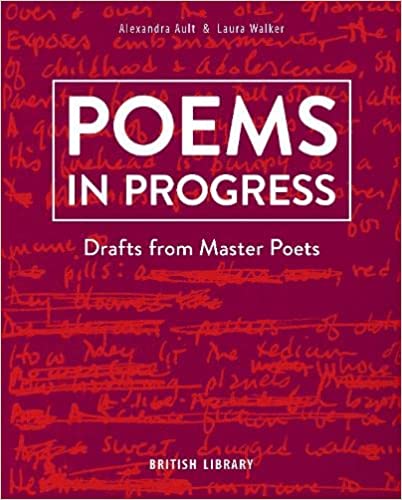


This is an interesting book, which I have received as the literary executor of Lee Harwood’s estate (he’s in it; more of that later). The British Library (for text, sound and video) are undergoing exciting developments, which will involve all kinds of archives going online. They have a copy of my tape cassette magazine 1983 (from the mid-1970s), and have digitalised some of the contents of number two, a whole side of Lee Harwood and even an early multi-tracked studio piece by me, ‘The Lover’. (Yes, I did know how to edit tape back then.) This is good, but it is a shame that nobody can locate the Master Tapes for 1983 which I donated to the National Sound Archive years ago, but are not in the collection now. (They also have a recording of the Allen Fisher Poetry Buzz, which I write about here, and Patricia and I are both on that:  https://robertsheppard.blogspot.com/2005/07/poetry-buzz-bus-ride-withand-for-allen.html. ) And loads of other stuff!

For now, we have this book. It is fascinating, although not all of the texts are drafts, and are in fact manuscript copies or special editions. Of course, there have been excellent draft-editions before now, notably of Eliot’s The Waste Land. There are ancient texts as well as a few contemporary poets, from Hafiz to Rebecca Goss. The contemporaries (while not always to my taste) show their workings-out in public, which is generous. Manuscript copies of already published poems don’t excite much, but two glimpses of Coleridge’s notebooks, Blake’s scribbles, war poets’ drafts, Eliot’s letters, Sappho’s papyrus, EBB’s sonnets, Lewis Carroll’s original ‘Alice’ book with images, Gascoyne’s translation of Jean Follain, Andrew Salkey’s typescript for a printer, etc, etc, are fascinating enough to make this an entertaining book.

 The two interesting grabs (from my point of view) from the British Library itself concerns Lee Harwood and Bob Cobbing.

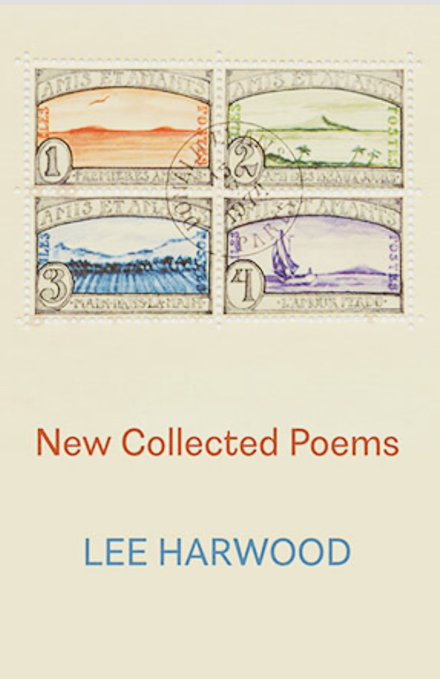
 Lee’s collaboration with John Ashbery is going to appear in the New Collected Poems that Kelvin Corcoran and I are currently editing for Shearsman. (See here: https://robertsheppard.blogspot.com/2022/01/lee-harwood-4-poems-and-note-on-them-in.html

This is it, as it will appear in our book. A taster:


Train poem – A collaboration


dog daisies poppies metal knitting

needles snail eyes backward

and then discord the records-file

prehensile tankers and block

which way the stage perimeter OK

block again greenhill rears upward mutinous

‘back!’ So until January

telegraphs twitching north to so and so

and a handkerchief slowly chopping heaves

‘ne nous fachons pas’ so that the houses

laughing in your eyes nearer the bang

let a forest caress unlace the instant

lovecog – did you really understand what I meant by that?

the farmyard in an uproar of freed peasants’ cough

            drops ah the old dogs at the window

but my love for you outgrew the shed

tools in disorderly heaps and wasps

a beam sagging into twisted visions of nowhere

and at this the small engine appeared from the siding

to inspect the phantoms and slowly disappear. 


What is different about the draft manuscript version is that we can see who wrote what. (Maybe that wasn’t the intention, because Lee doesn’t even tell us who the collaborator is! Perhaps as in some of my collaborations (about which I write here: https://robertsheppard.blogspot.com/2020/01/robert-sheppard-thoughts-on.html ), Harwood and Ashbery wanted to become the third author without differentiation, or perhaps they didn’t. Indeed, also printed here is a typescript of the poem, with Ashbery's contributions underlined. But to see the manuscript you will have to obtain the book, I’m afraid. The spacing is quite different from the published version. Neither Mr Corcoran nor myself can tell you what a ’lovecog’ is, but I can reveal that that phrase is in Lee’s handwriting!

The Bob Cobbing contribution is his 1951 notebook ‘Two Experiments’, and one is a word list for the now familiar (and oft performed) ‘WORM’, the other a contemporary word-list poem-draft, ‘Snow’. You can hear the eventual sound poem ‘Worm’ from about ten years later on the video below. There follows a fair description of Cobbing’s procedures, and we read the exciting information that the BL has over 300 reel-to-reel recordings of his work (as well as other recordings, such as my edition of 1983 number two which I speak of above). There is a later visual text printed too, which is odd because 'WORM' also exists as a visual poem (again, Cobbing waited for 10 years until duplicator technology enabled overprinting).    

My collaborations with Cobbing are now published by Veer. See here: Pages: COLLABORATIONS (Bob Cobbing - Robert Sheppard) published in a box by Veer - out now.


Thinking of recordings, I have a cassette recording of Verse and Perverse and Bob and I did record a video together of Blatant Blather/ Virulent Whoops, the two texts in Collaborations. That might be in the collection. The cassette tape is destined for my archive, I suppose, unless it gets lost.

 All of the catalogues of the BL collections may be consulted online.

The BL also archives this blog. 

The New Collected Poems of Lee Harwood is NOW available. HERE:  Lee Harwood - New Collected Poems (shearsman.com)

Thursday, September 02, 2021

COLLABORATIONS (Bob Cobbing - Robert Sheppard) published in a box by Veer - out now

Out now from Veer. Two booklets and a card introduction in a box! HERE


“Reprints of two collaborations between sympathetic but rather different disturbers of the poetic peace. As detailed in Sheppard’s illuminating Introduction, the first – Codes and Diodes - started with his poem for Cobbing’s 67th birthday; after another a year later Cobbing’s reworked response followed within days. Occasional exchanges continued till Christmas 1990 in the form of “flick-book ekphrasis”, cut-up and collage. - Sheppard:

Early in the alphabet the
Surprises began where the
Unknown linguist housed Francophone
Rattles
In the sewer music

Cobbing: Elongated words flying furred against Francophone forms. “Juxi! Splelp! Ajax out!” These imps stage the dark world of the sewer.

Ten years on, over three months, a second, more intensive set of exchanges – Blatent Blather/Virulent Whoops - was effected by post; a loose three-line form accommodated homophonic strings, associative leaps, puns, pure sound and even plain statement; printed and handwritten text, diagram, score and image being interrupted by a shaggy dog story of meetings repeatedly foiled by missed calls. From

m(over) –

as(to)nish

(you)ngsters

invention takes off apparently unstoppably through to an enigmatic conclusion '(end)uring freedom / in / (fin)ite j(us)tice'. Most of the personal pronouns appear in brackets like parts of mysterious encrypted messages still afloat on the relentless swirls of language."
                                                                    - Adrian Clarke

Veer Publications 093 & 094 [ISBN: 978-1-911567-24-0, 978-1-911567-25-7 & 978-1-911567-26-4 (boxed set)] 205mms x 285mms size. 34 & 34 & 4 pages. 2021. £13.00 (+ p&p).

 Go here to purchase and read more: Bob Cobbing - Robert Sheppard - Collaborations - Veer Books

 You may see me demonstrating how the box opens and the books spill out here!

The box format is appropriate to the fact that the first text in Codes and Diodes was also an introduction to Cobbing huge box publication Processual, one of Cobbing’s most important works. We just carried on from there. Here's one of my poems from that book, 'Verse and Perverse are Both Verses'. 


As I write of the second pamphlet here, in the introductory three page essay included with this publication:

My second co-authored piece with Cobbing, Blatent Blather/Virulent Whoops, conceived as a whole from the beginning, unlike its predecessor, falls into [the category of to and froing collaboration] (though falling into any category at all was clearly something that we were intending to avoid). The exchanges were conducted ‘to and fro’, via the post, between July and October 2001. I remember that Bob suggested that it was about time we wrote another collaboration at some point, and we must have discussed it at one of our still quite frequent meetings, even though I was living in Liverpool by the turn of the century. We established only one rule: we would each write 3 lines (or groups of 3 lines), then post the results to the other for response and continuation. One working title was ‘Over to You’.

A video of Patricia Farrell and I reading a revival of the text at The Other Room is visible on The Other Room website. (See video here: https://otherroom.org/videos/or-35-bob-cobbing-a-celebration/) 


I write about Cobbing a number of times on this blog; see here:

https://robertsheppard.blogspot.com/2015/05/bob-cobbings-abc-in-sound-republished.html

and here: 

https://robertsheppard.blogspot.com/2016/09/robert-sheppard-my-bob-cobbing-archive.html


Soon after finishing Blatant Blather/Virulent Whoops I found myself with the sad task of writing Bob’s obituary for The Guardian (which may be read here: https://www.theguardian.com/news/2002/oct/07/guardianobituaries.booksobituaries

I also write about collaboration in general (see here

https://robertsheppard.blogspot.com/2020/01/robert-sheppard-thughts-on.html

My previous prose book from Veer, Unfinish, my be read about and bought here:

https://robertsheppard.blogspot.com/2016/03/robert-sheppard-new-book-out-unfinish.html


Wednesday, January 29, 2020

Solo Thoughts on Collaboration 4: Literary Collaboration part one

The first three parts of these posts may be accessed from this post here:https://robertsheppard.blogspot.com/2020/01/robert-sheppard-thughts-on.html


I want to finally get round to defining literary collaboration as the co-creation of a literary work or works by two or more writers by whatever method. And I want to begin by exploring the instances where I have adopted this possibly large range of methods. In other words, where there is no other medium involved (music, dance, visual art practices), although there are elements of vocal performance involved now and again. As with other parts of this enquiry, I shall be considering the activities on the ‘Collaboration’ page of my website, which I believe is comprehensive. (I update it each summer, here.) They fall into three categories: early literary collaborations, ones deriving from the ‘Enemies’ project and its offshoots, and the EUIOA project resulting in Twitters for a Lark. Later posts will cover the last two areas: if you want to read those use the link above.


With Bob Cobbing I made two collaborations. On both occasions Bob wanted the text to be … well, text. Not to be sound or visual poetry. Possibly he thought I was incapable of producing such work (he was right) or he wanted to do what he seldom did in later years: produce a purely lexical text. 
First there was Codes and Diodes (Writers Forum 1991), a processual piece using the text and left-overs from my poetic introduction to Processual. (That may be read here: https://robertsheppard.blogspot.com/2014/09/robert-sheppard-micropathology-of-sign.html )

I literally gave him the scraps of paper in a bag and he made the extraordinary opening text, out of it. The following texts are produced from this ‘fixed’ vocabulary, which of course is not the vocabulary of the introduction. They were the parts that were used! We took turns about 4 times.

Then, a year before Cobbing’s death, we worked on Blatent Blather/ Virulent Whoops, a text written between July and October 2001, whose text may be read
here. A video of Patricia Farrell and I reading a revival of the text at The Other Room is visible on The Other Room website. (See video here: https://otherroom.org/videos/or-35-bob-cobbing-a-celebration/) Written via the post (other collaborations have involved email) we took turns to write however many three line stanzas we desired. It somewhat scrambles a reader’s sense of who wrote what. That’s something I think is quite important, so that contributions can’t be assigned, sourced, and a text begins to stand on its own, as though authored by a single, though plural entity. Dialogue becomes collaboration. In terms of content, it picked up themes or motifs, e.g. names of rivers, kinds of animal, etc. (I suspect Bob had books of facts and word lists to work from.)
[NB 2021: These two collaborations are now available together, from Veer: see Pages: COLLABORATIONS (Bob Cobbing - Robert Sheppard) published in a box by Veer - out now ]

Scott Thurston

In contrast, the poems emphatically lyrical, with Scott Thurston I produced Turns (published by Ship of Fools/The Radiator, 2003). This was a slow to-and fro-ing collaboration undertaken over several years, one poem each. It begins with ‘The Blickling Hall Poem’, which I wrote in 1980 (when Scott was 7!
‘The Blickling Hall Poem’ may be read Here. ), and decades later Scott responded to it with a single lyric poem. And so on, taking, as the title reminds us, turns. Then after 2003 there was a long gap, but the poem Scott wrote for the book he edited, An Educated Desire, which appeared (literally) on my 60th birthday in 2015, seems another ‘turn’. I’ve lazily said I’ll write a response to that and ‘Turns’ will then be started again. Though if Scott waits another 12 years that’s going to be a long wait. It’s clear who wrote what poem, although it doesn't say so. It is self-consciously a dialogue. Mind-bendingly slow. (News just in 31 January 2020: I've jut received a request from an editor to include 'The Blickling Hall Poem' in an anthology of 'country house' poems! Interestingly, the editor found the poem on this blog. Kevin Gardner and John Greening edit this  anthology Hollow Palaces. Read about that here, and watch me read the poem on video: Pages: Robert Sheppard: The Blickling Hall Poem (re: History or Sleep Selected Poems) .)  

With Rupert Loydell, our book Risk Assessment (Damaged Goods, 2006) resulted from a fast email exchange. I still have copies available free. We adopted a method (not saying what!) that means you can’t discern who wrote what. Re-reading them, I can’t. Here’s a few still online:


http://www.greatworks.org.uk/poems/ra1.html

http://www.greatworks.org.uk/poems/ra2.html

http://www.greatworks.org.uk/poems/ra3.html

http://www.greatworks.org.uk/poems/ra4.html

http://www.greatworks.org.uk/poems/ra5.html


http://freeversethejournal.org/issue-8-summer-2005-rupert-loydell-and-robert-sheppard/


https://exultationsanddifficulties.blogspot.com/2005/08/from-risk-assessment.html


I hadn’t realized so much of it was online. I hope some of you stop to read them.


Rupert Loydell


Rupert Loydell I regard as one of the two Mr Collaborations. Rupert has undertaken a lot of collaborative writing and art projects, and his creativity seems to bounce off of his collaborative encounters. I think I agree, although my own collaborative work (until the EUOIA) was sporadic, although writing these posts, I’m discovering that I’ve collaborated far more frequently and variously than I would have imagined. It breaks up the monotony of solo production, throws one’s imagination into the pit of somebody else’s, with whom you will, must, interact. You can change and they can too. Something unforeseen (though not necessarily unplanned) is produced. Something neither could have produced on his or her own. Possibly something in a third voice.