See here for the resultant set list and account of the event: Pages: My reading at the English Futures Saturday 9th July 2022 (set list) (robertsheppard.blogspot.com)
Monday, June 06, 2022
Monday, May 16, 2022
My transposition of a sonnet by John Clare, from British Standards, is published on Beir Bua
I’m pleased to say another poem from British Standards, a ‘transposition’ of the poems of John Clare, the first of that set to appear, as text, I think, is published in Beir Bua.
here: I love to see the old heath’s withered brake by Robert Sheppard – Beir Bua Press
Thanks to the noble editors involved. And you can check out the rest of the contents: journal – Beir Bua Press
Unthreading John Clare’s poems once or twice turned me into a bona fide animal poet (as the lockdown turned me, and everyone, into a bird watcher (and listener: the (possible) song thrush that appeared at 4.00 each afternoon finds his or her way into another Clare transposition, as do more common blackbirds, into another, with their ‘chup-chup’!)).
Here I am with a ‘flash of yellow-green’ in my borrowed hat reading the poem I love to see the old heath’s withered brake (or its draft) on the day I wrote it, 16th December 2020, looking daft for my draft, as it were:
It was my habit (ritual is a better word) to make one
of these little videos and post them on this blog temporarily for a few days to
signal the progression of the work. (And, it strikes me now, it was a way of
dealing with the lack of public poetry readings during that period, though I would have done it anyway.)
On the fallen ash stump, a
robin
poses, without sharp
trill, all
life in its eye –
out of the
generation that
love-struck
Audubon
sketched
here, snatched
in a line’s
quick fling.
Here’s a different robin (I think, though it could be the one he sketched at Greenbank) painted by Audubon:
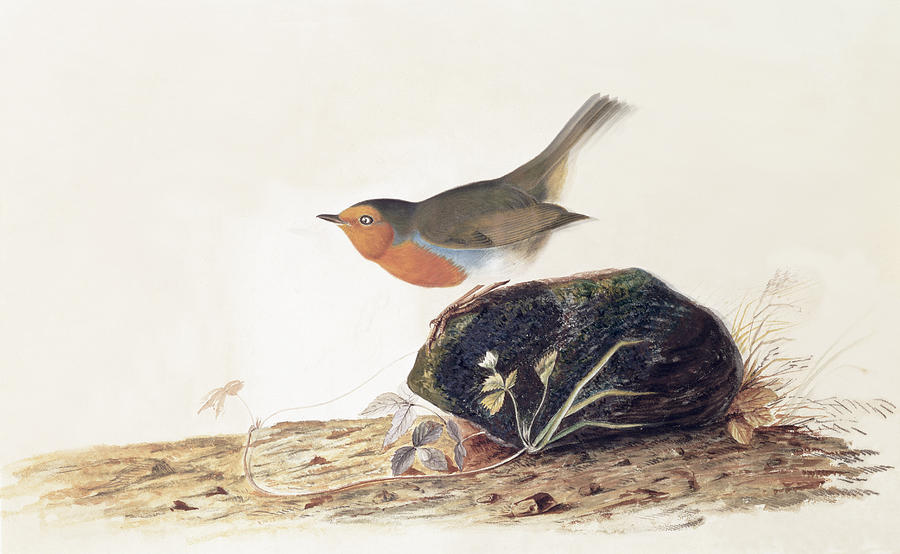
Although the Victoria Gallery was closed to the public when I wrote the poem, I remembered seeing in an exhibition there that Audubon had stayed in Greenbank House, which is just a few minutes’ walk from where we live, with the Rathbone family, and that he was love sick while there, AND that he had drawn a robin. I couldn’t re-visit the gallery, but I could have found it all online here (but used my memory of earlier visits instead):
Audubon Gallery - Victoria Gallery & Museum - University of Liverpool
The story of Audubon in Liverpool is told here:
John James Audubon - Victoria Gallery & Museum - University of Liverpool
(He’d also turned up in my reading of Denise Gigante’s The Keats Brothers. Cambridge, London: Harvard University Press, 2011, where he diddles George Keats out of all the money he and brother John had tried to extract from their ‘benefactor’. So he fluttered across two of my poets in British Standards).

It
modifies the whole
Machine
of being: this
Is
not unpolitical.
(Neither is my poem, I'd like to hint.) I have written about Middleton a number of times on this blog, and off it too, and this link will take you to one of those with spiders’ web links to other posts: Pages: Christopher Middleton (1926-2015) i.m. (robertsheppard.blogspot.com). Here’s my take on his poetics, on ‘measuring experience’: Pages: Robert Sheppard: Inaugural Lecture PART 2: Measuring Experience (on Christopher Middleton).
‘British Standards’ is also Book Three of a longer project of refunctioning traditional English sonnets, called ‘The English Strain’.

Book One of ‘The English Strain’, and Book Two, Bad Idea, are reviewed here: Review - "The English Strain" and "Bad Idea" by Robert Sheppard | Litter (littermagazine.com)

Sunday, May 01, 2022
Robert Sheppard: My essay on Ern Malley and Fictional Poets appears in International Times
You may now read my reflective essay on the Ern Malley ‘affair’, or rather on ‘our’ re-enactment of it in Liverpool in 2018, which I originally wrote about here:
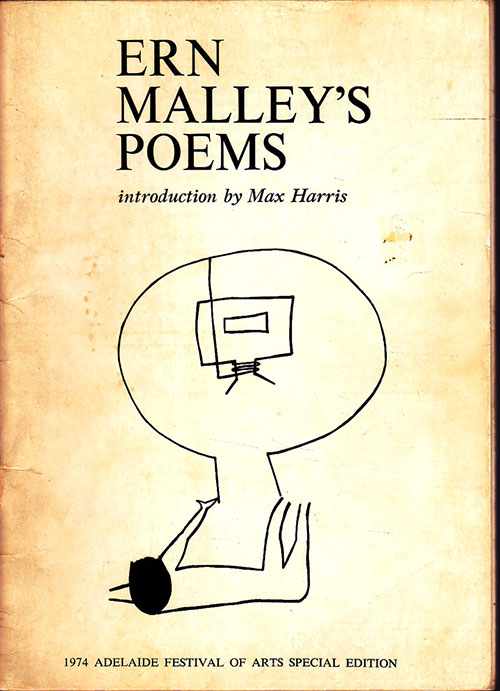
The new essay appears on International Times, and I thank Rupert Loydell (as so often) for selecting this piece, choosing some suitable illustrations, and for IT for following through with publication. It's called
Doubly Stolen Fire in his Prosthetic Voice: The Ern Malley Hoax and Fictional Poems in Liverpool:
https://internationaltimes.it/the-ern-malley-hoax/
Although I say it is on the Ern Malley affair, it doesn’t describe that (it’s an oft and well told story, which I summarise in a paragraph, but there’s loads online about it). It’s more a reflection on the nature of hoaxes, as carried out in this case, and as theorized by Charles Bernstein, AND a reflection on the difference between a hoax and a fictional poet. Of course, I’m thinking of my own use of fictional poets, and I refer to that. (Consult these webpages: Rene Van Valckenborch and the European Union of Imaginary Poets - Robert Sheppard (weebly.com) and European Union of Imaginary Authors (EUOIA) - Home (weebly.com)).
This essay comes from an assembling collection on the subject of authorship and ‘fictional poets’ and their mysterious hold (rather than hoax poets, with their sticky tricks to fit you up and empty you out). As Gerald Bruns says (and I’ve quoted this often): ‘A fictional poem would be a poem held in place less by literary history than by one of the categories that the logical world keeps in supply: conceptual models, possible worlds, speculative systems, hypothetical constructions in all their infinite variation.’
I hope you
enjoy this brief take on the issue. Then you may read my other, later,
reflections, which I have serialised on this blog, beginning, here: https://robertsheppard.blogspot.com/2021/10/a-fictional-poets-notebook-entry.html,
with a second series here: Pages:
Reflections on Fictional Poetry and Fictional Poets (1 and hubpost for the
sequence) (robertsheppard.blogspot.com).

The fruits
of my ‘fictional poet’ explorations are published as A Translated Man and
Twitters for a Lark, both accessible here: Sheppard,
Robert (shearsman.com) (along with other projects).

In that second book there appears a poem by 'Robert Sheppard' which supplies the title of my essay. It may be read in the book, of course, but is also available here: 'Robert Sheppard - Spring 15 (blazevox.org)
Saturday, April 23, 2022
Patricia Farrell: New work in International Times (and links and video)
Quite a large representational chunk has appeared from Patricia Farrell’s Rime in International Times, a work of visual and lexical poetry.
from Rime
From Rime – part one
From Crashed Anglia (Rime – part two)
From Coda:
Without Reason (Rime – part three)
More of
Coda appears online on Abandoned Playground here: Poems by Patricia
Farrell (theabandonedplayground.org)

Patricia Farrell is a poet and visual artist. Her most recent book publication is High Cut: My Model of No Criteria (Leafe Press, 2018). See here: https://robertsheppard.blogspot.com/2018/06/patricia-farrells-high-cut-my-model-of.html
Here are links to pages of her completely visual work, A Space Completely Filled with Matter https://robertsheppard.blogspot.com/2016/12/patricia-farrell-links-to-some-visual.html
which may
be purchased in whole from Veer, here: https://www.veerbooks.com/Patricia-Farrell-A-SPACE-COMPLETELY-FILLED-WITH-MATTER
Patricia Farrell reads a selection of her earlier work here:
https://www.youtube.com/watch?v=5pCqehHCwyk
And her
collaboration with Helen Tookey may be seen here: http://robertsheppard.blogspot.com/2015/06/patricia-farrell-storm-reading-helen.html
The last time we collaborated in public we did this:Pages: Robert Sheppard and Patricia: The Passionate Nymph'/The Impassive Shepherd' : European Poetry Festival, Manchester 2019 (set list)
Don’t forget to check out Patricia’s website: Patricia Farrell - Home (weebly.com).
Friday, April 08, 2022
If The English Strain is finished, what next? (Reflections and Loose Poetics)
It’s quite something to think that the project ‘The English Strain’ is finished. Reading my diaries through (a reading begun in lockdown, but not yet completed) I see that I was working on some poems based on Milton’s sonnets as early as 2011, and some of these found their way into The English Strain as ‘song-nets’ or ‘overdubs from Milton’. (This one: The Fugger of Wonderful Black Words by Robert Sheppard | Poetry at Sangam (sangamhouse.org) Others didn’t, but may well appear as ‘leftoverdubs’ at some point. This one, for example, ‘Synovial Joint's: from Overdubs | Stride magazine ) That means I spent as long on this ‘project’ (how did I ever adopt this term that I spent so much time trying to avoid throughout my Creative Writing teaching career?) as I did on Twentieth Century Blues. (See here: Pages: Robert Sheppard :Twentieth Century Blues out in paperback )That doesn’t mean (as it did in the case of C20 Blues) that that was the only project of the last ten years. Far from it. But ‘Flight Risk’ or Micro-Event Space, for example, only got mentioned as information, when published (as here: Pages: The Poem ‘Adversarial Stoppage’ from FLIGHT RISK is published in Mercurius (robertsheppard.blogspot.com) or finished (as here: Pages: Robert Sheppard's Micro Event Space is published by Red Ceilings Press NOW)
Posting the poems became, in this case, part of the writing of the poems, or at least, the ritual of the writing of the poems, as did the weekly videos, from the start of 2020, when I became able to add short films, short enough for these sonnet variations. (Like this one, one of the Mary Robinson sonnets, eventually a stanza in the poem 'Tabatha and Thunderer see the whole of it here: Pages: My 'Tabitha and Thunderer' is published in Blackbox Manifold (robertsheppard.blogspot.com).)

But of course that WASN'T the end at all. It nearly was, but one more poem revealed itself with the death of the Queen (did Bo kill her?) and the strange cargo cult reactions of the Great British Public. See here: Pages: Robert Sheppard: A final final poem for British Standards!
‘The English Strain’ is best described in posts for each of its books:
‘British Standards’, unpublished, is described here: https://robertsheppard.blogspot.com/2021/04/transpositions-of-hartley-coleridge-end.html where you will find links to other on and off line appearances of parts of the book (and some other videos). I transpose sonnets by Wordsworth, Mary Robinson, Shelley, both male Coleridges, John Clare (as in the video), Hopkins, Arthur Symons, and others, as well as Keats. ‘BS’ (ho ho) has now been ‘completed’ (I feel pretty confident to repeat) with this version of a Mickiewicz sonnet. (See here: https://robertsheppard.blogspot.com/2022/03/another-final-poem-of-english-strain.html )
That last sonnet, of course, pitches the work into another realm. As I was thinking, on Twitter, thinking how to address Graham Mort’s question/musing, ‘I've found the wanton destruction of human life and infrastructure in Ukraine almost overwhelming. Trying to bridge silence with utterance that doesn't seem merely self-serving or futile. How to respond? I wonder how that has been for other writers and artists?’ @grahammort. I tapped out this insufficient answer: ‘I found it impossible to continue my lampooning of Boris Johnson in British Standards, even though that puts me in the company of those withdrawing letters from the 1922 C'mittee. But I had to close it down with a nod to Mickiewiecz, one last poem: here: https://robertsheppard.blogspot.com/2022/03/another-final-poem-of-english-strain.html….’ @microbius.
Update July 2022: BUT NOW this poem has been also published in International Times, an appropriate venue for a finale of these political poems: ‘The final poem of British Standards, the third and final book of the ‘English Strain’ Project’ I announce before its subtitle: ‘Monitoring Adam Mickiewicz’ first Crimean Sonnet: The Ackerman Steppe’. Its actual title is ‘After-Shock’, the last of four ‘After’ poems at the end of the book.
Read it here: https://internationaltimes.it/aftershock/
I have other projects, mostly not mentioned on this platform, but only part of one of those has appeared here, the notes towards the third part of my ‘fictional poet project’, but that too is finished! It’s to be called Doubly Stolen Fire, I think. (See here: Pages: Reflections on Fictional Poetry and Fictional Poets (1 and hubpost for the sequence) (robertsheppard.blogspot.com) ) Weirdly that has something to say about Putin.
One is to write a book of poems about music (though the critical book on poetry and jazz will forever elude me: See here: Pages: Robert Sheppard: Poetry and Jazz and approaching Monk (Geraldine, not Thelonious) . This is partly to utilize the poems rescued from the elegant, indeed, lush, production of my ill-fated ‘book’ with Trev Eales, which I explain about here: Pages: Whatever happened to the book Charms and Glitter? (robertsheppard.blogspot.com) . But I’d want to add other already extant poems: my ‘Beefheart’ poem (see here: Pages: Robert Sheppard: reading at Doped in Stunned Mirages: poems in response to Captain Beefheart (set list) ), my poem for Philip Jeck (see here: Pages: Philip Jeck 2022 (robertsheppard.blogspot.com) ), a poem about Ray Charles 1964, and even the ‘leftoverdub’ I mention and link to above, 'Synovial Joints'. Of course, I’d like to write some more poems for it. A sequence on jazz saxophonists has been mooted in those diaries over the years (I mean decades, if I’m honest), but never achieved! Ekphrastic poems about music I’ve found difficult, though achieved in the one for the Beefheart weekend, and in the case of one for/about Frank Sinatra (that very odd poem even appeared in an anthology of poems all about Sinatra!).
Another possible project floats around a famous murder in Brighton, involving a night club owner who lent his pink Chevvy to Jeff Keen the filmmaker, the film Peeping Tom and involving Belle de Jour (both the film and the book). But I’ve not found a way in (yet).
Of course, I maintain my ‘Ark and Archive’ daily writing (which appears in, or results in, a lot of writings, in part or whole). This morning (just now) I wrote on into page 692 of this loose-leaf accumulation of continual lines. (‘Flight Risk’ comes almost entirely from it, as do my prose pieces ‘Weekend of Miracles’, which I am still brooding over.) I am writing through photographs presently. Today’s reads:
I checked
out the dispatch
room. The
empty bowls
were laid
out for the guests
with plates
of heaped olives
to
entertain them. My two boys
sat filling
the ledger.
My husband’s
legacy,
I’m afraid.
‘Administration
over
ministration,’ was his mantra.
Cooling
food. (‘Fooling cood! said the
bad poet,
with nothing more
to say.) I
threw a towel
over my
shoulder
and got
stuck in to service
as they
scribbled on.
‘Administration over ministration,’ seems propitious,
as a phrase. And the ‘bad poet’ keeps making parenthetical and irrelevant appearances
in this ongoing writing practice.
Men, check your risk here: Check your risk in 30 seconds | Prostate Cancer UK

Sunday, April 03, 2022
THREE new sonnets from British Standards (overdubs of John Keats) appear in Shearsman 131 and 132
You wait for ages and 7 Keats variations come along at once. Yesterday, I had 4 poems on Litter (see here: Pages: Four more Keats' overdubs published online in LITTER (and videos here) (robertsheppard.blogspot.com)). Today I am pleased to say that three (more) sonnets from Weird Syrup: Contrafacts and Counterfactuals from John Keats (part of the ‘British Standards’ volume of The English Strain project) have appeared in Shearsman 131 and 132. They are ‘overdubs’ of relatively well-known Keats poems. Thanks to editor Tony Frazer.

This first double-issue of Shearsman magazine for 2022 also features poetry by Tim Allen (his Shearsman book A Democracy of Poisons is jolly good: https://www.shearsman.com/store/Tim-Allen-A-Democracy-of-Poisons-p377708505, Kate Ashton, Isobel Armstrong (good to see), Carmen Bugan, Jonathan Catherall, Wendy Clayton, Tom Cowin, Claire Crowther, Julian Dobson, Katy Evans-Bush, Amlanjyoti Goswami, Lynne Hjelmgaard, Penny Hope, Eluned Jones, Fiona Larkin, Mary Leader, DS Maolailai, James McGonigal, James McLaughlin, Deborah Moffatt, Mark Russell, Tim Scott, Rufus Talks, my European collaborator Rimas Uzgiris, (see here for our text and film) , https://robertsheppard.blogspot.com/2018/05/rimas-uzgiris-and-robert-sheppard.html ) Ann Vickery, Margaret Ann Wadleigh, Polly Walshe, Fiona Wilson, Elżbieta Wójcik-Leese; and translations of Max Jacob (by Ian Seed, always interesting), Denis Rigal (by David Banks) and the energetic and interesting Portuguese modernist Mário de Sá-Carneiro (by Chris Daniels).
Purchase details here: https://www.shearsman.com/store/Shearsman-131-132-p389203122.

Each of my three contributions has a video, below, recording – nay, celebrating! – the completion of its first draft, as did the four published yesterday. They were posted briefly at those times, as part of a performance ritual of writing them (all quite a new sensation for me, as an habitual collagist, to get poems written in a couple of hours). They often differ slightly from the final poems that appear in print, and that is true of the ones here. But they give a good sense of the texts’ first manifestations than an updated version would, even read through clearer sinuses! There is a weird glitch on one of the versions, I seem to remember, and a lot of clowning about with the life-mask of Keats (and of Blake). These videos are not performances, so much as signatures. (They also compensate, I think, for the lack of poetry readings post-pandemic.)
The first poem, 'On Looking Again into Peter Hughes' Petrarch', is another (there are others) acknowledgement that it was his volume of Petrarch translations that started me off on 'The English Strain' project (which I describe below). I write about this first Keats version (because I had problems with it) here: Pages: an overdub, an understudy, a version, of Keat’s most famous sonnet (and then a further version) (robertsheppard.blogspot.com) and I have a literary critical response to his Petrarch (and Tim Atkins, and, then, mine) here: Pages: Robert Sheppard: Tim Atkins' and Peter Hughes' Petrarch versions compared.
In 'Keen Fitful Gusts...' I deliberately recall the poems written after my Petrarch obsession, when 'The English Strain' project indeed turned to the English Petrarchs (Wyatt and Surrey; see here: Pages: Robert Sheppard Hap: Understudies of Thomas Wyatt's Petrarch published NOW).

And there's more, much more. I recently had another two of these Keats poems
in Tears in the Fence. There’s a link to that publication, and
two more videos here: Pages:
Two more sonnets from British Standards (from Keats) in Tears in the Fence 75
(robertsheppard.blogspot.com)

I’m thinking that must mean nearly all 14 of the ‘Keats’
sonnets are now firmly on the interweberals. I wrote about the whole lot, when
I’d just finished them here: Pages:
Weird Syrup: The final Keats variation: a (premature) farewell to satire as a
strand in British Standards (robertsheppard.blogspot.com)
(We are in a different era. It needed a different focus.)

Read about
Book One of ‘The English Strain’, The English Strain here .
You can buy both of these published books so far, here: Pages: How to buy The English
Strain books one and two together (robertsheppard.blogspot.com)
Saturday, April 02, 2022
Four more Keats' overdubs published online in LITTER (and videos here)
I am pleased to say that four sonnets from Weird Syrup: Contrafacts and Counterfactuals from John Keats (part of the ‘British Standards’ volume of The English Strain project) have appeared on Litter, a very fine online journal They are ‘overdubs’ of relatively well-known Keats poems.
See here: Robert Sheppard - from Weird Syrup: Contrafacts and Counterfactuals from John Keats | Litter
Thanks to editor Alan Baker. (More on him here: Pages: Alan Baker's Journal of Enlightened Panic (and the EUOIA poets) (robertsheppard.blogspot.com))
Each has an accompanying video here, recording the completion of their first drafts, and which were posted briefly at those times, as part of a ritual of writing them. Therefore they all differ slightly from the final poems that appear on Litter. But they give a good sense of the texts’ first manifestations than updates would! (And the Keats life-mask has had a bit of an accident!)
Written
on the Day that Mr Bo was Committed to Prison
Times
Radio drones its truth to
power
itself. Bo’s shut away,
violator
of his word, yet in his flattered
state all’s a lark…
Great
Spirits Now on Earth are Sojourning
Vile
men have been among us
Bo
brushes tousled straw
Eyes
watery weak he who
On
Chequers plain drops
Good
Kosciusko, thy great name alone
Bo,
your bright syllable
pops
like corn,
sprays
us with beneficent
seed,
amid
‘collective forbearance’. ..
On Seeing the Elgin Marbles
Bo’s body and spirit weak
though morality weighs light
on a sleepless night
‘negotiating’
lockdown Liverpool’s
hardship fund…
I wrote about the 14 Keats variations here: Pages: Weird Syrup: The final Keats variation: a (premature) farewell to satire as a strand in British Standards (robertsheppard.blogspot.com)
There are three more Keats versions (and videos!) online here: https://www.pamenarpress.com/post/robert-sheppard
There is another that may be accessed here, published recently on Stride: Pages: A version of a Keats sonnet published on STRIDE today (links and video and context) (robertsheppard.blogspot.com). There is a video of me reading the poem here too.
I recently had another two of these Keats poems in Tears in the Fence. There's a link to that publication, and two more videos here: Pages: Two more sonnets from British Standards (from Keats) in Tears in the Fence 75 (robertsheppard.blogspot.com).
There are more poems in Shearsman magazine too.

I write about the 14 Keats sonnets I wrote here: Pages: Weird Syrup: The final Keats variation: a (premature) farewell to satire as a strand in British Standards (robertsheppard.blogspot.com)
These Keats poems come from a manuscript called ‘British Standards’. It is best described here: https://robertsheppard.blogspot.com/2021/04/transpositions-of-hartley-coleridge-end.html where you will find links to other magazine appearances of parts of the book. I transpose sonnets by Wordsworth, Mary Robinson, Shelley, both male Coleridges and others, as well as Keats.
‘British Standards’ is also book three of a larger project of refunctioning traditional English sonnets, called ‘The English Strain’. These two links (which link to other links) will inform you about the project. I note that I was beginning this investigation of the sonnet around 2011, so that's almost the same length of time as Twentieth Century Blues. I wrote about innovative sonnets here all that time ago. Fourteen posts (!) on the sonnet begin here: Pages: The Innovative Sonnet Sequence: One of 14 (robertsheppard.blogspot.com)
Read about Book One of ‘The English Strain’, The English Strain here .
Book Two, Bad
Idea, is talked about here .
You can buy both of these published books so far, here: Pages: How to buy The English
Strain books one and two together (robertsheppard.blogspot.com)

Sunday, March 27, 2022
Philip Jeck 2022
The Relevant Posts:
https://en.wikipedia.org/wiki/Philip_Jeck
It with great sadness that I am blogging about the life (but alas the death) of Philip Jeck, the musician, but also a friend of well over a decade, and a near-neighbour (and friend of other mutual friends too, both in Liverpool and elsewhere). I am writing this on the Sunday after the Friday on which he died. (I was not going to post it until I had seen official announcements elsewhere. Searching for the informative links above, I see that Touch, his record label, has quietly announced the fact in the last hour.) We were going to visit him on Saturday and found out just before we’d planned to leave that we were too late. (We had spoken on the phone the week before.)
There were many Philip Jecks, and there still are. He was foremost a musician – and his performances of turntable music was touched with genius. The sonic textures he built up and released were extraordinary and the result of his unique ear, and the product of hours of improvisatory performance and prepared recording. (He managed to cross the boundary between the two.) Music produced by this method is often weak laptronica, processual, whereas Phil was symphonic and lush. This was obvious in live performance, whether his re-visiting of his earlier Vinyl Junkyard, his collaborations with Janek Schaffer and Jonathan Raison, or his solo work, whether at the Bluecoat, with a public audience, or at Netti’s Kitchen, an annual invite-only kitchen performance. (I’m limiting myself to performances I witnessed. He also read poetry and prose at the Gramophone Ray Gun readings (and he was usually at my Liverpool readings over the last decade. He was a great reader of poetry).)
Another Phil was the record collector and enthusiast, of
all kinds of music, experimental to pop, Basinski to Beyonce, one might say,
but our tastes met in a love of Frank Sinatra and bossa nova (and perhaps blended
perfectly in the albums Sinatra made with Antonio Carlos Jobim). We often
listened to his choice of music. The last time I saw him it was to listen to
the whole of his latest album, which was quite different from earlier
work, being a collaboration with a volcalist: Stardust
with Faith Coloccia (2021, Touch). (He also has a video, made with Mary Prestidge, in a current exhibition
at the Bluecoat.)

Our thoughts are with Mary and Louis (both currently down with Covid). Mary’s just phoned up to ask for a pint of milk.
*
I wrote one poem for Phil, a fake ‘album’ (vinyl, because there is an A and a B side!). It is not a description of a Jeck album (as is clear from the above, I lack the words to describe what he did). It is a response to the kinds of impressionistic language that was often used in magazines like The Wire and I imagined a vinyl album in, or of, words.
You may read it here: Robert Sheppard - Spring 15 (blazevox.org) . You need to scroll down to find it. But now, the following morning, I've been fiddling with the text (which I've lined up for a book or section of a book that relates to music) and here's the reworked poem. It was written for Phil's 60th birthday (his birthday was 15th November, the day after mine, different year).
Spectres of Breath
Compilation album for Philip Jeck
Side A
Wispy digital noodling, with woozy laptronica lines over clipped guitar riffs, humming bowls, unprepared piano, Noise quotes
Post-punk guitar-scuzz, amid a wash of tone fluctuation, psych-garage munge with soun’tracky form-sloth jiggers, over vocaleering dream lounge flair
Serpentine drones with rough camel skin gauze, filtered through punchy kook-oriented space-electronic phrases, low-bore gush and drool, segueing to raw hypnagogic handclaps
A live jack lead, plugged into a bass valve-amp, crackles, while yacht rock tropes think through ring-modulated nasal sustain
Torch songs with Morricone twangs, dubbed out by reggae-funk lite, for clubfooted clomping along to burps, blips, dips and clanks
Washed-out melancholia, junkyard jams alternating with palm-muted bleeps and trickles, plangent bird calls and fluttering wings
Side B
Smell the pixels on these ice-cracking fire-spitting loops, re-mixing bathysphere pings, amid scorched-earth saxes played by improv avant-allstars
Effete acoustic jangle against lacquered finish, with FX and channel bravado, opens polished black space for scrying, to glimmer until cycling chords crescendo and ring silence
Styluses scraped against spinning bodies, an entire spectrum of partials grounded by synth-puffs and granular pitches
Spectres of breath in arrangements, layered up from scratch glossolalia, elbowed by tonal clusters, vocal sighs, and automobile-shudder basslines
Bitcrunched microtones and pitchbending grinds sunk in a seedbed of screaming
A pop
savvy barrage of dense keyboard doodles, clenched multiphonics on bassoon,
motoric minimalism of ghostly warbling, organ clusters, bone-rattling
brittleness in the voice, so convivial you can taste the retro crazed latency
that gives it human tape hiss
Subscribe to:
Posts (Atom)