Over on The Abandoned Playground on the swings, beyond the roundabout, you will find me in the sandpit, practising the sand dance with Kelvin Corcoran in honour of Lee Harwood:
Poems by Lee Harwood (theabandonedplayground.org)
The reason I am sand dancing with Kelvin is that he and I are currently editing Harwood’s New Collected Poems for Shearsman, and this is a snippet of our work, and a little bit of a heads-up to his many fans. Keep your eyes open for the book. Of course, I will be posting about it on this blog!
In the stiff note on text that we are concocting for this volume, we state: ‘This New Collected Poems assembles all the poems (and creative prose) Lee Harwood published in pamphlet or poetry collection form, published under his own name (though we include brief uncollected material only from the end of his career, one lyric poem and a collaboration with John Hall). The exception is the pamphlet Captain Harwood’s Log of Stern Statements and Stout Sayings which contains a ‘daybook’ of quotations, along with lyric poems that appear, in any case, in subsequent volumes, collected here. Fugitive poems (and creative prose) in magazines have not been considered.’
But I write about this project in the ‘Playground’ romp. Thanks to Daniele Pantano for suggesting, and publishing, this feature!
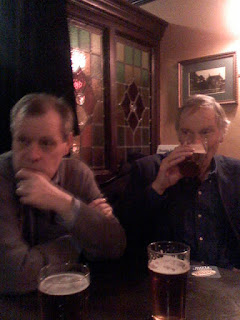
One of the poems in this feature is ‘The Books’. Here are a few thoughts on that poem, which is a good example of his late gentle art of collage,
as it switches from subject to subject, which is not to say that the subjects
themselves are gentle. It shocks with its revelations, one from the heart of
Harwood’s family (particularly as his family usually evokes his tenderest passages).
The poem swings from a persistent Harwood theme, the hypocritical barbarity
that often lies at the heart of so-called ‘civilisation’ and ‘civilised’ people,
Remember
the library in Alexandria.
Remember
its destruction by Christian fanatics,
and
the savage murder of the mathematician Hypatia,
to familial horrors during the Second World War:
The
young officer, my father, 1940,
having
to shoot one of his own men,
his
stomach ripped open beyond saving,
begging
to be put out of his agony.
The transition from the horror, and incomprehensible
compassion, of that detail, to the sudden, some might feel, inappropriate, campness
of the poem’s conclusion, is typical and deliberate of Harwood at his most
controlled:
I
don’t intend to sit here waiting in my coffin,
gathering
dust until the final slammer,
adjusting
my tiara.
I’ll
stamp my foot
and,
checking the rear-view mirror,
head
for the frontier.
The thematic restlessness we have traced throughout Harwood’s
work resolves at the end of ‘The Books’ into another trope common to his
sensibility, that of the quest, the journey, the exploratory plunge into
otherness, even, as here, in the face of death. Characters in Harwood’s world
are often on the verge of moving on, committed to process as a mode of being in
the world. It is never mere escape. The glance in the rear-view mirror ‘meets’
haunting personal memories which ‘meet’ historical remembrance.
HUB POST
As a long-standing student, critic, literary executor and (now) editor of the work, and a friend of the person, I have written number of pieces on Lee’s work on this blog, and I finish with links to these posts here:
My TLS review
of two books by Harwood (and others):
https://robertsheppard.blogspot.com/2015/12/robert-sheppard-far-language-commitment.html
Review of
the earlier part of the Collected Harwood (2004):
http://robertsheppard.blogspot.co.uk/2005/12/robert-sheppard-review-of-harwoods.html
Review of the later part of the Collected Harwood (2004):
http://robertsheppard.blogspot.co.uk/2006/01/robert-sheppard-review-of-harwoods.html
On three sequences in Morning Light (1998):
http://robertsheppard.blogspot.co.uk/2014/12/robert-sheppard-on-three-sequences-by.html
My review of The Orchid Boat, Lee Harwood’s final volume:
http://www.stridemagazine.co.uk/Stride%20mag%202014/december2014/The%20Orchid%20Boat.htm
A short reflection on the above:
http://robertsheppard.blogspot.co.uk/2014/12/robert-sheppard-review-of-lee-harwoods.html
A poem dedicated to Lee Harwood:
http://robertsheppard.blogspot.co.uk/2015/07/robert-sheppard-for-lee-harwood-burnt.html
A laugh with Lee Harwood:
http://robertsheppard.blogspot.co.uk/2015/08/robert-sheppard-laugh-with-lee-harwood.html
In Memoriam Lee Harwood:
http://robertsheppard.blogspot.co.uk/2015/07/lee-harwood-1939-2015-in-memoriam.html
Details of the Lee Harwood Archive at The British Library: Pages: Lee Harwood Archive now ready for study at the British Library (robertsheppard.blogspot.com)
My review/notes on ‘The Long Black Veil’, republished in the republished HMS Little Fox:Pages: Robert Sheppard: HMS Little Fox by Lee Harwood republished (My reading of 'The Long Black Veil')
What I
regard as my definitive piece on Harwood’s work, ‘The Gentle Art of Collage’ is
published in the huge volume CONTEMPORARY BRITISH AND IRISH POETRY, 1960 – 2015
Edited by Wolfgang Görtschacher and David Malcolm. Wiley Humanities, and I
write about that volume, here:
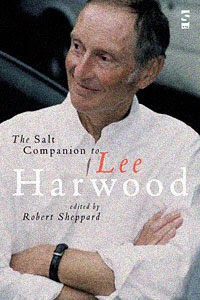
Here are links to posts made leading up to the publication of New Collected Poems.
Read the full text of a blurb written for the NCP by Iain Sinclair: Pages: Lee Harwood: New Collected Poems: a blurb or mini-essay by Iain Sinclair (robertsheppard.blogspot.com)
The New Collected Poems of Lee Harwood is NOW available. HERE: Lee Harwood - New Collected Poems (shearsman.com)
I think about Lee's friend Paul Evans and his selected poems which you could buy alongside Lee's NCP: here: Pages: Paul Evans' Selected Poems and Lee Harwood's Collected (robertsheppard.blogspot.com)


