Showing posts with label Philip Terry. Show all posts

Saturday, February 22, 2025

My Tears’ review of Philip Terry’s Dante’s Purgatorio and my own Dante project revived – plus thoughts on reviewing

I have just published a review of Philip Terry’s Dante’s Purgatorio in the 81st edition of Tears in the Fence. I have published poems quite regularly in the magazine for a long time now, but I think this is the first time I have written a review for them. The review section is very good and it’s a nice place to appear. Despite having published a new book of (kind of) critical pieces in the last six months (The Necessity of Poetics) I have not written many reviews for a long time. (Pages: The Necessity of Poetics - out now! ) Partly, this is the result of having moved from an early policy of book reviewing for magazines small and large (including New Statesman, TLS, PN Review) to writing academic literary criticism, which resulted in several books (not so much The Necessity of Poetics which largely collected disparate materials) but like The Poetry of Saying and The Meaning of Form. (Believe it or not I’ve only recently noticed that ‘The X of Y’ structure of these book titles! ‘I thought it was deliberate,’ Patricia opined. It wasn’t.)

Somehow, the thrill of writing reviews wore off. Perhaps I could do it in my sleep. Perhaps I regret not being paid (the New Statesman stuff was vital to our survival, I seem to remember, even though I had a full time job in FE). But I’ve seldom returned to it. Of course, my disenchantment with academic publishing is pretty high, too. A system where you’re lucky if you receive a pdf of your book title instead of the whole book, or where you have to buy a copy yourself is difficult to explain to friends in the pub. One said, ‘You need a better agent.’ (I didn’t like to tell him.) I don’t mind paying a bus fare but I don’t expect to have to build the bus first before I travel!

Another reason why I think I should review new poetry books (in particular) is that there is a shortage of reviewers out there (as I have discovered with my own latest, British Standards; I am thankful for Billy Mills’ tracing of its trajectory here: Two by Robert Sheppard: A Review – Elliptical Movements). And I feel I need to do my bit.


Now I have, with my account of Philip Terry’s Dante’s Purgatorio which you will not be too surprised to hear is his follow-up to his masterful Dante’s Inferno! In short (and without repeating the review) it’s great fun and serious at the same time, an Oulipo wonder, using the constraint ‘Up to Date’, which he operates in a much more systematic way than I did in my ‘English Strain’ project; I have collaborated with Philip and have observed him at work. See here (Pages: Twitters for a Lark launch at Bangor University 6th April 2018 (set list)) and here (Pages: 'My' Quennets from A TRANSLATED MAN published in The Penguin Book of Oulipo) for our meetings, over the remains of my ‘fictional poets’ project (something close to Philip’s own heart!).

Details of Tears in the Fence 81 here: Tears in the Fence 81 is out! | Tears in the Fence


Anybody reading this blog carefully (is there such a being out there?) will perhaps notice that I was advancing my own ‘Dante’ project, which I rather flagrantly ‘abandoned’ in this post here: Pages: On abandoning my transposition of Dante: thoughts and extracts.

For the moment, the old text shall remain there but I might remove it, since I have (as I thought I would, and said so, on the post itself) found a way to ‘treat’ the text, submitting it to a ‘coherent deformation’, daily working through the 80 pp of notes with a method, not (it should be recorded) an Oulipo method. In fact, today yielded, probably roughly, and in need of further work, these lines:


 Lower down the

proscribed Covid stairwell, very finely done, ‘Oh,

you know, the plague!’ says Blake. ‘Let’s watch

“this metamorphosis of a malefactor.” Everything’s

one day about this man. You’ll write other

dimensions, you already have.’ The riding figure

disintegrates before any masks. The Poet muffles

his nose in human decomp, arriving like an olfactory

fester. He acts to bloat and gloop the great naked

blasphemer, knocking, who blasts flames,

sequenced backwards like this story, which is,

admittedly, unambiguous and coiled with serpents.


Blake is my Virgil, and Dante is ‘The Poet’. Blake was my Virgil, since I used his very lopsided coverage of the Commedia, for the object of the original ‘writing through’, which I have now returned to, partly because I’ve forgotten the ‘abandoned’ text (and have not looked back at it); I have, however, kept its title, Stars: a Comedy Machine, and one of its epigraphs is


                                    Thus the cause

                        Is not corrupted nature in yourselves,

                        But bad government that has turned the world

                        To evil.

                                                Purgatorio XVI


which I mention in my review of Philip’s work, plus his own version of these lines. I say, ‘In a version of lines in Dante from Canto XVI that I think of as central to the Commedia, Terry has:


                                    What I’m saying is that the


Present state of the world is caused predominantly

By one thing and one thing alone: bad leadership.’


Interestingly, he keeps this in focus as a major theme.


Talking of epigraphs, mine, to the third, HELL, part of my ‘commedia’ (it’s narrated in reverse, ‘sequenced backwards like this story’ as I ‘wrote’ this morning) is taken from Terry’s Inferno:


 Capital divides

                                                            and rules     its kingdom

                                                Like a greedy spoilt dictator,


though I might choose another from his Inferno.

My own version is thus much taken with Terry’s. In fact I might have abandoned my version much sooner, since the very existence of his version threw mine into doubt. But Philip encouraged me to continue: as an Oulipean there can never be enough versions of the text for him (so long as he doesn’t have to write them all, I suspect!).

 I agreed to review the book in order to deal with it (and I knew it would be as funny as I found the first volume, though more poignant). I’m glad I did. It’s been useful for seeing what he’s up to, what I’m up to, and it might very well propel me to write further reviews for whoever wants them. It gets the news out there. There is always this blog, too, for further thoughts.  

*

Previous appearances in Tears in the Fence are recorded here, the first 2 links carrying details of poems printed from the aforesaidmentioned ‘English Strain’ project, with videos of me reading some of these poems. Thanks again to editor David Caddy for taking these works and the new review! 

Pages: Two new poems from British Standards published in Tears in the Fence 73

Pages: Two more sonnets from British Standards (from Keats) in Tears in the Fence 75

Pages: Robert Sheppard: 'Between' a poem for Roy Fisher published in Tears in the Fence

Thursday, December 05, 2024

On abandoning my transposition of Dante: thoughts and extracts


It came to me in a flash in April 2024: write a version, or transposition, of Dante’s Divine Comedy BACKWARDS, from Paradise back to normal life. The rest of the plans came more slowly, as notes in my Red Notebook testify. I won’t trace the movement of these ideas too thoroughly: I’ll simply give a précis of procedure and progress. Dante would be a version of me, Sheppàrd by name, who appears twice in British Standards. My Beatrice would be Benjamin/Klee’s ‘Angel of History’ (pictured above). Virgil would be William Blake, for my basic notes were produced ‘writing-through’ his wonderful illustrations to Dante, composed at the end of his life, and having the advantage of stepping pretty lightly through the more doctrinal ‘Paradiso’. Like Milton (who was slated to be Statius in this retelling) Blake was of the Devil’s Party. I read as many versions of Dante as I could find: Cary’s (I had an 1847 edition I bought at a jumble sale in August 1972! A similar edition pictured below), CH Sisson’s, Alistair Gray’s, Robin Kirkpatrick’s Inferno, and other looser texts: Philip Terry’s Dante’s Inferno (I’ll return to that), Adrian Clarke’s ‘Paradise Gardens’, Bruce Andrews’ Lip Service, Amiri Baraka’s ‘from The System of Dante’s Hell’, and a load of background books. I ended up quite knowledgeable on the subject.


Some way into the preparatory process, by dint of some synchronicity, Philip Terry wrote to tell me he’d written his follow-up Purgatorio. I despaired, until I realised I wasn’t proposing anything like his brilliant work, which was strictly Oulipean. I have since reviewed his book, for Tears in the Fence (Spring 2025 edition; see here: Pages: My Tears’ review of Philip Terry’s Dante’s Purgatorio and my own Dante project revived – plus thoughts on reviewing ). With something like 84 pages of notes, produced slowly, one Blake ‘image’ a day, I was ready to write the thing. I would not have what I have always called ‘interfering’ material: I’d have ‘informing’ material. Working with the writings-through, I needed to mix in some political philosophy, some wonderful phrases and collocations from Cary’s Miltonic version of the comedy, and, Alighieri’s Your Uncle, it would all come together! A rich absurd allegory for our times. It was to be (to quote from the unprocessed notes) a ‘comedy machine’. Epigrams were prepared. An earlier poem, which I wrote for the ‘Dante’ edition of the online magazine Junction Box, in 2021, offered itself as an introduction, and a guide to the tone and style. (I still approve of this poem, by the way.) Issue 16 Dante Page 1 – Glasfryn Project


But, not unlike Belacqua in Beckett’s stunning early story (another piece of ‘background’, ‘Dante and the Lobster’), I was more or less ‘stuck in the first of the canti in the moon. He was so bogged that he could move neither backward nor forward.’ ‘All he had to do,’ Beckett explains, ‘was to follow her step by step.’ ‘Her’ being Beatrice, of course: my Angel of History. Perhaps it was the precision with which I had envisioned the whole as a whole, perhaps I didn’t find it hard enough, resistant to my garrulousness and productivity – but it fell to pieces on me.  A quotation from Derrida which I came across in my re-reading of Derek Attridge's The Work of Literature (see my first encounter here: Pages: Robert Sheppard: The Meaning of Form and Derek Attridge’s The Work of Literature) describes the singularity involved in reading (and what is my method of 'transposition' but a mode of 'reading'?). 'Reading must give itself up to this uniqueness, take it on board, keep it in mind, take account of it. But for that ... you have to sign in your turn, write something else which responds or corresponds in an equally singular, which it to say irreducible, irreplaceable, "new" way.' (Attridge 2015: 138) There was not enough response or correspondence in my approach, perhaps.


I should say it’s been great fun. ‘Trump?’ ‘No, did you?’ Blake and Sheppàrd say at one point, as they Derek and Clive their way through the circles, running back from the summer of 2024 to, sort of ‘midlife’, December 3rd 1994, when the almost-legendary Smallest Poetry Festival in the World was held. (See my post here: Pages: Remembering The Smallest Poetry Festival in the World 3rd December 1994) Sheppàrd can’t remember a thing, after crossing Lethe; unlike Dante he won’t be able to report back to the people of the earth. When Blake tries to instruct him, he learns nothing!


In one of my notes I worried about whether, if you base a text upon another, particularly one with an alien or even repugnant content, do you inevitably carry something over from the original, like a germ or a virus or a glitch, that still operates in ways one might not be able to anticipate, in ways of which one might not approve? It’s a sobering thought, though surely my experience in writing the three books of transpositions of sonnets in ‘the English Strain’ project, suggests the virus may be inoculated (or transformed into comedy: laughter, as Blake and Sheppàrd discover, is the best medicine). But then maybe the answer is simpler, and lies in those THREE volumes (pictured below, though one is hiding! Links here: Pages: New book British Standards completes the 'English Strain' project: all 3 books available ). I’m through with ‘transposition’ as a method: done! In April perhaps I should have said to myself, ‘That would have been a good idea five years ago. Let’s move on.’ (In fact on that day, I also had another idea: writing a kind of memoir via an Alphabet of Poets.)


I am posting my ‘fragments of an attempted writing’ which I have now deliberately curtailed, though I decided to jump forward and write the last part (which was almost in complete form anyway). I like what I have written, but doubt whether I would like a whole book of this stuff, unmotivated as it seems on reflection. But all is not lost. Two other writings have come out of the ferment. I half-intended my long poem ‘The Palisaded Ditch’ as an accompanying text to ‘Stars’

 (‘God made the sliding bricks of the gateway,

but Mankind built the bands crossing the

scorched earthenware ground with words:

here a cathedral with owl eyes, there

a castle of pure flame, capped in a psilocybin glans,

two shuttlecocks colliding in the lane.’);


and my ‘Tone Poem: Starlight and Stardust’, a sequence of jazz poems, dedicated to Jazz Ian Perry, began life as ‘interfering’ materials, but it took on a life of its own, though even in its opening lines you can see my mind was dwelling in the upper levels of Paradise:

‘it’s not Sam Rivers

            playing ‘Beatrice’ like a paradisal theme tune

                        haunting though that would be:

            it’s ‘Starlight’

            played by Fred Hersch


constellations of high notes from woody keys’.


The poem ‘Thinking About Dante’ stands alone in 2024, just as it did in 2021 when I wrote it. Perhaps I should have heeded these lines from it:


                                              He

sits in the pub thinking about Dante,

his visions, decides to write

(but knows he won’t) eternal versions of

his tercet Commedia:

‘midway through the Black Forest Gateau

I threw up over you! Such things move

the moon and the stars and the sun!’

(I was thinking of Caroline Bergvall’s ‘Via’, of course.) Yes, all is not lost. I know enough of my own procedures to wager that my voluminous notes won’t simply be tossed into my non-existent archive. Watch some other space.  

29th November 2024


Stars: A Comedy Machine


                                    Thus the cause

                        Is not corrupted nature in yourselves,

                        But bad government that has turned the world

                        To evil.


                                                Purgatorio XVI


                                    As a fir tree

                        Upward from bough to bough less amply spreads,

                        This one’s tapered upside down, so no one

                        (I think) may climb it.


                                                Purgatorio XXII


The introduction is the 2021 poem 'Thinking About Dante' (which may be read here: 

Robert Sheppard: Thinking About Dante – Glasfryn Project)


[UPDATE 7 March 2025: As I say in the post about the review of Philip Terry's Dante's Purgatorio, (see here: Pages: My Tears’ review of Philip Terry’s Dante’s Purgatorio and my own Dante project revived – plus thoughts on reviewing) and as I ponder above, I have returned to the original notes of the project, and submitted them to a 'coherent deformation' (a slightly different technique for each cantica) and am pretty certain, as I move through those 80 pages of notes, that I will have some sort of text, or draft of a text, at the end of the process(ing). It feels right, then, to remove this abandoned version, to make way, eventually, for a new text, a better text, a more distanciated text - though I have kept the Ur-story of The Poet (I've dropped the explicitly named Sheppard), Blake, The Angel of History, travelling backwards through the story intact, possibly even the return to Tooting. This might be buried in the new 'narrative', but I think it will still guide the writing, and most of the reading (I should think). As I write, I have written the first two cantiche, which are quite short (Blake's choices of canti to illustrate still guides the focus and size of the project), and I am currently about half way through the daily writing, one processed page per day. When I reach the end, I shall be able to see what has happened, and can proceed as necessary. But I am confident of a final text appearing. I don't want readers to compare it with the 'original', as they might think of it. For me, borrowing Blake's engraver's vocabulary, I shall call it a 'state', just a stage on the way. (I don't want to read it either, at least, not until I've finished the daily writing, which is a quite quick activity by the way.) I have decided (I think) to keep the title, the epigraphs, and the positioning of 'Thinking About Dante' as an introduction to the whole. I hope to finish the writing by April, which will be the anniversary of the flash of inspiration I relate at the top of this post. Even after abandonment I continued to read my Dante Alighieri. The Vision; or Hell, Purgatory, and Paradise. trans. Henry Francis Cary. London; Henry G. Bohn, 1847, a canto a day, and my array of Dante books and translations and versions and transpositions still line the shelf above my desk, though the spine of the Cary is hanging lose, and the stretch has been augmented by Philip Terry's new Purgatorio. I knew somewhere inside that I hadn't finished. I don't abandon much. Or if I do, the 'idea' comes back in a different, but related, form.] 

]  


Saturday, July 21, 2018

Celebrate Belgium’s Independence Day with European Union of Imaginary Authors poet Paul Coppens and with Rene Van Valckenborch

I've been celebrating the National Days of the countries whose poets I have swelled the numbers of by inventing new ones! This is a special one, and the last. (And may well be the last of my special EUOIA posts too, and it includes possible plans for the future.)

Celebrate Belgium’s Independence Day with European Union of Imaginary Authors poet Paul Coppens, who was co-created by myself and Philip Terry, and with Rene Van Valckenborch, my original Belgian invention! So a bit of a double, or a treble, if you include Philip!

Me and Rene in Brussels?

See here for more on Philip Terry.

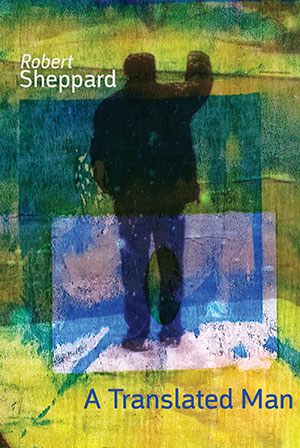
René Van Valckenborch is noted for writing in both Flemish and French. Publishing between the years 2000-10, his books (in French) include masks and other masks and glance poems. In Flemish, his projects include The Fuck Me Shoes Chronicles (though no parts of this are translated - yet) and the online European Union Of Imaginary Authors: 27 Translations. He was President of the EUOIA until 2010, when he was deposed by Hermes, and he disappeared (but not in a good way). A generous selection of his work, translated by Annemie Dupuis and Martin Krol, was published as A Translated Man (Shearsman, 2013) with an introduction by Erik Canderlinck and an authorial imprimatur from Robert Sheppard. 

Read a piece of Van Valckenborch’s critical prose (not included in A Translated Man), an account of the cinema of forgotten Belgian film-maker Paul Coppens Snr, father of the invention of Philip Terry and myself,  here.

Rene, a real troll, also Tweets here. There are three of his 'twitterodes' here! Most recently he has decided to adopt the middle name Pelikan for the length of 2018. More on him here at these links (which themselves contain further links): 


And here's me at The Other Room some years ago, where I read his Flemish poems.

Read an early account of Van Valckenborch here; the book is also available from Shearsman here:


Picture

Together Philip and I worked on the antonymic translations of Rene Van Valckenborch's quennets (which appear in A Translated Man) for the corpus of Rene's exegete and friend Paul Coppens. We wrote them two words at a time, a deliberately insane method that took six months to complete. They literally turn Van Valckenborch's poems inside out, and represent another of the links between these two books of fictional poems.
    
Here is Philip showing us what a quennet looks like on the page
I see these two books as the first two parts of a fictional poetry trilogy. So what will part three look like? One possibility is that Van Valckenborch returns in some way, like Bob McCorkle perhaps, in Peter Carey’s wonderful novel My Life as a Fake, and takes over again. Who knows? The unseen Fuck Me Shoes Chronicles might be entertaining to complete. Or would he write new poems? Would they be in Dutch or French? In any case, I have posited a possible (but quite different) continuing fiction here, but I am unsure how this may be used now (and whether it would involve Rene). I also re-read my short story 'Tropp' the other day. I'd forgotten that this story about a Czech Esperanto poet was a sort-of 'dry-run' for Rene, although I thought the story (which I'd not looked at for a while) was OK. It is published in my 44 pp volume of 3 stories The Only Life by KFS. You can still buy it here. 

20th July 2018: A vague apprehension, reading Erin Moure's fine selected poems, Planetary Noise (and the selection of poetry and poetics we made for Atlantic Drift), of how I might adapt her way of marshalling her fictional 'circus animals'. They re-appear at crucial points, as names, alter egos, (m)others, analogues (and the opposite of those four characteristics). They are part of a poetic and plastic polylogue, NOT bit-players in a fiction. (I've done that: twice). [list of free characters, not collaboratively composed - obviously I can't continue with any of those that are)] 13, plus 'Robert Sheppard' of Twitters, as Moure has an 'Erin Moure' or EM. Bad Prophets Err, in my anagrammic case.... To move away from the writing of fictional poems to the creation of a textual web which could incorporate many of the ideas I've been gathering with each of these 'national day' celebrations. Even this here, though it would become quite fragmented in this new guise. Let's leave that now. (August is time for my summer break from blogging. August might be your time for reading: see here for my take on some of Erin Moure's work, working notes for my chapter in The Meaning of Form on her exacting work.) 

You can read more about the European Union of Imaginary Authors here and here. All the collaborators I've worked with are accessible via links here; our resultant works are collected in Twitters for a Lark, published by Shearsman. Videos of The Other Room special EUOIA evening last August, which have only this week become available, may be accessed (variously) here:


More on Twitters here and here:


 And check out a review by Billy Mills, who thinks the EUOIA should hang up its multi-coloured Rimbaudian letters, here.

Sunday, April 08, 2018

Twitters for a Lark launch at Bangor University 6th April 2018 (set list)

Twitters for Lark launch at Bangor University (as part of the Expanded Translation conference and project)


These are my notes, which I spoke from, extempore.

I am very happy tonight to be launching this collection (I think of it as that rather than as an anthology), Twitters for a Lark – this collection of co-created fictional European poets. And I’m thrilled I have so many of those co-creators here, in a sense coincidentally, at the Conference. Though not so coincidentally, given the conference!

But first I want to read three poems from a different project. There are three reasons for this, two of them connected to the European poets project, the first not.

I want to read from my versions of Sir Thomas Wyatt’s versions of Petrarch, because they are expanded translations, the theme of the conference, and because today is a special day in the Petrarchan calendar. On this date in 1327 he first espied Laura (she also is reported to have died on this day, etc….) That is the theme of my Petrarch 3 poems that (along with the work of others whom I have written about in my book The Meaning of Form) so exercised Peter Riley recently.(Peter Hughes talked about his Petrarch project in a paper that was largely on his Leopardi follows-up. Great stuff.)

But my reason –the second reason – for reading these are also that they are openly poems about Brexit. My ‘Wyatt’ is partly a servant of that first unstable Brexiteer Henry the Eighth, and also a kind of contemporary civil servant or a spy

I read Hap 5,6, and 13. More on that project here:


The third reason I read those poems was that, despite the name, the European Union of Imaginary Authors (the EUOIA) is not a Brexit project. Who could have predicted that my mild joke, my Belgian fictional poet, RVV, invented all of these poets in 2013 or so, would have become so politicised a concept, and that some of us (‘almost most’ as my poem says) learnt to love the EU too late, and that the EU failed to enamour itself to the slender ‘Many’. Nevertheless, I shamelessly argued in the blurb for Twitters, ‘If the right poets for the times don’t exist, then they have to be invented,’ though I did fess up: ‘Although devised before the neologism ‘Brexit’ was spat across the bitter political divide, this sample of 28 poets of the EUOIA … takes on new meanings in our contemporary world that is far from fictive, ‘fake news’ or not.’

Rene Van Valckenborch as a project: was about translations and exploring the author function, the way work constellates around a name… Meet Rene here.

EUOIA in it

and straight into the reading. More about collaboration than translation per se.

featuring my collaborators

Zoe Skoulding
James Byrne
Alys Conran
Philip Terry
Jeff Hilson


All the collaborators are accessible via links here.

and our creations:

Gurkan Arnavut (Cyprus)
Martina Markovic (Croatia)
Christofol Subira (Catalonia)
Paul Coppens (Belguim)
Ratsky Josef (Hungary)
Alys Conran

James Byrne (and Robert Sheppard)

Lily Robert-Foley

Robert

Zoe full of life: Zoepoetics

Haps led into reading with Zoe, an account of how she set the whole thing off, by suggesting we use my unused fictional poets; with James, who added a few new details about Martina; and with the wonderful Alys; the joys of collaborating with somebody one previously hadn’t know.

Philip and I decided we’d demonstrate our loose antonymic translation by me reading (slowly) Van Valckenborch’s quennets and Paul Coppens’ translations.
Philip Terry showing the audience the shape of the Qunnet form

Jeff and me: which I pre-visaged as a high-octane belter, but something else happened. We were reading in the School of Music, and there was an organ in the corner, that worked, and so, finding that Lily Robert-Foley could play keyboards, we enlisted her services, and she played pieces under each of our two poems, and they were considerably interrupted by the slow music (her own songs), slowing both of us down and punctuating and re-articulating the work (appropriate, I should say, because Ratsky is an organist-poet and the poems feature organ-related notions!) Simutaneous intersemiotic translation, in Sophie Collins’ terms.Many thanks to Lily!

after Jeff:

Thanks at the end to: Zoe for setting it off, Zoe and Jeff for including it in this conference, Zoe and Jeff and all the other poets for collaborating, and everybody for coming…

Thanks to Jeff for the photos...(That's why he isn't in them.)

This event was part of the ‘Expanded Translation’ Project. Read more here and here:


And read here Zoe Skoulding's response to Peter Riley's review of some 'expanded translations' (including my Petrarch 3), but it's also an account of the Bangor Conference at the whole research project: here.

Read more about the European Union of Imaginary Authors here and here More on Twitters here and here. Updated link:


Read about the August 2017 Other Room Manchester reading of the EUOIA poets (pre-launch of Twitters) here

Read about the November 2017 mini-launch in Luton here.

And the Leicester (States of Independence) launch:


Tuesday, February 27, 2018

Meet the EUOIA collaborators: Philip Terry


Philip Terry is currently Director of the Centre for Creative Writing at the University of Essex.  Among his books are the lipogrammatic novel The Book of Bachelors, a translation of Raymond Queneau’s last book of poems Elementary Morality, and the poetry volumes Oulipoems and Shakespeare’s Sonnets.  His novel tapestry was shortlisted for the 2013 Goldsmith’s Prize.  Dante’s Inferno, which relocates Dante’s action to present day Essex, was published in 2014, as well as a translation of Georges Perec’s I Remember.  A new volume of poetry, Quennets, was published by Carcanet in 2016.  He is currently working on a version of Gilgamesh in Globish, the international business language.

Together we worked on the antonymic translations of Rene Van Valckenborch's quennets (which are available in A Translated Man) supposedly composed by Rene's exegete and friend Paul Coppens. We wrote them two words at a time, and insane method that took six months to complete.


Friday, May 27, 2016

Paul Coppens says Don't Leave the EUOIA


Belgium’s  Paul Coppens (1980-), created with Philip Terry, who does exist, says, 'Don't Leave the EUOIA' (European Union Of Imaginary Authors).
Paul Coppens’ books include his masterpiece The Fainting Goats of Moon Spot Farm. His essay, ‘Henri Lefebvre and Van Valckenborch’s Poetics of Space’ appears in Canderlinck and De Zoute’s The Transliterated Man. He is the son of the film maker Paul Coppens, about whom René Van Valckenborch has written an essay, ‘Frozen Cuts of Light: The Scratch Cinema of Paul Coppens’, published in Chosement 1 (2010) but available in English in Junction Box at http://glasfrynproject.org.uk/w/655/robert-sheppard-frozen-cuts-of-light-the-scratch-cinema-of-paul-coppens/.

If Britain votes to leave the EUOIA on 23rd June, Robert Sheppard, the British representative of British imaginary authors, will have to be excluded from his own anthology, EUOIA, which he is conducting and collaboratively writing with other writers; at the very least he will be moved to the Appendices with Frisland’s Hróbjartur Ríkeyjarson af Dvala (whom he created with Eiríkur Örn Norðdahl). To find out more or less about the EUOIA check the EUOIA website which is still live at http://euoia.weebly.com, and there are multiple posts on the subject of the EUOIA on this blog (use the keyword EUOIA to see them all displayed, and then scroll).


Wednesday, August 22, 2012

from 'Poet' (a work in regress)

Poet makes his writing practice material, inventorying every printed book he can see as he sits at his laptop. On the desk. Along the shelf. In the big box behind. A composite self-portrait with no self. Feeds it to Twitter, title by title. Until he sees at last, the most satisfying thing, saved for the final tweet. Neat in its crimson bag, the pristine leather-bound fine-paper notebook that Poet has not dared to write in since buying it a decade before, in Florence. A bibliography of a work he’ll never write.

On Poet's desk:

Tears in the Fence 55
Benjamin’s Illuminations
David Ter-Oganyan

(Uncovering a few more books on his desk:)

Meredith’s Modern Love
Poet’s 2012 diary
Poet’s dictionary (with its gifts of ‘ithyphallus’, ‘mallemaroking’, ‘rounceval’)
Anthony Rudolf's and Colin Wiggins’ Kitaj in the Aura of Cézanne and Other Masters

Looking along the shelf above Poet's desk; (in a pile, top to bottom):

Hans-Peter Feldmann’s Voyeur
Ingrid Schaffner’s The Essential Joseph Cornell
John Seed’s Collected Poems and a single volume of his Pictures from Mayhew
Pete Clarke’s Letters to Language
Paul Evans’ True Grit and Prokofiev’s Concerto

(Then upright, left to right:)

Scott Thurston’s Salt Companion to Geraldine Monk
Monk’s Insubstantial Thoughts on the Transubstantiation of the Text
Michael Hamburger’s The Truth of Poetry
Joan Retallack’s The Poethical Wager
Huntsperger’s Procedural Form in Postmodern American Poetry
Bernstein’s The Politics of Form
Rawes’ Romanticism and Form
Milton’s Paradise Lost. Poem, in Twelve Books. The seventeenth edition, Dublin, Printed for
A. Ewing, W. and W. Smith and P. Wilson, 1765
Wood’s Literature and the Taste of Knowledge
Watten’s The Constructivist Moment
René Van Valckenborch’s Vache
Mousley’s Towards a New Literary Humanism
Denise Riley’s Poets on Writing
Susan Wolfson’s Formal Charges
Adorno’s Aesthetic Theory
Lemon and Reis’ Russian Formalist Criticism
Derek Attridge’s The Singularity of Literature
Joughin and Malpas’ The New Aestheticism
József Attila’s Eszmélet
Angela Leighton’s On Form
Art Matters by Peter de Bolla
Louis Armand’s Avant-Post
Allan Sekula’s Polonia and Other Fables
Language Alive 2
Radnóti Miklós’ Naptár
Peter Barry’s English in Practice
Marcuse’s The Aesthetic Dimension
Hans-Peter Feldmann’s Foto
Ian Davidson’s Into Thick Hair
From: Tracey Traces by Jeff Hilson
Mukařovský’s Aesthetic Function
Christopher Middleton’s Selected Writings
The Plantin-Moretus Museum Visitors’ Guide
Wolfson and Brown’s Reading for Form
Leech’s Linguistic Guide to English Poetry
Christopher Middleton’s Selected Writings

In the big box behind Poet:

Sean Bonney’s Happiness
Chris McCabe’s The Borrowed NotebookShakespeare’s Sonnets
John Goodby’s Illennium
Philip Kuhn’s Boltzmann’s Constant & the Black Body Spectrum
Gareth Farmer’s Mock into the Brazen Day
Matthew Welton’s We needed coffee but we’d got ourselves convinced that the later we left it
the better it would taste, and, as the country grew flatter and the roads became quiet and dusk began to colour the sky, you could guess from the way we retuned the radio and unfolded the map or commented on the view that the tang of determination had overtaken our thoughts, and when, fidgety and untalkative but almost home, we drew up outside the all-night restaurant, it felt like we might just stay in the car, listening to the engine and the gentle sound of the wind
Vahni Capildeo’s No Traveller Returns
Paul Hoover’s Postmodern American Poetry
Jeff Hilson’s In the Assarts
Michael Zand’s Lion
Chris McCabe’s Zeppelins
Louis Armand’s Letters from Ausland
Simon Perrel’s Nitrate
David Markson’s This is Not a Novel
Philip Terry’s Shakespeare’s Sonnets
Peter Gillies and Rupert Loydell’s A Music Box of Snakes
Lucy Harvest Clarke’s Silveronda
Carrie Etter’s Infinite Difference
Scott Thurston’s On Being Circular
Andrea Brady’s Vacation of a Lifetime

plus the notebook described last in the text (not a ‘printed book’ at all, actually). Disturbed by the act of writing, the volumes are no longer configured as they are described here, Poet wants you to know. Tumbling down from the shelves as they’re touched. Re-stacked in reverse order. This portrait already a history.