Showing posts with label Twitters for a Lark. Show all posts

Sunday, May 01, 2022

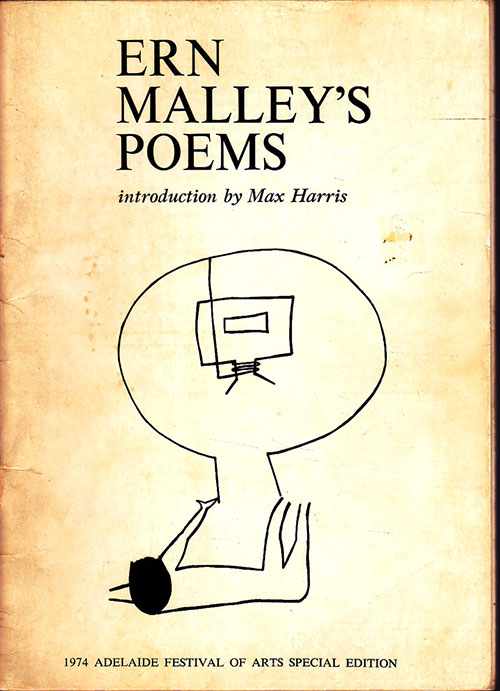
Robert Sheppard: My essay on Ern Malley and Fictional Poets appears in International Times

You may now read my reflective essay on the Ern Malley ‘affair’, or rather on ‘our’ re-enactment of it in Liverpool in 2018, which I originally wrote about here:

 Pages: Ern Malley 1918-1943: Celebrating the centenary in his place of birth Liverpool (set list) (robertsheppard.blogspot.com)


The new essay appears on International Times, and I thank Rupert Loydell (as so often) for selecting this piece, choosing some suitable illustrations, and for IT for following through with publication. It's called 

Doubly Stolen Fire in his Prosthetic Voice: The Ern Malley Hoax and Fictional Poems in Liverpool: 

https://internationaltimes.it/the-ern-malley-hoax/

Although I say it is on the Ern Malley affair, it doesn’t describe that (it’s an oft and well told story, which I summarise in a paragraph, but there’s loads online about it). It’s more a reflection on the nature of hoaxes, as carried out in this case, and as theorized by Charles Bernstein, AND a reflection on the difference between a hoax and a fictional poet. Of course, I’m thinking of my own use of fictional poets, and I refer to that. (Consult these webpages: Rene Van Valckenborch and the European Union of Imaginary Poets - Robert Sheppard (weebly.com) and European Union of Imaginary Authors (EUOIA) - Home (weebly.com)).  

This essay comes from an assembling collection on the subject of authorship and ‘fictional poets’ and their mysterious hold (rather than hoax poets, with their sticky tricks to fit you up and empty you out). As Gerald Bruns says (and I’ve quoted this often): ‘A fictional poem would be a poem held in place less by literary history than by one of the categories that the logical world keeps in supply: conceptual models, possible worlds, speculative systems, hypothetical constructions in all their infinite variation.’

I hope you enjoy this brief take on the issue. Then you may read my other, later, reflections, which I have serialised on this blog, beginning, here:  https://robertsheppard.blogspot.com/2021/10/a-fictional-poets-notebook-entry.html, with a second series here: Pages: Reflections on Fictional Poetry and Fictional Poets (1 and hubpost for the sequence) (robertsheppard.blogspot.com).


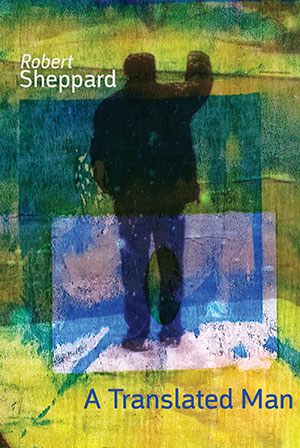
The fruits of my ‘fictional poet’ explorations are published as A Translated Man and Twitters for a Lark, both accessible here: Sheppard, Robert (shearsman.com) (along with other projects).


In that second book there appears a poem by 'Robert Sheppard' which supplies the title of my essay. It may be read in the book, of course, but is also available here:  'Robert Sheppard - Spring 15 (blazevox.org)

Tuesday, October 05, 2021

A Fictional Poet's Notebook (entry one)(hubpost to other parts)

Sophie Poppmeier is one of the ‘fictional poets’ of my European Union of Imaginary Authors project, and she appears both in Twitters for a Lark and A Translated Man (both Shearsman book). The EUOIA website which describes both the project as a whole (here: European Union of Imaginary Authors (EUOIA) - Home (weebly.com) ) and contains a page about her (here: Sophie Poppmeier (1981-) Austria - European Union of Imaginary Authors (EUOIA) (weebly.com) ). Two relevant posts about her burlesque work may be read here and here. A poem from Book 4 may be read online here.

I have been writing a notebook to try to write her into the present, as it were, and I’m presenting most of it here, in instalments, like the text itself. It's probably best to start with her page on the EUOIA website (see above). 

This first installment includes links to all the posts (so far).  I'll be posting them a year after they were written - except the final two, because we'd have to wait too long for the climax.


The blank handkerchief is like a sudden bad mood.

5th October 2020: I begin to write in this notebook and I find the above already there, though it is not in my handwriting. I imagine it is a message from the mannequin that stands, dressed in my outfit from the Ute Lemper burlesque, in my bedroom. I know it has powers of apparition, one might say. It suddenly embodies, disembodies, and droops (like a Bladerunner replicant). This is the prologue to my notebook, to its performance. I have heard of talking creatures in folktales, of boars in Middle European forests, rodents on British dependencies. It works like this: if I talk to it long enough, it will cease to be a thing, and become a person, a personality. It’s not going to have a gender – like on stage. It was my female lover in one, but Putin’s soldier, in another, act. (You know which one, that one, 'Pegging Putin').

            Why does my enthusiasm drain so quickly for these writings? (I want to leave the desk to delight myself with my own thoughts, not to perform for anybody any longer.)

*

This post is also a hubpost with links to the rest of the notebook as they are posted. There are eleven parts in all. The last two are perhaps the most important. 

Part two: https://robertsheppard.blogspot.com/2021/10/a-fictional-poets-notebook-part-2.html

Part three: Pages: A Fictional Poet's Notebook (part 3) (robertsheppard.blogspot.com)

Part four: Pages: A Fictional Poet's Notebook (part 4) (robertsheppard.blogspot.com)

Part five: Pages: A Fictional Poet's Notebook (part 5) (robertsheppard.blogspot.com)

Part six: Pages: A Fictional Poet's Notebook (part 6) (robertsheppard.blogspot.com)

Part seven: Pages: A Fictional Poet's Notebook (part 7) (robertsheppard.blogspot.com)

Part eight: Pages: A Fictional Poet's Notebook (part 8) (robertsheppard.blogspot.com)

Part nine: Pages: A Fictional Poet's Notebook (part 9) (robertsheppard.blogspot.com)

Part ten: Pages: A Fictional Poet's Notebook (part 10) (robertsheppard.blogspot.com)

Part eleven: Pages: A Fictional Poet's Notebook (last part: 11) (robertsheppard.blogspot.com)

*

Some of these posts have been incorporated into a prose chapter of my 2023 book, Doubly Stolen Fire, which you may read about, and purchase, here: Pages: Doubly Stolen Fire (a new book of hybrid texts) is now OUT (robertsheppard.blogspot.com)

You may also be interested that these reflections continue into another sequence of posts, beginning here: Pages: Reflections on Fictional Poetry and Fictional Poets (1 and hubpost for the sequence) (robertsheppard.blogspot.com)

*

And guess what? Yet another prose reflection on fictional poets here: Pages: A further thought on fictional poetry and imaginary authors (robertsheppard.blogspot.com)


An essay on the Ern Malley affair and its Liverpool celebrations may be read here:

https://robertsheppard.blogspot.com/2022/05/robert-sheppard-my-essay-on-ern-malley.html


Tuesday, September 29, 2020

'My' Quennets from A TRANSLATED MAN published in The Penguin Book of Oulipo

Rene Van Valckenborch (see here for his credentials: https://euoia.weebly.com/rene-van-valckenborch.html) talks to Robert Sheppard, as part of an occasional series of interviews, conducted when he turns up 'out of nowhere', like Bob McCorkle in Peter Carey's My Life as a Fake on my doorstep. (Thank God I'm not allowed to invite him in, thinks Sheppard.) 


VV: I’m pleased to announce that I have some of my quennets published in The Penguin Book of Oulipo. https://www.waterstones.com/book/the-penguin-book-of-oulipo/philip-terry/9780241378427

 RS: That’s great news! That means I’ve got some poems in there too!

 VV: Well, not quite. They only appear under my name.

 RS: What!? I invented you. You’re a fictional poet like Alvaro De Campos or Simon Armitage!

 VV: Well, that’s what they appear as in the book. Me and Perec and Roubaud. We’re like that! (Intimates his fingers on big stubby hand.)

 RS: But it was part of my fictional poets project. You were part one … https://robertsheppard.blogspot.com/2018/07/celebrate-belgiums-independence-day.html


VV: … and inventor of part two, ‘the co-created fictional poets of the European Union of Imaginary Authors (EUOIA)’. https://euoia.weebly.com/ That’s what it says in Twitters for a Lark https://robertsheppard.blogspot.com/2017/11/robert-sheppard-with-others-twitters.html


RS: But the project is mine, and all your poems are mine. Everybody knows that!

 VV: The readers of the Penguin Book won’t! (Chuckles.)

 RS: I remember now. Philip Terry phoned me and said that he wanted to publish your, my, quennets in the book, and he thought it would be funny to publish them under your name. I suppose that makes you the clinamen of the collection.

 VV: Quite! So you agreed then?

 RS: In a way, yes. Of course, I’m delighted. But I doubt whether he thought he’d conjured you up from the mists of time, like a bad dream. Do you still drink that de Koninck mud-water?

 VV: It’s revenge, my revenge. Because you and Philip Terry decided to write those antonymic translations of my quennets. You don’t know how negative that felt!

 RS: It was one of the highlights of Twitters for a Lark: https://robertsheppard.blogspot.com/2018/04/twitters-for-lark-launch-at-bangor.html

 VV: I noticed you read them together.


RS: I also read the original quennets (the ones in the anthology) at the Bluecoat and performed them as a poetry reading-mime within an invisible cube. Quite a novel act-event.

 VV: So you ripped off Marcel Marceau as well as me, then? AND, don’t forget, you appeared as me at the North Wales Poetry Festival, didn’t you?

RS: (Bashful.) As an Englishman, I couldn’t possibly comment on that circumstance.  (See ttps://robertsheppard.blogspot.com/2013/12/reflections-on-translated-man-last.html )

VV: It's my name on the poster, not yours. Now, at last, I’m vindicated with this, possibly my most out-there appearance to date. I feel myself stirring, if you’ll pardon the expression...

RS: … I don’t …

VV: ... cracking the old poetic bone. It’s been a long time. Ten years since my supposed ‘disappearance’.

RS: (Carefully) Where did you go, then? There was a rumour you were writing in German.

VV: Ha! That title The Salad in the Wardrobe was a joke, dummy.

RS: Good to hear it. But don’t get any ideas. Talking about coming back won’t get you into part three.

VV: Oh, there’s a part three planned, is there? How do you want me, darling? Flemish or Walloon?

RS: Cease your waffle, Belgian. I might work on Sophie Poppmeier, give her a little more reality. I might get her to collaborate with a mannequin. (See here for her elaborate biography: https://euoia.weebly.com/sophie-poppmeier-1981--austria.html )

VV: I made her up too, though, remember?

RS: I said you did, though I cooked up her burlesque performances. On the other hand, I might include my new work on the talking mongoose of the Isle of Man. Or Ern Malley, even, now I’ve been singing in the Ern Malley Orchestra. http://robertsheppard.blogspot.com/2018/03/ern-malley-1918-1943-celebrating_14.html

VV: But Malley’s a fake!

RS: So are you. Didn’t you recently tweet, ‘It’s not my death I’ve faked, but my whole life’?

VV: Yes. I was feeling bad that day. Veerle Baertens won’t answer my letters, emails or Tweets. But the arrival of The Penguin Book cheered me up no end. It meant, poetry-wise, at least, that I am Somebody.

RS: (Silence)

VV: Hello? Are you still there?

 RS: You mean, you’ve been writing to Veerle Baetens? Again?


The Penguin Book has just arrived this afternoon, a big fat book, with lots of Oulipean standards (Queneau, Perec, Roubaud, Mathews), but also lots of precursors (such as Stefan Themerson, for whom I have advocated) and post-Oulipeans, such as Tom Jenks (ditto). There is a helpful and alphabetical introduction by Philip Terry. The paperback is out in November.    

See here for my earliest encounter – one might say, pre-encounter – with the Oulipo: https://robertsheppard.blogspot.com/2011/07/innovative-sonnet-sequence-eight-of-14.html

 and here for my co-presence with Jacques Roubaud in Translating Petrarch’s Poetry , my article on writing my 'Oulipean' Petrarch 3. Here: https://robertsheppard.blogspot.com/2020/09/practice-led-piece-on-petrarch-3-from.html .
 

Sunday, May 05, 2019

A new review of Twitters for a Lark in Dundee University of the Arts by Annie Runkel

There is a new review of Twitters for a Lark here

Or Annie Runkel, ‘Twitters for a Lark’, Dundee University Review of the Arts.


It is short but astute I thought. Of course, Brexit suffuses all the reviews (although, as Runkel notes, the poems were all written before Brexit happened, or seemed likely). She also reminds readers that this book, the poems of the EUOIA (European Union of Imaginary Authors) is related to one of my previous volumes, A Translated Man. (Which reminds me that there is a third volume, or part, of the project to write one day. I have some ideas.)

The sentence that amused me was: 

In the age of Brexit, getting a group of mostly British poets to pretend they were fictional European nationals can easily seem like a bad idea.

Why? because Bad Idea is the title of what I am writing now about Brexit. See here for a description of that latest project, here! Of course, it's Brexit that's a bad idea, although Idea is Michael Drayton's ideal woman (the sequence transposes Drayton's sonnets Idea).


YOU MAY BUY TWITTERS here:

https://www.shearsman.com/store/Robert-Sheppard-ed-Twitters-for-a-Lark-p102839129

Norman Jope’s review ‘Games Across Frontiers’ (Twitters for a Lark) appears in the new Tears in the Fence 69, Spring 2019: 122-127. See also Billy Mills: ‘Poetry after Brexit’ (Twitters for a Lark): Elliptical Movements (web), 13th May 2018.  Read this review  Here

There are rather a lot of references to the books and to EUOIA on this blog, so here are a few links to hubposts that have links to other posts and/or videos of the many performances by myself and collaborators (and sometimes not with me):

https://robertsheppard.blogspot.com/2018/02/meet-euoia-collaborators-general-intro.html
http://robertsheppard.blogspot.com/2017/08/euoia-night-august-reading-at-other.html
https://robertsheppard.blogspot.com/2018/04/twitters-for-launch-part-of-european.html

To find out more or less about the EUOIA check the EUOIA website which is still live at http://euoia.weebly.com,


Monday, March 25, 2019

Robert Sheppard and Patricia Farrell: Collaborating as part of the Manchester European Camarade: April 2019

European Camarade has been to Manchester


On April Saturday 13th 2019


You can read what Patricia Farrell and I did for the performance: here.

The International Anthony Burgess Foundation 3 Cambridge St, Manchester M1 5BY, UK

The European Poetry Festival comes to Manchester with some of the finest modern poets of the thriving Manchester (and surrounding!) scene in collaborative pairs with writers visiting from across Europe, though some locals, like us, are working together. (As we have for over 30 years, though not like this!) New performances made for the night in this unique Camarade event. Featuring

Kim Campanello and Leonce Lupette
Harry Man and Krisjanis Zelgis
Scott Thurston and Simona Nastac
Tom Weir and Endre Ruset
Colin Herd and Morten Langeland
Martin Kratz and Inga Pizane
Sophie Carolin Wagner and Maria Sledmere
Robert Sheppard and Patricia Farrell
Nell Osborne and Vilde Valerie Bjerke Torset
Sarah-Clare Conlon and Jazmine Linklater
Tom Jenks and SJ Fowler
Tania Hershman and Christodoulos Makris


Patricia and I have made use, as a template, the almost-collaboration between Christopher (‘Kit’) Marlowe and Sir Walter Raleigh, the former’s ‘The Passionate Shepherd to His Love’ and the latter’s ‘The Nymph’s Reply’. We have jointly composed two poems.

For the first we treated as a source vocabulary some words from a passage in Anthony Burgess’ novel A Dead Man in Deptford, in which the two poets converse.

To correspond to Sir Walter Raleigh’s ‘reply’ to Marlowe’s poem, we jointly wrote a ‘reply’ to our first poem that was its ‘antonymic translation’. This technique, we discovered, was far from a mechanical selection of simple opposites. 

It all seems to fit together, particularly in terms of location.

This year’s (and last year’s) information and full documentation may be found here

Last year's group picture

It’s always an interesting and varied evening. The last (2018) Manchester Euro reading was partly a launch for Twitters for a Lark


All the videos are to be found here: 


At the 2018 Manchester launch I was also collaborating with a real Lithuanian poet Rimas Uzgiris, https://www.europeanpoetryfestival.com/rimas-uzgiris

which I thought went well. You may also see that here. AND I posted the text itself, a lyrical piece called 'Unreadable Expressions', on this blog HERE

Read more about the European Union of Imaginary Authors here and here. All the collaborators are accessible via links here.


Saturday, March 16, 2019

My REF statement describing Twitters for a Lark / Review of the book in Tears in the Fence

I may be retired from Edge Hill but, as you may know from reading three previous posts, they can still use my publications from my period of employment in the dreaded REF process. Part of the process for those entering creative writing involves the writing of a 300 word introduction to the work. That’s four out of the five. I thought I’d put them on my blog. I don’t think I’ve perjured myself. Indeed, making them public seems a useful thing to do. I’m not offering them as a model, but they might help somebody write their own. It might also – in this context – draw people’s attention to the book, persuade them to buy it, even.

It is the very different Twitters for a Lark, about which I have written the following:


Twitters for a Lark: Poetry of the European Union of Imaginary Authors (with Others), Bristol: Shearsman Books, 2017

If the right poets for the times don’t exist, then they have to be invented. Working with this axiom, I co-created the works described above. While collaboration is a major mode of contemporary poesis, and these poems have been parts or wholes of at least 5 performances, this project is unique in collecting multi-authored collaborations under one concept. I was able also to combine working with both well-known and emergent writers of various poetical persuasions. It was an experiment in the creation of fictional poets and exposes the fiction of ‘voice’ as a construct of careful artifice. Like its sister book, A Translated Man, it researches the limits of what Foucault calls the ‘author-function’ through the means of ‘fictional poems’, to use Bruns’ term. Not a hoax (the book foregrounds its fictiveness), this work operates in some relation to the Ern Malley Hoax and to the use of heteronyms by Pessoa. The collaborative element helped to create the illusion that each invented poet (one for each of the EU countries) was an individual, but ensuring that they were quite different: from conceptualists to Oulipeans, from lyricists to experimentalists. Fictional biographies at the end of the book (commingled with ‘real’ bibliographies) destablises the unreality of the project. The EUOIA project (as I call it) was conceived before Brexit, but performances and the reception of the book have been coloured by this divisive issue. (The book itself very clearly reveals the authors of the poems.)

YOU MAY BUY TWITTERS here:

https://www.shearsman.com/store/Robert-Sheppard-ed-Twitters-for-a-Lark-p102839129


Norman Jope’s review ‘Games Across Frontiers’ (Twitters for a Lark) appears in the new Tears in the Fence 69, Spring 2019: 122-127. I rather liked: ‘Each imagined poet is like a fabulous beast, imagined by a tonsured scribe at a bench’ (Norman Jope)

See also Billy Mills: ‘Poetry after Brexit’ (Twitters for a Lark): Elliptical Movements (web), 13th May 2018.  Read this review  Here

This is joined by Annie Runkel, ‘Twitters for a Lark’, Dundee University Review of the Arts, at https://dura-dundee.org.uk/2019/05/01/twitters-for-a-lark/. in May 2019.


There are rather a lot of references to the book and to EUOIA on this blog, so here are a few links to hubposts that have links to other posts and/or videos of the many performances by myself and collaborators (and sometimes not with me):

https://robertsheppard.blogspot.com/2018/02/meet-euoia-collaborators-general-intro.html
http://robertsheppard.blogspot.com/2017/08/euoia-night-august-reading-at-other.html
https://robertsheppard.blogspot.com/2018/04/twitters-for-launch-part-of-european.html

To find out more or less about the EUOIA check the EUOIA website which is still live at http://euoia.weebly.com,

Access the other REF statements on my 2014-2017 output via links accompanying the first one here:
http://robertsheppard.blogspot.com/2019/03/writing-my-ref-300-word-statement-on.html

Saturday, July 21, 2018

Celebrate Belgium’s Independence Day with European Union of Imaginary Authors poet Paul Coppens and with Rene Van Valckenborch

I've been celebrating the National Days of the countries whose poets I have swelled the numbers of by inventing new ones! This is a special one, and the last. (And may well be the last of my special EUOIA posts too, and it includes possible plans for the future.)

Celebrate Belgium’s Independence Day with European Union of Imaginary Authors poet Paul Coppens, who was co-created by myself and Philip Terry, and with Rene Van Valckenborch, my original Belgian invention! So a bit of a double, or a treble, if you include Philip!

Me and Rene in Brussels?

See here for more on Philip Terry.

René Van Valckenborch is noted for writing in both Flemish and French. Publishing between the years 2000-10, his books (in French) include masks and other masks and glance poems. In Flemish, his projects include The Fuck Me Shoes Chronicles (though no parts of this are translated - yet) and the online European Union Of Imaginary Authors: 27 Translations. He was President of the EUOIA until 2010, when he was deposed by Hermes, and he disappeared (but not in a good way). A generous selection of his work, translated by Annemie Dupuis and Martin Krol, was published as A Translated Man (Shearsman, 2013) with an introduction by Erik Canderlinck and an authorial imprimatur from Robert Sheppard. 

Read a piece of Van Valckenborch’s critical prose (not included in A Translated Man), an account of the cinema of forgotten Belgian film-maker Paul Coppens Snr, father of the invention of Philip Terry and myself,  here.

Rene, a real troll, also Tweets here. There are three of his 'twitterodes' here! Most recently he has decided to adopt the middle name Pelikan for the length of 2018. More on him here at these links (which themselves contain further links): 


And here's me at The Other Room some years ago, where I read his Flemish poems.

Read an early account of Van Valckenborch here; the book is also available from Shearsman here:


Picture

Together Philip and I worked on the antonymic translations of Rene Van Valckenborch's quennets (which appear in A Translated Man) for the corpus of Rene's exegete and friend Paul Coppens. We wrote them two words at a time, a deliberately insane method that took six months to complete. They literally turn Van Valckenborch's poems inside out, and represent another of the links between these two books of fictional poems.
    
Here is Philip showing us what a quennet looks like on the page
I see these two books as the first two parts of a fictional poetry trilogy. So what will part three look like? One possibility is that Van Valckenborch returns in some way, like Bob McCorkle perhaps, in Peter Carey’s wonderful novel My Life as a Fake, and takes over again. Who knows? The unseen Fuck Me Shoes Chronicles might be entertaining to complete. Or would he write new poems? Would they be in Dutch or French? In any case, I have posited a possible (but quite different) continuing fiction here, but I am unsure how this may be used now (and whether it would involve Rene). I also re-read my short story 'Tropp' the other day. I'd forgotten that this story about a Czech Esperanto poet was a sort-of 'dry-run' for Rene, although I thought the story (which I'd not looked at for a while) was OK. It is published in my 44 pp volume of 3 stories The Only Life by KFS. You can still buy it here. 

20th July 2018: A vague apprehension, reading Erin Moure's fine selected poems, Planetary Noise (and the selection of poetry and poetics we made for Atlantic Drift), of how I might adapt her way of marshalling her fictional 'circus animals'. They re-appear at crucial points, as names, alter egos, (m)others, analogues (and the opposite of those four characteristics). They are part of a poetic and plastic polylogue, NOT bit-players in a fiction. (I've done that: twice). [list of free characters, not collaboratively composed - obviously I can't continue with any of those that are)] 13, plus 'Robert Sheppard' of Twitters, as Moure has an 'Erin Moure' or EM. Bad Prophets Err, in my anagrammic case.... To move away from the writing of fictional poems to the creation of a textual web which could incorporate many of the ideas I've been gathering with each of these 'national day' celebrations. Even this here, though it would become quite fragmented in this new guise. Let's leave that now. (August is time for my summer break from blogging. August might be your time for reading: see here for my take on some of Erin Moure's work, working notes for my chapter in The Meaning of Form on her exacting work.) 

You can read more about the European Union of Imaginary Authors here and here. All the collaborators I've worked with are accessible via links here; our resultant works are collected in Twitters for a Lark, published by Shearsman. Videos of The Other Room special EUOIA evening last August, which have only this week become available, may be accessed (variously) here:


More on Twitters here and here:


 And check out a review by Billy Mills, who thinks the EUOIA should hang up its multi-coloured Rimbaudian letters, here.

Saturday, July 14, 2018

France's National Day and EUOIA poet Carte-Vitale (presented by Sandeep Parmar and myself)


How Paris looks to Carte-Vitale

Remember France's National Day with European Union of Imaginary Authors poet Carte-Vitale. With Sandeep Parmar I created the poem of Carde-Vitale for Twitters for a Lark: Poetry of the European Union of Imaginary Authors. Nothing is known about this writer except that that he/she/e/they resides in Paris. The reader should investigate the poem, not consult the biographies, of course.

Sandeep reads the whole poem on a video of the Manchester launch of Twitters. You can read about the evening  here. But the video is here:


Speaking of videoes, the vids of The EUOIA Other Room reading from last August are now available here.

Read more about the European Union of Imaginary Authors here and here. All the collaborators are accessible via links here.

All the poets are collected in Twitters for a Lark, published by Shearsman. 


More on Twitters here and here.


I have posited a possible continuing fiction here, but I am unsure how I shall carry the plot forwards. Or even (as I think of it now) if I will. I have plans, but nothing I want to pursue. However, the whole project is a series of fragments, not in the sense that nothing is finished, but in the sense that the little that is offered to the reader (Carte-Vitale's single poem, for example) suggests all the other potential poems that the individual fictional poets might have written. 

Monday, June 25, 2018

Celebrate Slovenia’s National Day with European Union of Imaginary Authors poet ABC Remic

Celebrate Slovenia’s National Day with European Union of Imaginary Authors poet ABC Remic who was co-created by myself and Alan Baker.

See Twitters for a Lark for more on ABC Remic, and here for more on Alan Baker. 

As nearly everybody who reads this blog regularly knows, I worked in collaboration, over a number of years, with a team of real writers, Alan being one of them, to create a lively and entertaining body of work of fictional European poets.

Read more about the European Union of Imaginary Authors here and here. All the collaborators are accessible via links here.

Accompanied by biographical notes, the poets grew in vividness until they seemed to possess lives of their own; they are collected now in Twitters for a Lark, published by Shearsman.   

More on Twitters here and here

This collection marks a continuation of the work I ventriloquised through my solo creation, the fictional bilingual Belgian poet René Van Valckenborch, in A Translated Man (read an early account here; the book is also available from Shearsman here ).

Alan took part in The Other Room reading for the EUOIA here.

The videoes of that evening, featuring Alan, are now available here.

Alan Baker blogs here, and runs the  magazine: LITTER here. And the press Leafe, whose most recent publication is Patricia Farrell's High Cut: My Model of No Criteria.

 I have posited a possible continuation of the fictional poets project here, but I am unsure which way this will go now. After two (I think) successful parts, the third part would have to be really good. But maybe, like Iain Sinclair's novels of the North and East, they will remain unwritten.

Saturday, June 23, 2018

Celebrate Luxembourg's National Day with European Union of Imaginary Authors poet Georg Bleinstein


Celebrate Luxembourg's National Day with European Union of Imaginary Authors poet Georg Bleinstein who was co-created by myself and Tom Jenks. 

See here for more on Tom Jenks.

Georg Bleinstein has the longest biographical details in Twitters for a Lark: Poetry of the European Union of Imaginary Authors. You can read more abouthim here.

I DO implore you to check out this link because the monstrously long biographical note that we wrote together (in effect, the real collaboration), appears in full and I’ve embedded some surreal and wonderful photographs and videos to illustrate a life that is (literally) not over yet! It's a work of web art in its own right, according to Georg's agent, General Knaphausen, pictured above. I think it takes about an hour (if you can bear Eurovision clips, sausage videos, the late Dale Winton, Group Captain Carol Vorderman and Sabrina Salerno, also pictured above).

After that, read more about the other European Union of Imaginary Authors here and here. All the collaborators are accessible via links here. Most of those are real.The videos of the EUOIA Other Room reading from last August are now available here.Tom is featured.

Twitters for a Lark is published by Shearsman. More on Twitters here and here

In short, this collection marks a continuation of the work I ventriloquised through my solo creation, the fictional bilingual Belgian poet René Van Valckenborch, in A Translated Man (read an early account here; the book is also available from Shearsman here ). 'On this evidence, Robert Sheppard is now as Belgian as moules-frites and Herman Van Rompuy,' commented Tom Jenks... Tom is now as Luxembourgish as Jean-Claude Juncker!

I have posited a possible continuing fiction here, but I am unsure which way this will go now. Georg Bleinstein himself is perhaps an illustrative fiction about the madness of pursuing the fictional poetry project to its ultimate ends. We'll see (whoever 'we' turn out to be, or to have been).

Sunday, June 10, 2018

Celebrate Portugal’s National Day with European Union of Imaginary Authors poet Ana Cristina Pessao

Celebrate Portugal’s National Day with European Union of Imaginary Authors poet Ana Cristina Pessao who was co-created by myself and Jessica Pujol i Duran.

Jessica with Richard Parker, Amsterdam 2011, the day I first met them both (and the pirate elephant behind them)
See here for more on Jessica and here for more on Pessao (who is a footnote to one of Pessoa's footnotes, the great-niece of one of his lesser-known heteronyms, though we don't say so).

I worked in collaboration, over a number of years, with a team of real writers, to create a lively and entertaining body of work of fictional European poets. Read more about the European Union of Imaginary Authors, as I called them, here and here. All the collaborators are accessible via links here.

Accompanied by biographical notes, the poets grow in vividness until they seem to possess lives of their own; they are collected now in Twitters for a Lark, published by Shearsman.   

More on Twitters here and here. Billy Mills reviews it here.

This collection marks a continuation of the work I ventriloquised through my solo creation, the fictional bilingual Belgian poet René Van Valckenborch, in A Translated Man (read an early account here; the book is also available from Shearsman here ).

I see these two books as the first two parts of a fictional poetry trilogy. I have posited a possible continuing fiction here, but I am not sure I will pursue it, or this might be present in the background of some other scheme. In other words, I don't know.  


Wednesday, June 06, 2018

Celebrate Sweden’s National Day with European Union of Imaginary Authors poet Kasja Bergstrom (plus full bibliography and a new poem)

Yesterday was the Danish day. (See here.) Today celebrate Sweden’s National Day with European Union of Imaginary Authors poet Kasja Bergstrom, who was co-created by myself and SJ Fowler.

See here for more on Kasja (more than appears in Twitters) and here for more on SJ Fowler. We (actually it was Steve) concocted a longer biography than was finally published, so it seems the appropriate day to present that AND another of our works by Bergstrom that I had to omit from Twitters on length grounds. It follows on from the last sentences of the biography well:


Kajsa Bergstrom is one of the finest of modern, modest Northern European poets. Born into a gentrified family in 1956, in Ornskoldsvik, she is one of the last to follow the ecstatic revolution in Scandinavian literature, after the likes of Ibsen, Hamsun, Garborg and Strindberg, and on then from Ekelöf, Martinson, Tranströmer. The outpouring of reflective, burdened personal emotion, of self-analysis, of the destructive power of civilised discourse, marks out the early poetry, as though she were living the works of those who had come before her. Bergstrom is indelibly marked by her father’s death while she was a child. Her mother, a member of the petty nobility, still retained the Bergmanesque protestant hardness of her forebears, and seems to have been indifferent to her daughter and, as had happened with Schopenhauer, this emotional isolation surrounded by wealth produced a superlative gift for the imagination for the young poet. Like Schopenhauer too, this became directed toward the Oriental, the Eastern mode, in her turning away from Christianity and European parochialism.

After brief periods studying in London and Uppsala, Bergstrom became a student of music in Paris and became familiar with the work of the Tel Quel group. She forever maintained their influence on her was limited. Her first collection Flak (1977) was not received with any particular fanfare. She described its writing as suicidal, a process of poetry amidst emotional upheaval, and indeed her use of cryptic linguistic constructions, etymological tracings, repetitions, seems to hark to the best of European experimental movements and yet, almost by design, seem utterly impersonal, impenetrable to the reader.

As her work transformed, she returned to Stockholm, and her esoteric embracing of the poetic medium began to become tempered by more direct images in the text work that appeared to be increasingly offset by the remarkable use of typography, as though she were literally breaking apart the limitations of the Swedish language to express direct thoughts and images. The high experimentation left its trace in her use of materials and the ever present relentlessness of her images. By the time of Songbook (1996) and Noli Me Tangere (2005), when she had moved to Malmø, her oscillation between obtuse mysticism and deeply personal intellectualism had won her great acclaim.

from Noli Me Tangere

Elva

I     Manuskriptet

a write
             on her thought
       a flesh-filled  boka
                blue if we think differently and look
        taught then             one of them whistles they aren’t
essential seats are not guaranteed she sits on
        the bus and thinks her eye rests where she nests

lost grass as uniform as baize and three
     Jämthunds scrabble and bolt and the Asian horde
hunched with hair        thinks about our boka

           writing looking at her lips soft continually but her eyes are the softened
inviting him so horst        scarred up coiled
             towards them trained and savage in a film
       on her farm which seems neither mobile nor dark
                        she imagines writing            thinks there’s nothing
                      in rolls then the rolls are equal
                            measures you turn to notice and pray

           her hard drive next to her she imagines writing sorg
                     of this later she’ll say or write uncoiled
      and cut into neat squares to concentrate upon
                    crossing the road or covering the last vacant
feat of the journey


II   träsk

  Water and sand pillowing her advance past
                  its return in a way she’s returned and sold in multiples
             by the square you’re not sure which version
           of events in Master Johansgatan   a silent restaurant of sand
s          hut words past language into  
            with studium fat laws elsewhere today a pheasant                you
              prefer one
then tw
o the
n fou
r the
n unl
it clu
bs the a
ir fresh e
mpty
your interiority the woman in the suit processionally
                   detailed sunlight hops across the temporary
sward four rats swim the algae nod towards t          he


III            Imperium

Emporia
staggering ove
r to th
e sleepi
ng vagrant
wrapped in
fallen gold Harolden le
aves putting at the corner
they scuttle across the short g
rass but nothing impresses more
talk more get up you and sa
ndy buildings
redden though
walking alone
Hyllie Boulevard which has er
upted from below
the surface of the day da
mp cobbles dipping in
to countries  

Read more about the European Union of Imaginary Authors here and here. All the collaborators are accessible via links here.

Accompanied by biographical notes, the poets grow in vividness until they seem to possess lives of their own; they are collected now in Twitters for a Lark, published by Shearsman.   

More on Twitters here and here

This collection marks a continuation of the work I ventriloquised through my solo creation, the fictional bilingual Belgian poet René Van Valckenborch, in A Translated Man (read an early account here; the book is also available from Shearsman here ).

I see these two books as the first two parts of a fictional poetry trilogy. I have posited a possible continuing fiction here, but I am unsure which way this will go now.I talked about that yesterday too, on the Danish post.


SJ Fowler at the centre of the Manchester European Poets reading, with some EUOIA collaborators there too: Patricia Farrell, Scott Thurston, Tom Jenks - and me
The EUOIA Other Room reading from last August is now available here. SJ Fowler appeared by video-link from Norwich, Europe.