Showing posts with label fictional poets. Show all posts

Wednesday, October 22, 2025

My DEFLATED EGO on Stride (a mini essay on my creative summer torpor)

Introduction to my DEFLATED EGO


Rupert Loydell asked me, over the summer, if I’d participate in his second set of ‘DEFLATED EGO’ (the capital letters seem quite necessary to me). He caught me at the right moment. I was restless, listless even, and in need of a holiday that was never going to arrive. Even taking a few days off never quite works for me. Indeed, far from being a holiday, writing this piece was a busman’s holiday, at best. Writing about not writing. But with the suggestive title and the brief – ‘You are welcome to choose your own approach, be that self-interview, review, manifesto, contextual/social material, statement of poetics, personal comment, or whatever', - I was propelled into imaginative boredom. This is another way of saying that I was hamming it up. After all, I got down to the writing he requested with enthusiasm!

However, I think the short piece does have something to say about the self-absorption of writers (and this writer, in particular) and it hints that anti-poetics or non-poetics or apoetics (to use Charles Bernstein’s term) is always lurking within poetics, as indeed non-creation is latent in creation, and we are always creating on the edge of not creating. Or no longer creating. 

I also pick up on a few projects, both completed and abandoned (and, again, those states might be intimately related), although there is a listing of projects not even begun. And thereby (I think, maybe even hope) dumped. I think the careful first sentence ‘Robert Sheppard is bored of Robert Sheppard and bored with the writings of Robert Sheppard,’ sets the scene well.

You may read it here: Deflated Ego 15: Robert Sheppard on Robert Sheppard | Stride magazine


Extras and Notes

I write about anti-poetics with regard to John Hall’s essay on ‘Not Writing’ in Bad Times that Made for Good Poetry (see here: Shearsman Books buy Robert Sheppard - When Bad Times Made for Good Poetry).

I make reference to my daily writing ‘machine’, Ark and Archive, in the EGO piece, but there is more about it here: Pages: Ark and Archive page 1,000 - keeping a daily practice of writing going.


The ‘fictional poet project’ that I refer to is best accessed here: European Union of Imaginary Authors (EUOIA) - Home, along with the three volumes that record it, particularly Doubly Stolen Fire, which is mentioned in passing.


My abandonment – and then recovery – of the ‘Dante project’, ‘Stars’, is detailed here, in the blogpost directly referred to in the piece: Pages: On abandoning my transposition of Dante: thoughts and extracts .

Here's some of the others I've enjoyed:

Peter Finch: Deflated Ego 10: Peter Finch on Peter Finch | Stride magazine

H.L. Hix: Deflated Ego 12: H.L Hix on H.L. Hix | Stride magazine

Eileen Tabios: Deflated Ego 14: Eileen Tabios | Stride magazine (though not deflated enough for my tastes). 

Andrew Taylor: Deflated Ego 16: Andrew Taylor | Stride magazine

Sheila Murphy: Deflated Ego 17: Sheila Murphy on Sheila Murphy | Stride magazine (she's not deflated though!)

Paul Hetherington: Deflated Ego 19: Paul Hetherington on Paul Hetherington | Stride magazine (interesting poetics, but some inflation clearly visible!)

Friday, October 27, 2023

Doubly Stolen Fire (a new book of hybrid texts) is now OUT

My new book Doubly Stolen Fire is now available. Buy it straight from the publisher: HERE:Robert Sheppard: Doubly Stolen Fire – Glasfryn Project

Cost (plus postage and packing) UK £13; Europe £15.00; USA and the rest of the world £17.00 

To buy click here to pay by Paypal: https://glasfrynproject.org.uk/w/8459/robert-sheppard-doubly-stolen-fire/ 

or send a cheque - made out to Aquifer Books - to

Aquifer Books, Glasfryn, Llangattock, Powys, NP8 1PH


http://aquiferbooks.co.uk


It looks great, and I’d like to thank Lyndon Davies, the publisher of Aquifer, for his hard work, and recommend all the books he’s published to date. (See the website for a full account of his many activities: Glasfryn Project: a hub of literary/artistic activity in rural Powys )

Mixing and matching hybrid modes – memoir, essay, creative non-fiction, fiction, fictional poems, psychogeographical derives, footnotes, poetics and even jokes – Doubly Stolen Fire examines authorship, real, fictional, hoaxing, as well as my own, from multiple viewpoints.

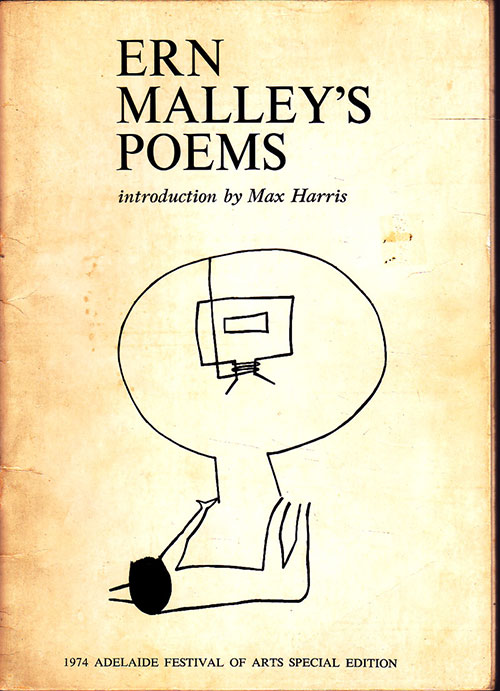
Whether a woman named Anonymous, or a mongoose called Gef, a fictional Austrian poet whose lockdown diary records her poeticizing mannequin, or some version of me in 1979 tracking the paths taken by novelist Malcolm Lowry, the book hosts a cast of unstable actors. Yes, I know that means that I’m one of them, and I acknowledge my attack of total global amnesia in one of the many labyrinthine footnotes. The characters keep returning to the scenes of their literary crimes, Liverpool mainly, though their guilty fictions float out to Berlin, the Isle of Man, Sussex and even to Ern Malley’s Australia.

You can re-write the history of post-War British poetry if you listen to your mannequin, it seems. You can put in a call for ‘creative literary history’ and all manner of alternatives appear. You can make Larkin and his crew disappear! All this in a volume bulging with mercurial humour and wily wit, and crawling with my creatures! What more could you want?


Contents

 Introduction: by Jason Argleton (he’s a fictional poet; he seemed appropriate)

One

Anonymous (a true short short about meeting a woman of that name)

Doubly Stolen Fire in his Prosthetic Voice: The Ern Malley Hoax and Fictional Poems in Liverpool (an essay coming out of the difference between hoaxes and fictional poems, and about some Ern Malley celebrations in Liverpool)

Thirty Russell Road (essay-poem-collage-piece about a strange event on the Isle of Man in the 1930s; previously unpublished)

Vestigial Gestures: The Fictional Poetry Project (in which Sophie Poppmeier communicates with her mannequin and produces English language fictional poems from the 1950s to rival Larkin and That Lot; and then I meditate upon current and previous fictional poets (who have appeared in the two books mentioned below. But also check out the EUOIA website for details of them: European Union of Imaginary Authors (EUOIA) - Home (weebly.com) )

The Novel (not a novel but another short short about (not) writing a novel; a fable of (non) creativity.)

Two: Malcolm Lowry’s Land

The Lowry Lounge (a short poem concerning Lowry or the Lowryesque, short enough to read on video, as I do here):


Malcolm Lowry’s Land (an account of visiting Lowry’s grave in 1979, mediated through attempts at a poem on that subject written then and read in the ‘now’ of the poem, 2009; previously published in the pioneering LUP/Bluecoat volume Malcolm Lowry: From Mersey to the World)

 Cablegram to Dale St (a fantasy poem about Lowry and Liverpool)

 Circle of the City: following in the steps of Chapter Five (All of the pieces in Part Two have been performed at the annual Lowry Lounge events held in Liverpool every year: I write about those meetings AND about this poem, a recent one; there is a link to the text there too: Pages: Circle of the City published now on Osmosis/New book coming soon (robertsheppard.blogspot.com))

Read about the Liverpool launch of the book, here:  Pages: Launch of Doubly Stolen Fire at the Lowry Lounge 2023, Liverpool (robertsheppard.blogspot.com)

*

 Doubly Stolen Fire is a visionary glimpse into Robert Sheppard’s ‘inventory of the invented’. To begin with he is King Hoax, trickster offspring of Pessoa and Enderby with a smatter of W.C. Fields and Alfred Jarry. Curator of a fugitive archive of writings by and about imaginary authors, Sheppard is shapeshifter, saloon huckster, cabaret comedian, laugh out loud funny. The second part is a Firminist investigation into the Malcom Lowry labyrinth –psycho(somatic)geography, raw response, fragmented memory recovered. The work is imbued with loss, inky with fingerprints, words like haunted Kodaks.

so says Jeff Young, author of Ghost Town, A Liverpool Shadowplay


Robert Sheppard’s curiosity, brilliance and mischief are entwined as closely as ever in this gathering of poetry and prose. Continuing his excavations of poetry from perhaps-parallel universes, the first part explores the potentialities of fiction in and as poetry (or vice-versa), with the famous Ern Malley hoax as a touchstone for further inventions. In the context of this probing of authorial identities, the second part, with its focus on the apparently real Malcolm Lowry, shimmers with alternative possibilities. However, what holds the double construction of this book together is the character of Liverpool, its street names and gossip and half-heard stories haunting the fragmentary speculations that unfinish themselves, here and elsewhere at the same time. Behind the dissolving characters, there’s a committed sociality in Sheppard’s writing that makes it thoughtfully open to others as well as to language’s scintillating play of otherness.

so says Zoƫ Skoulding, author of A Marginal Sea

Here's me opening the box of books.

I write about the first launch of the book, at the Lowry Lounge 2023 here:  Pages: Launch of Doubly Stolen Fire at the Lowry Lounge 2023, Liverpool (set list) (robertsheppard.blogspot.com)

This book is (or parts of it are) the third part of my ‘fictional poetry’ project. Although you don’t need to know them, they are also available, A Translated Man, which features the Belgian fictional poet Rene Van Valckenborch, and Twitters for a Lark, in which I collaborate with a number of other writers to create European poets. (See European Union of Imaginary Authors (EUOIA) - Home (weebly.com) for info on that; or see the two books here: Shearsman Books buy Robert Sheppard - A Translated Man and here: Shearsman Books buy Robert Sheppard (ed) - Twitters for a Lark, where you may buy those.


The availability of all my book-length publications may be accessed here: Pages: Robert Sheppard: seeing what's in print and what's not!

*

Locating Robert Sheppard: email: robertsheppard39@gmail.com  website: www.robertsheppard.weebly.com Follow on Twitter: Robert Sheppard (@microbius) / Twitter  latest blogpost: www.robertsheppard.blogspot.com


Sunday, October 08, 2023

Launch of Doubly Stolen Fire at the Lowry Lounge 2023, Liverpool (set list)


I launched my new book Doubly Stolen Fire as part of the Lowry Lounge at the Bluecoat, Liverpool on Saturday 28th October. 

Full details of the book itself, and how you may buy it HERE: Robert Sheppard: Doubly Stolen Fire – Glasfryn Project .

 Aquifer – Glasfryn Project. 

 Cost (plus postage and packing) UK £13; Europe £15.00; USA and the rest of the world £17.00


Or, 

to buy click here to pay by Paypal: https://glasfrynproject.org.uk/w/8459/robert-sheppard-doubly-stolen-fire/


or send a cheque - made out to Aquifer Books - to

Aquifer Books, Glasfryn, Llangattock, Powys, NP8 1PH


http://aquiferbooks.co.uk

See my hubpost on the book here: Pages: Doubly Stolen Fire (a new book of hybrid texts) is now OUT (robertsheppard.blogspot.com)


The Lounge started at the Bluecoat in the morning with a reading by me from Doubly Stolen Fire, originally subtitled reflections on authorship, real and imaginary, which includes my writings on Lowry. There were also be updates on other Lowry-related projects, including the new online archive in development, charting the arts centre’s 14-year (so far!) Lounge programme. In the afternoon, some folk walked to Hilbre Island on the Wirral. 


I write about a number of our previous meetings here: with links right back to 2009! Pages: The 2022 Lowry Lounge - a few thoughts (robertsheppard.blogspot.com)

- Lowry online archive update, Bryan: progress so far. Do check it out: it's looking good:  https://www.thebluecoat.org.uk/library/malcolm-lowry

I talk about the book as a whole, here: Pages: Doubly Stolen Fire (a new book of hybrid texts) is now OUT (robertsheppard.blogspot.com), but here's roughly what I told the audience, with an indication of what poems I read:

Doubly Stolen Fire is a book about authorship and one of the authors I consider is Malcolm Lowry. All of the other authors are, in one way or another, imaginary, even myself. Of course, Lowry is not exempt from the practice of concocting what I call fictional authors, Sigbjorn Wilderness, and so on. The second ‘half’ of my book contains my various responses to Lowry’s work, life and geographies, and, as we shall see, Lowry, or rather this Lounge, features briefly in the first part, which is about imaginary authors, fictional poets and hoaxes. I'm not going to read from two long pieces, one which features the famous Ern Malley hoax of the 1940s, and the second which showcases the case of the extra extra clever talking Mongoose on the Isle of Man in the 1930s. I wonder whether Lowry knew of either of these hoaxes, particularly the latter, with his interest in the Isle of Man: it was the stuff of interwar tabloid journalism. These pieces worry away at my distinction between hoaxes, which are usually malign, and fictional poets or imaginary authors – and I have constructed many of these, as I’ll reveal, for my many sins, albeit in passing today – which are benign but haunting presences in the literary imagination. They can’t be un-imagined. But first, I want to read you a complete but short real non-fictional story about somebody who could have been fictional – but wasn't. You’ll also notice that Liverpool is a persistent background theme in what I’m reading.

I read ‘Anonymous’, p. 11

I could not but read this poem that I wrote for Bryan Biggs some years ago. It came out of meeting the only actual Consul (of one of the world’s poorest nations) that I’ve met. I found him conducting consular business at the bar of a pub, very Firmin-like. He whisked away passports as I approached. A working title for this fantasia was ‘The Consul on the Smithdown Road’. It’s now appropriately called…

‘The Lowry Lounge’, p. 55


We’re now in the Lowry half of the book, which consists of three poems and a reprint of the hybrid prose piece I wrote for the From the Mersey to the World volume, edited by Bryan and Helen. This is impossible to read an extract from: it consists of bits of a poem I wrote in 1979 on my pilgrimage to Lowry’s grave in Sussex, plus descriptions of photographs I took on that journey, and my commentary on the whole thing, written in 2009. The piece is called ‘Malcolm Lowry’s Land’. [Extra info: ‘Malcolm Lowry’s Land’ (an account of visiting Lowry’s grave in 1979, mediated through attempts at a poem on that subject written then and re-read in the ‘now’ of the poem, 2009; previously published in the pioneering LUP/Bluecoat volume Malcolm Lowry: From Mersey to the World. See a review of it: 47-Lowry-book-review.pdf ; it says: ‘Robert Sheppard’s moving account in "Malcolm Lowry’s land" of his pilgrimage from Liverpool, the place of Lowry’s birth (and Sheppard’s present home) to Ripe, the place of Lowry’s death, and back again.' Miguel Mota.)] If my 1979 walking poem never saw the light of day my ‘Circle of the City’ did. It’s a series of interrupted haiku (my ‘pops’ this time, my ‘haiku-movie’) written (and read here) in 2021 while following the Liverpool perambulation taken by sailor-revolutionary SigbjĆørn and his shipowner father as described by Lowry in his unfinished novel, written in the mid-1930s, In Ballast to the White Sea. Their walk starts (and ends) at Exchange Flags and skirts the docks, walks very close to this building, and rests at a cinema to view a Russian revolutionary film. They discuss politics and their culpabilities in the deaths of others. Like Lowry, I take in the messages of the urban environment I pass through: street signs, adverts, t-shirt slogans. There are, oddly, both in Lowry’s novel and my poem, references to Herbert Melville’s Redburn. The Liverpool ‘guidebook’ Redburn carried was 50 years out of date. My ‘guidebook’ was Lowry’s novel, 90 years out of date!

I read ‘Circle of the City’: p. 66: [‘Circle of the City: following in the steps of Chapter Five’ (All of the pieces in Part Two have been performed at the annual Lowry Lounge events: I write about those meetings AND about this poem, a recent one; there is a link to the text there too: Pages: Circle of the City published now on Osmosis/New book coming soon (robertsheppard.blogspot.com))]

Lowry makes an unexpected, unscheduled appearance in the longest shaggy-dog story section of part one! I thought I was presenting my thoughts on my ‘fictional poetry project’ in the form of the lockdown diary of one of my creations: she has a talking mannequin, as you do, that starts spouting English poetry from the 1950s, a prophylactic to the poisonous ‘Movement Orthodoxy’. You’ll have to read her account in the book, which is on sale today. I also reflect on my most extensive ‘fictional poet’, RenĆ© Van Valckenborch, a Belgian, who writes in both Flemish and French, and reflect on how ‘fictional poets’ feel so real to some readers that ‘if they had not been invented, they would have to exist’. Another important fact is that I wrote a ‘fictional’ introduction (something my new book also has!). Then this happened. It involves this Lowry Lounge intimately, and a copy of the Van Valckenborch book: A Translated Man. (Also on sale.) With this I shall finish.

I finally read ‘A Great Gift’: p. 48

Ailsa Cox, who had generously introduced me,  led the Q and A. I don't know whether it was nerves, or not, but I don't remember a single question (or my answers).

Thanks, Firminists and Bluecoat and Aquifer (Lyndon Davies) for a great day (at the end of a great week: another reading and a lecture/reading on poetics!).


The launch...


*

Locating and contacting me: email: Please do not use my old Edge Hill one; it doesn’t work: robertsheppard39@gmail.com  website: www.robertsheppard.weebly.com Follow on Twitter: Robert Sheppard (@microbius) / Twitter  latest blogpost: www.robertsheppard.blogspot.com

Sunday, May 01, 2022

Robert Sheppard: My essay on Ern Malley and Fictional Poets appears in International Times

You may now read my reflective essay on the Ern Malley ‘affair’, or rather on ‘our’ re-enactment of it in Liverpool in 2018, which I originally wrote about here:

 Pages: Ern Malley 1918-1943: Celebrating the centenary in his place of birth Liverpool (set list) (robertsheppard.blogspot.com)


The new essay appears on International Times, and I thank Rupert Loydell (as so often) for selecting this piece, choosing some suitable illustrations, and for IT for following through with publication. It's called 

Doubly Stolen Fire in his Prosthetic Voice: The Ern Malley Hoax and Fictional Poems in Liverpool: 

https://internationaltimes.it/the-ern-malley-hoax/

Although I say it is on the Ern Malley affair, it doesn’t describe that (it’s an oft and well told story, which I summarise in a paragraph, but there’s loads online about it). It’s more a reflection on the nature of hoaxes, as carried out in this case, and as theorized by Charles Bernstein, AND a reflection on the difference between a hoax and a fictional poet. Of course, I’m thinking of my own use of fictional poets, and I refer to that. (Consult these webpages: Rene Van Valckenborch and the European Union of Imaginary Poets - Robert Sheppard (weebly.com) and European Union of Imaginary Authors (EUOIA) - Home (weebly.com)).  

This essay comes from an assembling collection on the subject of authorship and ‘fictional poets’ and their mysterious hold (rather than hoax poets, with their sticky tricks to fit you up and empty you out). As Gerald Bruns says (and I’ve quoted this often): ‘A fictional poem would be a poem held in place less by literary history than by one of the categories that the logical world keeps in supply: conceptual models, possible worlds, speculative systems, hypothetical constructions in all their infinite variation.’

I hope you enjoy this brief take on the issue. Then you may read my other, later, reflections, which I have serialised on this blog, beginning, here:  https://robertsheppard.blogspot.com/2021/10/a-fictional-poets-notebook-entry.html, with a second series here: Pages: Reflections on Fictional Poetry and Fictional Poets (1 and hubpost for the sequence) (robertsheppard.blogspot.com).


The fruits of my ‘fictional poet’ explorations are published as A Translated Man and Twitters for a Lark, both accessible here: Sheppard, Robert (shearsman.com) (along with other projects).


In that second book there appears a poem by 'Robert Sheppard' which supplies the title of my essay. It may be read in the book, of course, but is also available here:  'Robert Sheppard - Spring 15 (blazevox.org)

Friday, April 08, 2022

If The English Strain is finished, what next? (Reflections and Loose Poetics)

It’s quite something to think that the project ‘The English Strain’ is finished. Reading my diaries through (a reading begun in lockdown, but not yet completed) I see that I was working on some poems based on Milton’s sonnets as early as 2011, and some of these found their way into The English Strain as ‘song-nets’ or ‘overdubs from Milton’. (This one: The Fugger of Wonderful Black Words by Robert Sheppard | Poetry at Sangam (sangamhouse.org) Others didn’t, but may well appear as ‘leftoverdubs’ at some point. This one, for example, ‘Synovial Joint's: from Overdubs | Stride magazine ) That means I spent as long on this ‘project’ (how did I ever adopt this term that I spent so much time trying to avoid throughout my Creative Writing teaching career?) as I did on Twentieth Century Blues. (See here: Pages: Robert Sheppard :Twentieth Century Blues out in paperback )That doesn’t mean (as it did in the case of C20 Blues) that that was the only project of the last ten years. Far from it. But ‘Flight Risk’ or Micro-Event Space, for example, only got mentioned as information, when published (as here: Pages: The Poem ‘Adversarial Stoppage’ from FLIGHT RISK is published in Mercurius (robertsheppard.blogspot.com) or finished (as here: Pages: Robert Sheppard's Micro Event Space is published by Red Ceilings Press NOW)  

 ‘The English Strain’, on the other hand, has had an intimate relationship with this blog, from the original work on others’ linguistically innovative Petrarchan versions, which set it off (see here: Pages: Practice-Led piece on 'Petrarch 3' from The English Strain published in Translating Petrarch's Poetry (Legenda) (robertsheppard.blogspot.com) to the later practice of posting each new sonnet online for a week, and accumulating text for residual posts at the end of each ‘section’ or book of the project. (See, for example, this one, here: Pages: Robert Sheppard: Four sonnets from Non-Disclosure Agreement published on Stride (links)  

Posting the poems became, in this case, part of the writing of the poems, or at least, the ritual of the writing of the poems, as did the weekly videos, from the start of 2020, when I became able to add short films, short enough for these sonnet variations. (Like this one, one of the Mary Robinson sonnets, eventually a stanza in the poem 'Tabatha and Thunderer see the whole of it here: Pages: My 'Tabitha and Thunderer' is published in Blackbox Manifold (robertsheppard.blogspot.com).) 


But of course that WASN'T the end at all. It nearly was, but one more poem revealed itself with the death of the Queen (did Bo kill her?) and the strange cargo cult reactions of the Great British Public. See here: Pages: Robert Sheppard: A final final poem for British Standards!

‘The English Strain’ is best described in posts for each of its books:

 Read about Book One of ‘The English Strain’, The English Strain here . That’s the one with the Milton overdubs in it. Book Two, Bad Idea, is talked about here . See covers of the books above.

 ‘British Standards’, unpublished, is described here: https://robertsheppard.blogspot.com/2021/04/transpositions-of-hartley-coleridge-end.html where you will find links to other on and off line appearances of parts of the book (and some other videos). I transpose sonnets by Wordsworth, Mary Robinson, Shelley, both male Coleridges, John Clare (as in the video), Hopkins, Arthur Symons, and others, as well as Keats. ‘BS’ (ho ho) has now been ‘completed’ (I feel pretty confident to repeat) with this version of a Mickiewicz sonnet. (See here: https://robertsheppard.blogspot.com/2022/03/another-final-poem-of-english-strain.html )

That last sonnet, of course, pitches the work into another realm. As I was thinking, on Twitter, thinking how to address Graham Mort’s question/musing, ‘I've found the wanton destruction of human life and infrastructure in Ukraine almost overwhelming. Trying to bridge silence with utterance that doesn't seem merely self-serving or futile. How to respond? I wonder how that has been for other writers and artists?’ @grahammort. I tapped out this insufficient answer: ‘I found it impossible to continue my lampooning of Boris Johnson in British Standards, even though that puts me in the company of those withdrawing letters from the 1922 C'mittee. But I had to close it down with a nod to Mickiewiecz, one last poem: here: https://robertsheppard.blogspot.com/2022/03/another-final-poem-of-english-strain.html….’ @microbius. 

Update July 2022: BUT NOW this poem has been also published in International Times, an appropriate venue for a finale of these political poems: ‘The final poem of British Standards, the third and final book of the ‘English Strain’ Project’ I announce before its subtitle: ‘Monitoring Adam Mickiewicz’ first Crimean Sonnet: The Ackerman Steppe’. Its actual title is ‘After-Shock’, the last of four ‘After’ poems at the end of the book.

 Read it here: https://internationaltimes.it/aftershock/

I have other projects, mostly not mentioned on this platform, but only part of one of those has appeared here, the notes towards the third part of my ‘fictional poet project’, but that too is finished! It’s to be called Doubly Stolen Fire, I think. (See here: Pages: Reflections on Fictional Poetry and Fictional Poets (1 and hubpost for the sequence) (robertsheppard.blogspot.com) ) Weirdly that has something to say about Putin.

 All this from the poet of ‘unfinish’, of course.

 Another ‘result’ of reading (I nearly wrote ‘re-reading’, but I don’t think that’s what I’m doing) – another ‘result’ of reading my diaries is to see how I’ve worked on more than one project or non-project at any given time. It feels strange to have finished so many (perhaps this is compounded by having started medical treatment for a serious condition at this time as well)! I have a couple of ideas, which have been floating around for a while.

One is to write a book of poems about music (though the critical book on poetry and jazz will forever elude me: See here: Pages: Robert Sheppard: Poetry and Jazz and approaching Monk (Geraldine, not Thelonious) . This is partly to utilize the poems rescued from the elegant, indeed, lush, production of my ill-fated ‘book’ with Trev Eales, which I explain about here: Pages: Whatever happened to the book Charms and Glitter? (robertsheppard.blogspot.com) . But I’d want to add other already extant poems: my ‘Beefheart’ poem (see here: Pages: Robert Sheppard: reading at Doped in Stunned Mirages: poems in response to Captain Beefheart (set list) ), my poem for Philip Jeck (see here: Pages: Philip Jeck 2022 (robertsheppard.blogspot.com) ), a poem about Ray Charles 1964, and even the ‘leftoverdub’ I mention and link to above, 'Synovial Joints'. Of course, I’d like to write some more poems for it. A sequence on jazz saxophonists has been mooted in those diaries over the years (I mean decades, if I’m honest), but never achieved! Ekphrastic poems about music I’ve found difficult, though achieved in the one for the Beefheart weekend, and in the case of one for/about Frank Sinatra (that very odd poem even appeared in an anthology of poems all about Sinatra!).

 The diaries also suggest there is more material for a continuation of Words Out of Time, even beyond the ‘Work’ text that I appended to the published book. (See here: Pages: ‘Work’ from Words Out of Time: the 2017 Supplement (robertsheppard.blogspot.com) )

Another possible project floats around a famous murder in Brighton, involving a night club owner who lent his pink Chevvy to Jeff Keen the filmmaker, the film Peeping Tom and involving Belle de Jour (both the film and the book). But I’ve not found a way in (yet).

Of course, I maintain my ‘Ark and Archive’ daily writing (which appears in, or results in, a lot of writings, in part or whole). This morning (just now) I wrote on into page 692 of this loose-leaf accumulation of continual lines. (‘Flight Risk’ comes almost entirely from it, as do my prose pieces ‘Weekend of Miracles’, which I am still brooding over.) I am writing through photographs presently. Today’s reads:


I checked out the dispatch

room. The empty bowls

were laid out for the guests

with plates of heaped olives

to entertain them. My two boys

sat filling the ledger.

My husband’s legacy,

I’m afraid. ‘Administration

over ministration,’ was his mantra.

Cooling food. (‘Fooling cood! said the

bad poet, with nothing more

to say.) I threw a towel

over my shoulder

and got stuck in to service

as they scribbled on.   


‘Administration over ministration,’ seems propitious, as a phrase. And the ‘bad poet’ keeps making parenthetical and irrelevant appearances in this ongoing writing practice.

 I’m alert to accidents of opportunity (or opportunities of accident), of course, and that dreadful word ‘project’ doesn’t quite enfold my ways of working. My poetics lie in wait for the material to jump on (see my latest poetics effusion, here: Pages: Playing my Part in the New Defences of Poetry project (the poetics of British Standards: Shifting an Imaginary: Poetics in Anticipation (robertsheppard.blogspot.com)) . I think I’ve assembled a book of poetics, dating back to the 1980s. But that will have to wait. I’m thinking about what creative works might emerge next. As that poetics piece concludes:

 ‘A listening happens after saying. I cannot say what comes next and I’m saying it now.’

 Exactly that; exactly that!

 PS Some readers will have not paid attention since reading the words ‘medical treatment for a serious condition’, and are wondering what it is. This is prostate cancer, which I have mentioned in my biography on my website, alluded to in poems, but not mentioned on this blog. I have had it monitored for 5 years: it is now time for action. In fact, it’s begun. Yesterday I came upon Beckett’s word ‘texticles’ and that struck me as a possible title for a text about my treatment. But I’m not really that kind of writer, am I? Am I? You’re not really that kind of reader, are you? Are you?

Men, check your risk here: Check your risk in 30 seconds | Prostate Cancer UK


Saturday, March 26, 2022

A further thought on fictional poetry and imaginary authors

A Great Gift: another thought on fictional poets and their unintended consequences 

My recent and current investigations of the fictional poetry project appear largely in two serial sets of posts. The first here: Pages: A Fictional Poet's Notebook (entry one)(hubpost to other parts) (robertsheppard.blogspot.com), which relates the invention of Sophie Poppmeier’s lockdown diary and her caperings with a mannequin; and here: https://robertsheppard.blogspot.com/2022/02/reflections-on-fictional-poetry-and.html, which contains reflections on the fact and factlessness of fictional poets and fictional poetry (two different things). Then a further episode suggested itself. This one. 


The fraternity of Malcolm Lowry scholars who have washed up in Liverpool for various academic conferences on, and (deliberately) non-academic celebrations of, the work of Malcolm Lowry, seem a remarkable bunch. (My numerous accounts of these events may be accessed here: https://robertsheppard.blogspot.com/2021/10/the-lowry-lounge-2021-bluecoat.html ) They are the best of academia, in fact, with their decades-long dedication to that enigmatic and eccentric author, whose marginality and greatness has never put them off, or marred their generosity. Often seeming immensely old, but physically robust and mentally vigorous, figures such as Sherill Grace, Paul Tiessen, Chris Ackerley and Pat McCarthy, complement the more ragged local enthusiasts, ‘the Firminists’ as we are known. One of the best of, and the most frequent of, visitors was Vik Doyen, who was, in the words Tiessen supplied for Grace’s obituary, to some: a ‘great gift to the Lowry world’ (he still had plans to deal with the labyrinthine manuscripts of Lowry’s October Ferry to Gabriola) ‘and to others: a dear, sweet, thoughtful man’. (Grace 2020: 222: see here: https://robertsheppard.blogspot.com/2020/11/in-lieu-of-lowry-lounge-2020-remaking.html

and here for my brief obit: https://robertsheppard.blogspot.com/2018/12/robert-sheppard-in-memoriam-vik-doyen.html

 )


Vik was also Belgian. One year, at ‘The Lowry Lounge’, having spent some time talking to him, and judging his sense of humour, that ‘sweetness’ that Tiessen identifies, I dared to present him with a copy of A Translated Man. There, I had done it! I had placed my works of a fictional Belgian into the hands of a palpably real Belgian, a Belgian, no less, who was an expert in fiction! I’d done so at the end of the weekend celebration, without explanation, and without the possibility of response.

The following year, Vik returned to the Lounge, and spotting me, pointed across the room at me, laughed. We later spoke. He corrected my mistake of imagining that Walloon was a language, but otherwise made no comments on the poems of Van Valckenborch (or other failures in my genuine attempts to reflect Belgian social realities as I had gleaned them from visit and research). A Translated Man carries an introduction, ‘The Secret Player: RenĆ© Van Valckenborch and his Double Oeuvre’, supposedly written by editor Erik Canderlinck, who styles himself ‘formerly of the Institute of Literary Translation, Leuven’. (An early version of this may be read here:) I had picked Leuven, not for the dreadful pun (‘You’ve lost that Leuven feeling’!), but because I had never been there, and I knew nobody from its town or gown. Vik, of course, was from both, having taught at the Katholieke Universiteit Leuven from 1974 to 2002, emeritus professor until his sad death in 2018. 

            Whereas I have considered the situation of readers who cannot unhoax themselves of the presence and ‘reality’ of fictional authors (and their works), Vik had the opposite ‘problem’: he could not understand how I could not have known his colleague at the university – I fortunately forget his name – to produce such an erudite representation of his work’s focus and style in Canderlinck in prose. What I’d intended as a parody of academic discourse, with a shade of pomposity and preposterous posing, and a glimmer of insanity, was read as entirely plausible, or even more than that, real. Vik interrogated me time and again, so convinced was he, ‘You must know him!’ but never stopped smiling. I even used Lowry in my defence (though I’m not sure how that could have helped, given his frequent marshalling of real people as fictional shells). From its opening sentence, ‘This book is the result of an incredible story,’ through accounts of Van Valckenborch’s disappearance, to Canderlinck’s final admission of textual complicity (he declares he has amended the translated poems ‘occasionally without the benefit of an original’), I had tried to foreground the unreality of the imaginary author, only to trap Vik – he was quite happily trapped, I think – in the sticky web of my framing device. What we know we cannot unbelieve. Who we believe we cannot unknow. However much we are aware – at some level – that they are not the same. 

2021-2


Works Cited

The first two volumes of ‘The Fictional Poetry Project’ are:

A Translated Man, Exeter: Shearsman Books, 2013.

Twitters for a Lark: Poetry of the European Union of Imaginary Authors (with Others), Bristol: Shearsman Books, 2017. Both here: Poetry books | Modern Poetry | Classic Poetry | Poetry in Translation | Hispanic Poetry (shearsman.com)


Grace, Sherril. ‘“Glimpses of Immortality”: Our Voyages with Vik Doyen’, in Helen Tookey and Brian Biggs, eds.
Remaking the Voyage: New Essays on Malcolm Lowry and In the Ballast to the White Sea. Liverpool: Liverpool University Press, 2020. (See:  https://robertsheppard.blogspot.com/2020/11/in-lieu-of-lowry-lounge-2020-remaking.html

)