Showing posts with label Edge Hill. Show all posts

Friday, October 28, 2022

SHOP TALK (TO) POETICS: about the forms of writing - presentation to MA Creative Writing, Edge Hill University

SHOP TALK (TO) POETICS: oh yes, 'shop talk' about the forms of writing, some notes for a presentation to the MA Creative Writing, Edge Hill University, on my patented buzzword, 'poetics'. (Oh, yes, this was my 'thing'.) Tonight. These notes (these links) might prove of use beyond the limited context, although it didn't feel 'limited' tonight.


By means of introduction, this is who I am, what I’ve done, what I’m doing, what I hope to do: 

https://robertsheppard.weebly.com/ 

These are some of the texts I used tonight, rapping, in between whatever it is I said:

I used ‘Gathering from the Past’ to introduce the topic, see:

https://creativecritical.net/gathering-from-the-past/

 on the excellent ‘Creative-Critical’ website:

 https://creativecritical.net/

 though ‘Creative-Critical’ does not quite describe the focus of poetics as ‘shop talk about form’.

 Three famous examples of poetics suggest the range of possibilities:

 http://robertsheppard.blogspot.com/2016/04/robert-sheppard-necessity-of-poetics-5.html

T.S. Eliot, Samuel Beckett and Salman Rushdie each present themselves as writers of poetics.

A dry run for the introduction to Atlantic Drift: An Anthology of Poetry and Poetics is posted here, but, of course, it may be found in its final form in the anthology itself (I thought it quite useful tonight,, though I only referred to it a bit, it's a course text):

 http://robertsheppard.blogspot.com/2017/05/robert-sheppard-definitions-of-poetics.html

This itemises further examples you may read (though they are focussed on poetry; remember: ALL writing has poetics!).

I wanted to talk about what isn’t poetics. (This could be more useful than what it is, we thought!) Two examples:

ONE. Against exegesis: ‘don’t explain’. Poetics doesn’t explain. Explained here, with reference to Malcolm Lowry's famous explication to Jonathan Cape: 

http://robertsheppard.blogspot.com/2016/04/robert-sheppard-necessity-of-poetics-6.html

TWO. Poetics is not a manifesto (you can find the bit I’m concentrating on in the third paragraph, but poets might want to read on. My first sentence-paragraph is pretty axiomatic to me too: that 'the writings that writers write about writing are curiously misread', though that wasn't my major theme tonight.).

https://jacket2.org/article/poetics-and-manifesto

(Though if the word 'manifesto' helps (you), use it!) My litany of definitions of poetics (to suggest its multiple varieties and FORMS) may be read here:

https://creativecritical.net/gathering-from-the-past/

after the introduction ‘Gathering from the Past’. (You’ll find that ‘gathering from the past’ is part of the first definition.) They begin:

Poetics is the product of the process of reflection upon writings, and upon the act of writing, gathering from the past and from others, speculatively casting into the future.

Poetics is a discipline, though a flexible one.

Poetics is a discourse, though an intermittent mercurial one…. [and so on…]

I didn't actually read all of this anaphoric litany, though I'd intended that. Perhaps I should have rehearsed, as I would have for a poetry reading. 

I wanted to make passing reference to the best book I’ve read on Creative Writing, Andrew Cowan’s new (2023!) Against Creative Writing, but in this context I only referred to the part where he (very briefly) makes reference to my notion of poetics and to the pamphlet The Necessity of Poetics, on p 176. He also reflects on the rise of ‘exegesis’ in some Creative Writing commentary, while I recommend a strategy of ‘Don’t explain’! See here:

https://www.routledge.com/Against-Creative-Writing/Cowan/p/book/9781138593572

After discussion of the students’ poetics (I prepared an oral questionnaire for them) I didn't have time to read my own poetics. (I wouldn't dream of mentioning theirs, in any detail, here. Our discussions are not for public consumption.). 

This poetics refers to British Standards, not yet a book, but now a finished project (more or less): see here: https://robertsheppard.blogspot.com/2021/04/transpositions-of-hartley-coleridge-end.html. The poems in the book are all versions of Romantic Era sonnets, Wordsworth to Hartley Coleridge, including Clare and Mary Robinson. They treat of the twin subjects Brexit and Covid in the ‘twin’ forms of Romantic sonnets and my sonnets! The poetics in full may be read here (but I had a shortened version for the evening, but that didn't find air-time):

http://nclacommunity.org/newdefences/2021/07/16/shifting-an-imaginary-poetics-in-anticipation/

It seemed only fair to make my own poetics available to the students. OK : it's now 01.53 - and I'm back at home, a number of (Handyman) drinks on(wards), and I think it's time to let Rory Gallagher (on the CD) yell, 'Let's go home!'

Did. 

Tuesday, September 01, 2020

I RETIRED 3 YEARS AGO

 I’m going to go on about this again. Here are two posts on my retirement, three years ago. The first includes my ‘rap’ at leaving, a text I performed at my leaving ‘do’ (a good way to get out of the ‘speech! speech!’ trap), which looks back over the previous 20 or so years: 

https://robertsheppard.blogspot.com/2017/09/robert-sheppard-my-leaving-rap-for-my.html

The second is an account of my gadding about town with Patricia on my first day of freedom, a freedom that seems all the more poignant following lockdown and the easing out of lockdown that we are still living through. It would be freedom indeed to walk down Bold Street now (which I haven’t visited since March):  

https://robertsheppard.blogspot.com/2017/09/is-that-lump-sum-in-your-pocket-or-are.html

On the second anniversary I wrote of how I’d returned to Edge Hill for Roy Bayfield’s ‘do’ and took part in a little reading for him

http://robertsheppard.blogspot.com/2019/09/retirement-mine-and-roy-bayfields-remix.html

with my ‘Portslade/Southwick Remix’ from Words Out Of Time which in the end I didn’t read (but I talk about that text and the ‘Sussex’ poems that I did).


Sticking with that text, my ‘autrebiography’, there are links to the ‘Words Out Of Time’ update, where I brought the final poem ‘Work’ (which is deliberately incomplete in the published book) up to the end of my ‘work’ period, to the eve of my ‘retirement’, here.

Words Out Of Time may be read about here: https://robertsheppard.blogspot.com/2015/05/robert-sheppard-words-out-of-time.html

Here are thoughts after only a year:

https://robertsheppard.blogspot.com/2018/09/robert-sheppard-thoughts-on-year-after.html

Indeed, there I decide that I am not ‘retired’ at all, but a ‘full time writer’. Lockdown and the virus have taught me that my desire to simply stay at home and read and write has been delivered to me in the luxury extra long play edition. Only: can we move on now? please! Joking aside, I think I’ve been able to deal with it better than if I’d been still at work. I can’t imagine how I would have functioned as a teacher via Zoom; I’ve only used it to talk to Scott Thurston and with my colleagues at Bangor University, where I am still external examiner, my now one remaining ‘professional’ commitment, since my brilliant PhD students Adam Hampton and Joanne Ashcroft have completed. Of course, I’ve been writing a lot under these conditions. ‘Poems of National Independence: liberties with Wordsworth’ hit the lockdown head-on, their theme moderating from Brexit into Virus, here: https://robertsheppard.blogspot.com/2020/03/the-last-of-my-wordsworth-versions-in.html

‘14 Standards’ were written out of sequence, appropriately, during the timelessness and emptiness of lockdown. I have written two additional ‘Double Standards’ about the Cum’s disgraceful lockdown infringements and his elitist refusal of apology and regret, the single event that has led to breakdown in trust in the government (as if Brexit hadn’t done that). See here for all 16 standards! http://robertsheppard.blogspot.com/2020/05/robert-sheppard-14-standards-from.html . And now ‘Tabitha and Thunderer’ is complete, and I have moved onto Keats. See surrounding temporary posts early September 2020 for the end of one and the false starts and tentative beginnings of the next.


I have been blogging temporarily about these writings but not about others: in terms of this blog, there are more hidden writings than displayed (and that hidden includes poetry, fiction, poetics and criticism). The (con)temporary nature of ‘the English Strain’ project is important to me, hence the immediate and temporary blogging. Indeed, I am glad to report that the first two parts are to be published soon, as two books. (There are readable posts on Book One here and another on Book Two, here . They also contain links to published excerpts from the work, and some of my practical poetics.)


Monday, September 16, 2019

Andrew Taylor: Robert Sheppard and the Edge Hill Poetry and Poetics Research Group on Litter

Up on Litter now is ‘“Isn't it time somebody wrote all this down”: Robert Sheppard and The Edge Hill Poetry and Poetics Research Group, 1999-2013.’ This is a generous account of the PPRG, focussing on the years the author Andrew Taylor was a member, but nevertheless acknowledging that this poetics anti-workshop is still going (strong: there is a new publication on its way). There are some nice photos too, of our meetings and publications. Thanks for the article Andy.

Read it here.
Cliff Yates and Andrew Taylor talking at the 'Going Public' open meetings of the PPRG 2009

It is a detailed piece on its history, much of it I'd forgotten, and my only concerns are that it might mythologise what should remain historicised: the attempts we made to define the nature of poetics (see here) were crucial, both in terms of defining the discourse and defining OUR discourses. It is good to recall that the PPRG is still operative. There's a meeting next week!
Andrew Taylor and others at the Symposium
A version of this article was presented at the Robert Sheppard Symposium at Edge Hill University, 8th March 2017. (More about that here.)

Details of The Robert Sheppard Companion which came out of the symposium may be read here:

Pages goes back almost as far as the PPRG. Here’s an early post about it with some links:

Here’s some thoughts on the group here, which I think I posted after including the thoughts in an email to Andy; he quotes some of it: https://robertsheppard.blogspot.com/2017/09/robert-sheppard-thoughts-on-edge-hill.html

And don’t forget that this summer I guest-edited Stride and exclusively featured the current members of the PPRG. See here for an account of that with links to all the items.

In a nice neat symmetry, there are also four new poems by original PPRG member Cliff Yates in Litter too: here: http://leafepress.com/litter13/yates/yates.html

My last appearance in Litter was four ‘Burnt Journal’ poems, birthday poems for poet friends: http://leafepress.com/litter12/sheppard/sheppard.html

Litter also carries the first review of my Micro Event Space here.

Tuesday, March 19, 2019

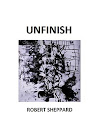
My REF statement describing my Veer volume UNFINISH

51VTwOgIVwL_352.jpg

I may be retired from Edge Hill but they can still submit my publications from my period of employment in the (mostly-dreaded) REF process. Part of the process for those entering creative writing involves the writing of a 300 word introduction to the work. That’s four out of the five. I thought I’d put them on my blog. I don’t think I’ve perjured myself.
51VTwOgIVwL_352.jpg
But for Unfinish, these be the words; I’m not offering them as a model, but they might help somebody write their own. It might also – in this context – draw people’s attention to the book, persuade them to buy it, even. It’s one of my least-noticed books, but one of my favourites. This is what I say:

Unfinish. London: Veer Publications, 2015
51VTwOgIVwL_352.jpg
Unfinish is an attempt, in 7 prose pieces, in different styles, to test out some of the following theses, and to produce a variety of experimental forms in response to some of the axioms printed at the beginning of the miscellany: ‘Interruption is one of the fundamental devices of all structuring’ (Walter Benjamin). A poetics piece, in the form of a letter to the poet Sean Bonney, is an instrument of interruptions. As such it illustrates another of the axioms, ‘The main thing is how to think crudely’ (Brecht), but in its developed poetics it relates to one of the best definitions of poetics: ‘His judgement was always anchored in poetry, or in the very subtle thinking that surrounds it. (Alain Badiou on Mandelstam). This collection of contrasts also contains a writing-through of TASS photographs of Soviet history which attempts a surreal history of that social experiment, interwoven with a ghostly narrative of espionage; a performance piece in two parts (a conventional story and a fantasia upon its theme); and a piece of psychogeographical prose, ‘In Unadopted Space’, that relates to another two of the axioms: ‘Space is a part of our mental life’ (Roy Fisher) and ‘Space is as much a challenge as is time. Neither space nor place can provide a haven from the world.’ (Doreen Massey) Varieties of montage, de-montage, with interruption as structure, with transformation and transposition, formal resistance, creative linkage, ‘imperfect fit’, near-perfect fit, contribute to create all kinds of multi-form unfinish, to use the deliberate title of the book. As another of the quotations states: ‘As Picasso said about unfinish, alive and dangerous… I have a taste for unfinish. It’s one of the ways I want to live my life and art.’ (Ronald Kitaj)
51VTwOgIVwL_352.jpg

The two axioms I don’t quote are:

We listen to silence. We listen to fictitious music in our head. Think music. (Ralf Hutter)    
          
But for what we believe most we don’t have art at all. (Kenneth Koch);

I couldn’t quite see how to work them in! But what's not to like?   
51VTwOgIVwL_352.jpg
Buy Unfinish  here and read more of the text.
51VTwOgIVwL_352.jpg
I write more about it here:
http://robertsheppard.blogspot.com/2016/03/robert-sheppard-new-book-out-unfinish.html

and I have another set of axioms that didn’t end up in the book here:
http://robertsheppard.blogspot.com/2016/03/robert-sheppard-new-book-unfinish-de.html

Access the other REF statements on my 2014-2017 output via links accompanying the first one here:
http://robertsheppard.blogspot.com/2019/03/writing-my-ref-300-word-statement-on.html

 51VTwOgIVwL_352.jpg

Sunday, March 17, 2019

My REF description of my book Words Out of Time: autrebiographies and unwritings

As I said also recently, I may be retired from Edge Hill but they can still use my publications from my period of employment in the dreaded REF exercise. Part of the process for those entering creative writing involves the writing of a 300 word introduction to the work. I thought I’d put them on my blog. I don’t think I’ve perjured myself. In fact, I don't want to write anything for the process that I didn't make public.

But for Words Out of Time, these be the words; I’m not offering them as a model, but they might help somebody write their own. It might also – in this context – draw people’s attention to the book, persuade them to buy it even.


Words Out of Time: autrebiographies and unwritings. Newton-le-Willows: Knives Forks and Spoons, 2015

The first part of this work began as a project – out of an existential dilemma – to deal with particular MATERIALS: the piles of journals, diaries, and less categorisable autobiographical writings that I have accumulated since 1965 when they began, and that I have periodically attempted to use for writing. In its opting for PROCEDURE it is thus a conceptual project, but is perhaps not quite an example of ‘uncreative writing’ as that term has come to be used, but is a creative ‘unwriting’, to adapt a term I have used to describe my earlier texts refunctioned or re-moulded from others. Perhaps the work might be thought of as an ‘unwriting through’ of the MATERIALS, but such proliferation of terms is only useful if it assists a gloss on PROCEDURE. 

The result of the ‘coherent deformation’ of the materials is what I call an ‘autrebiography’, a shaped narrative that concentrates upon certain aspects of the diaries. The most anthologised piece, the opening ‘I Don’t Remember’, catalogues the incidents in my diary of which I have no recall. Thus the piece may be described as an anti-memoir. One part two of the work proceeded by interrogation: each sentence is a question. It also covers a short space of time. The second part, ‘Arrival’, features the voice of a near-imaginary female sibling, constructed from re-examining diaries in such of female utterance, actions and agency, and transforming it. The third part, ‘When’, is even more conceptual – hence the titles, ‘With’, ‘Words’ and ‘Work’ moving through writings, photographs and diaries (again with an asymmetrical relationship between account and chronology: more as each year passes). . As such it is an exploration of subjectivity in text. Indeed, since publishing the piece I have come across the articulations of creative memory in the work of Rosi Braidotti; she says: ‘Remembering is less about forgetting to forget than about retaking, as in refilming a sequence: it is about differing from oneself.’


(Part of this material may be seen this year, since I am blogging my 1969 Diary, daily, 50 years after the event(s).) But it's only a very small part of the material!

I wrote in detail about producing the first part of Words Out of Time, ‘The Given’, here.

Buy Words Out of Time here.


And there is a supplement to ‘Work’, here:
http://robertsheppard.blogspot.com/2018/09/work-from-words-out-of-time-2017.html

I explain the writing of the supplement thus:


My book Words Out of Time: autrebiographies and unwritings (Knives Forks and Spoons) ends with a piece entitled ‘Work’. In that version it finishes not with a full stop but with ellipses. That’s because its focus, the world of work, acts of, commitments to, actions of labour, wasn’t over for me at that time (the book appeared in 2015). Formally, the text distends time, or slows it even (the original idea was 15 words for unwritings of diaries when I’m 15, 50 for when I was 50, and thus 61 words for when I was 61, etc, but that broke down to nevertheless leave the general effect). That means that the text covering 2011-17 is as long as that for 1965-2011! (I was reacting against the fact that most conventional (auto)biographies spend more time on their subjects’ early years, and I wanted this section to ‘do different’.) Here’s the end of the end.

There is an ‘outtake’ here:
http://robertsheppard.blogspot.com/2013/12/robert-sheppard-say-when.html

Access the other REF statements on my 2014-2017 output via links accompanying the first one here:
http://robertsheppard.blogspot.com/2019/03/writing-my-ref-300-word-statement-on.html

Saturday, March 16, 2019

My REF statement describing Twitters for a Lark / Review of the book in Tears in the Fence

I may be retired from Edge Hill but, as you may know from reading three previous posts, they can still use my publications from my period of employment in the dreaded REF process. Part of the process for those entering creative writing involves the writing of a 300 word introduction to the work. That’s four out of the five. I thought I’d put them on my blog. I don’t think I’ve perjured myself. Indeed, making them public seems a useful thing to do. I’m not offering them as a model, but they might help somebody write their own. It might also – in this context – draw people’s attention to the book, persuade them to buy it, even.

It is the very different Twitters for a Lark, about which I have written the following:


Twitters for a Lark: Poetry of the European Union of Imaginary Authors (with Others), Bristol: Shearsman Books, 2017

If the right poets for the times don’t exist, then they have to be invented. Working with this axiom, I co-created the works described above. While collaboration is a major mode of contemporary poesis, and these poems have been parts or wholes of at least 5 performances, this project is unique in collecting multi-authored collaborations under one concept. I was able also to combine working with both well-known and emergent writers of various poetical persuasions. It was an experiment in the creation of fictional poets and exposes the fiction of ‘voice’ as a construct of careful artifice. Like its sister book, A Translated Man, it researches the limits of what Foucault calls the ‘author-function’ through the means of ‘fictional poems’, to use Bruns’ term. Not a hoax (the book foregrounds its fictiveness), this work operates in some relation to the Ern Malley Hoax and to the use of heteronyms by Pessoa. The collaborative element helped to create the illusion that each invented poet (one for each of the EU countries) was an individual, but ensuring that they were quite different: from conceptualists to Oulipeans, from lyricists to experimentalists. Fictional biographies at the end of the book (commingled with ‘real’ bibliographies) destablises the unreality of the project. The EUOIA project (as I call it) was conceived before Brexit, but performances and the reception of the book have been coloured by this divisive issue. (The book itself very clearly reveals the authors of the poems.)

YOU MAY BUY TWITTERS here:

https://www.shearsman.com/store/Robert-Sheppard-ed-Twitters-for-a-Lark-p102839129


Norman Jope’s review ‘Games Across Frontiers’ (Twitters for a Lark) appears in the new Tears in the Fence 69, Spring 2019: 122-127. I rather liked: ‘Each imagined poet is like a fabulous beast, imagined by a tonsured scribe at a bench’ (Norman Jope)

See also Billy Mills: ‘Poetry after Brexit’ (Twitters for a Lark): Elliptical Movements (web), 13th May 2018.  Read this review  Here

This is joined by Annie Runkel, ‘Twitters for a Lark’, Dundee University Review of the Arts, at https://dura-dundee.org.uk/2019/05/01/twitters-for-a-lark/. in May 2019.


There are rather a lot of references to the book and to EUOIA on this blog, so here are a few links to hubposts that have links to other posts and/or videos of the many performances by myself and collaborators (and sometimes not with me):

https://robertsheppard.blogspot.com/2018/02/meet-euoia-collaborators-general-intro.html
http://robertsheppard.blogspot.com/2017/08/euoia-night-august-reading-at-other.html
https://robertsheppard.blogspot.com/2018/04/twitters-for-launch-part-of-european.html

To find out more or less about the EUOIA check the EUOIA website which is still live at http://euoia.weebly.com,

Access the other REF statements on my 2014-2017 output via links accompanying the first one here:
http://robertsheppard.blogspot.com/2019/03/writing-my-ref-300-word-statement-on.html

Monday, March 11, 2019

Writing my REF 300 word statement on History or Sleep: Selected Poems

I may be retired from Edge Hill but the university can still use my publications from my period of employment in the REF 2021 process (which is not being used in a disciplinary way at Edge Hill as it is in other institutions, or I wouldn’t play ball). Since I still supervise a few PhD candidates it is only fair that I should. Part of the process for those entering creative writing involves the writing of a 300 word introduction to each work. I thought I’d put them on my blog. I don’t think I’ve perjured myself. In an earlier form I was asked to state the ‘significance’ of my creative work, which received this rebuff:  

As a leading theorist of poetics as a speculative, writerly discourse, which attempts to provide open strategies for a writer, while not closing them down into ‘descriptions’, I have stated often my contention that writers cannot judge the significance of their own work. This puts me in a dilemma. As Jung wrote:  ‘Being essentially the instrument for his work he (the artist) is subordinate to it and we have no reason for expecting him to interpret it for us. He has done the best that is in him by giving it form and he must leave interpretation to others and to the future.’

But for History or Sleep, these be the words:


History or Sleep: Selected Poems. Bristol: Shearsman, 2015


This is the first selection of the full range of my poetry to be published, and it gives a panoramic view of the work, or rather: a chronological journey through the work as it develops. The earliest poem dates from 1982 (and is an unpublished poem). The most recent includes excerpts from A Translated Man (2013). I decided that since my 407 pp long poem Twentieth Century Blues was still commercially available I would only select lightly from that project, and avoid the complex indexing it carries. In fact, the decision was also made to restrict information on previous provenances so that the poems were foregrounded in their own rights. This would provide a different reading experience, even for those used to the poems in other contexts. Sequences, such as ‘Empty Diaries’ and Warrant Error, are represented by poems that best exist on their own; the emphasis was on the experience of the individual poem. (This sets up a tension with my creative practice to write in interrelated clusters of poems. Hopefully the poetic strategies are laid bare by this decision: the varieties of montage, de-montage, with interruption as structure, with transformation and transposition, formal resistance, creative linkage, ‘imperfect fit’, near-perfect fit, all kinds of multi-form unfinish, as I call them in my poetics. Combined with my desire to translate the matter of history into the manner of poetry, this volume demonstrates originality in its scope, its selection, its presentation and its poetic foci. This is reflected in the titling (which is also the title of a long poem included). There are various patterns that a reader might detect, both the poetic strategies and the poetic foci, as I put it, but also others of which the author might not be aware.


I’m not offering this as a model, but they might help somebody write their own statement. It might also – in this context – draw people’s attention to the book, persuade them to buy it, if they don't possess it.

You can buy it here:

https://www.shearsman.com/store/Robert-Sheppard-History-or-Sleep-Selected-Poems-p102839128


but there are other posts about the book (and links) here. About selections here:

http://robertsheppard.blogspot.com/2016/01/robert-sheppard-how-i-selected-history.html


about de-selections here:

http://robertsheppard.blogspot.com/2014/09/robert-sheppard-micropathology-of-sign.html

For similar statements on my other creative writings:

See my REF statement (and some thoughts about two reviews of the book): Twitters for a Lark here

For a statement (and some other matters) about Words Out of Time, go HERE.

And for an REF account of Unfinish go here. 
 

Saturday, February 16, 2019

Reading with Forrest Gander and Rachael Allen on Friday 15th February 2019 (set list)

Tonight (last night now) I read at The Arts Centre, Edge Hill University, in Ormskirk, with Forrest Gander and Rachael Allen.

It was good to read with Rachael Allen, who has a first book out from Faber, which she read from well, and I liked the way she got inside bodily desire and despair.

It was great to see Forrest Gander again, who is included in the anthology Atlantic Drift, which this evening's organiser, James Byrne, and I, edited last year. He read from his latest book and from new work about lichen and intimacy.

I briefly launched Hap: Understudies of Thomas Wyatt’s Petrarch, which is now available from Knives Forks and Spoons, and read from my most recent work Bad Idea, my versions of Michael Drayton's sonnets Idea.


I read Hap 2, 9, 13. Followed by Bad Idea: 2, 4, 5, 6, 7, two that will appear soon in Monitoracism, i.e., 9 and 10; then; 17, 19, 'May Albion Never Learn', 26: Despair, 27, 28, 29:


last words: 'Even in fancy, I've betrayed my European IDEA'.  


Hap may be read about here:

https://www.knivesforksandspoonspress.co.uk/product-page/hap-understudies-of-thomas-wyatt-s-petrarch-by-robert-sheppard-26-pages


Steve Spence has reviewed it here.

here. Thanks Steve.  And that’s recently been joined by:

Clark Allison: ‘One Side Ripening’, Stride, January 2019: http://stridemagazine.blogspot.com/2019/01/one-side-ripening.html

I write about my sonnets generally here, and here and see here and here for more on my 'Petrarch' obsession.


I shall also be reading at the launch of The Robert Sheppard Companion, a volume of essays on my work, at Bluecoat, Liverpool, on 13th May (a date for the diary). Note: I will be reading different work at that reading. 


Sunday, September 02, 2018

Robert Sheppard: Thoughts on a Year after Leaving Edge Hill

It’s a year since I retired, and it’s about six months since I stopped referring to myself as retired and started to think of myself as a full-time writer. You can look back at my ‘first day of freedom’, AND at my retirement ‘do’ rap. I'm curious that, in the latter, I wrote and recited the following:


Generally depressed by the Brexit result which has left many students bereft of a cleanly conceptualisable future, young people have discovered that they are not just individual consumers but that they form an electorate, surprisingly left-leaning, that wishes to scrap tuition fees and loans and even to erase standing student debt. They’ve even been gifted two elections to try this power out, and they’ve got a taste for it.

That makes this moment a potentially interesting one that could stall the growing pitting of student against staff and suggests a more collaborative future for HE

As I put it in a recent poem about ‘one of those days in sovereign global Britain’

(you didn’t think you were going to get away without this, did you?)

There are no students in this poem yet their standing debt
Has nurtured a collective electorate that forms beyond
The ‘envies’ of petit bourgeois consumerism
This semantic field is manured with usurers’ tears
(The poem is one of my versions of Surrey's sonnets.)

The industrial dispute during the year over, well, pensions (you wait until Brexit when they will ‘roll back the state’ – what do you think the second half The English Strain and Bad Idea (so far) is about?)… The dispute in the ‘old’ universities did indeed answer some of these issues. Students on the whole lined up behind staff, part time lecturers finally revolted against their exploitation, and academics become militant in an inspiring way. It was a shame this dispute was not also in the ‘new’ universities sector where the exploitation (caused increasing research, increasing teaching, increasing admin and increasing bullying) is more acute. It was, as they say, consciousness raising. My involvement with the Ern Malley Orchestra (see here), many of whose highly unionised members teach at Liverpool University, showed me what was happening second hand. I took part in the only way I could: I (temporarily) resigned as an external examiner. I also talked at a conference on the profession of Creative Writing (a keynote, follow the links to the text at the end of this post), though that was before the dispute. I'd not seen such a negative vibe amongst Creative Writing tutors before. Exhausted.

Actually I've had quite an active year, professionally, given that I’ve retired. No, I haven’t, have I? I am a full time writer. This seems to be true in a very literal but limited way. I have written a lot of creative work, but NO critical work at all. Only that keynote (and a post about Roy Fisher's radicalism, here). No editing. No curating poetry readings. None of the things I thought I might do. The magazine Patrica and I proposed, Three Famous Aviators, remains firmly glued to the tarmac. Though I've been pondering how to process the 'fictional poet' trilogy (as I see it, and as I see it here). But that's creative work again.

I can’t quite explain this, but now I’ve had a year ‘off’ (though no holiday) I might turn my attentions to more than my creative work (some of which is recorded on this blog: the ongoing sonnets, the collaborations withPete Clarke and Trev Eales, and more). I suppose if my goal was to have no goal (as Patrick Kavanagh put it) I shouldn’t be surprised to find I have no goal. But certainly not targets. No outputs. No projects. But possibly a (private) list.

I've just seen the contents of the 'Robert Sheppard Companion'. It's overwhelming and I'm not going to be lonely with a companion like that! A big boot up the rear from other people's suppositions about what it is I might have been doing.

Watch this space. An upcoming post on the history of Pages itself may suggest some renewed literary activism. Even 'aesthetic justice'.

(The above was mostly written before my mother died, so a lot of these thoughts have been put on hold while I deal with the bureaucracy of death. Here.) 

Saturday, September 01, 2018

Atlantic Drift published a year ago today

It's a year now since Atlantic Drift - the transatlantic anthology edited by James Byrne and myself - was published. It's not too late to buy it, or to adopt it for teaching purposes. Or just to read for pleasure and enlightenment. The inclusion of poetics in the volume as well as work by the 24 poets is part of our venture to further the use of a speculative writerly discourse, by writers and readers. (There is a lot on this blog about poetics.) 
Read the first review by Ian Brinton on the Tears in the Fence website here
Read the second response by Clark Allison on Stride here
Read an online review by Steven Waling here
Read the third review of Atlantic Review in the print journal Poetry London by Mary Jean Chan, or read online here.
Here's an account of the Berkeley Uni launch in the US. 

It's on the ARC site, and you may also buy the book through that link!

Links to much more about the anthology, the launches, etc, here. Including the London Review of Books Shop one.


Sunday, May 20, 2018

i.m. John James (and my poem 'As Yet Untitled Poem' for John James)

Sad to hear of the death of John James. We last saw him on this blog at the launch of Atlantic Drift in London in January, see here. He wasn't in the best of health then. Here's me watching him read.


But I also want to remember him at his reading at Edge Hill in 2005, as he is in this photograph, holding his Collected Poems aloft, and as he is addressed in this poem I wrote after he'd left the house with Patricia to talk to the students the morning after the reading. (It appears in Berlin Bursts.) He is an astonishing poet. I'm glad I taught his work to students, and I'm glad he's in Atlantic Drift. 


A certain kind of elegance has gone out of the world.  


As Yet Untitled Poem

for John James

I beg you to hear this boy. And hear him out.
His morning poem you’re in, now,
is neatly creased as a crisp new shirt, stiff-
backed and clipped on its cardboard torso, posed.

It trips you over the cat from the film you’ve never
seen, as you search for your spectacles.
I use my enormous brain to seek the signals
they emit. We are both The Prisoner

on this island, Crusoes of overlapping surveillance.
Sleep is where we’ve come from, captive, a misty place                            
of drizzled desire and mordant fear. The fog has
lifted, real enough, for the expedition that must

set off for the explanation. Your house-
guest, a sort of vapour that
an opening door dispels, coughs his soft pardons.
Serious poetry is back in town:

the Unfinished Alba of the Unknown
Troubadour, whose vida is word for word. The
beloved of this lyric is the hero of that epic, where
sometimes I did seek, I beg you now to flee this boy.

2005

Watch him reading 'Baudelaire at Cebazan' at the LRB here.

Wednesday, November 15, 2017

Atlantic Drift Launch: Zoe Skoulding, Trevor Joyce and Chris McCabe


Launch of Atlantic Drift: An Anthology of Poetry and Poetics

Published by Arc Publications and Edge Hill University Press 
November 23rd , 7.30pm


Chris reading

Featured Chris McCabe, Trevor Joyce and Zoë Skoulding 

Introduced by the books' editors, Professor Robert Sheppard and Dr James Byrne and with remarks from Pro-Vice Chancellor Mark Allanson
Me explaining why the anthology contains poetics as well as poetry

This reading featured three poets from a new and groundbreaking publication of poetry and poetics published by Edge Hill University Press.
All three readers read well! Many copies of the book were sold...

Atlantic Drift publishes 24 poets from the UK, Ireland, USA and Canada in partnership with Arc Publications. This anthology seeks to highlight new and existing writing and to define/redefine the discussions between poets from both sides of ‘the pond’. By developing a dialogue between English-speaking traditions, Atlantic Drift will include some of the most exceptional poetry and poetics written in the 21st century.

But also visit this page HERE for the various posts I've made concerning the book, its editing, including videos and photos.