Monday, October 24, 2022

The Horrible Thought that Bo mioght be back: only The Bard could save me now!

 I know I keep saying goodbye to Bo(ris Johnson), once through the Medium of Jake Thackray’s masterpiece. That’s here: Pages: Goodbye to Bo through the Medium of Jake Thackray’s masterpiece (not a book review) (robertsheppard.blogspot.com)

 Before that I said goodbye to Bo(ris), here, with a poem:

https://robertsheppard.blogspot.com/2022/08/final-extra-last-poem-of-english-strain.html

And then, here, finally, finally finally, here here here: Pages: Robert Sheppard: A final final poem for British Standards!

But yesterday I thought I might have to say HELLO again to him! The horror! The horror! The thought that this wreck of a human being, nursing his hangover, desperately phoning out for supporters, or to Deliveroo for an Alka-Selzer (as one wittily expressed it on Twitter), thumbs-upping us in Trumpian triumphalism, was returning, was a threat of more ego-driven drivel! Even those Union Jacks limply appropriated (from where?) for the occasion in the empty office space (hired by the hour?) express the desperation. The biggest threat, was not the political chaos that would follow (maybe a second royal yacht in case of emergencies) but the threat to ME! (Why can’t I be as big as egotist as him?) The threat that, far from having passed on to a project to write through the Liverpool images of Tricia Porter, or to write 10 poems one line at a time (today’s is ‘as they twirl knowledge in a giddy drop’), or even to finish my ‘novel’ Elle, I would have to return (like Bo himself) to that which I have renounced. Of course, I haven’t been in the Caribbean (though I have been in the Belvedere, The Handyman, and Ye Cracke… No, but I might have to return to the task of transposing sonnets to keep up with Bo’s vaulting ambition (imagine him vaulting!), even though I’ve rejected the decadent sonnets I was looking at some months ago (that’s all in those posts linked to above), Arthur Symons and all that.

No, I decided, I would have to face up to the Big One, Shakespeare’s Sonnets. I’ve avoided them, because others have written through them (Philip Terry, K. Selim Mohammed, Michael Egan, and many others), and because they are curiously disarming in a way that Drayton’s are not (I bagged Drayton's here: https://robertsheppard.blogspot.com/2019/09/on-bad-idea-and-reference-to-earlier.html : all done, all available). In preparation I read about 35 of them, and also the pages in Jonathan Bate’s very fine book Soul of the Age that I’d already marked, in my initial sonnet-researches eons ago. So, off I would go. I looked at sonnet one. Oh, yes, the imploring voice, it sounded like Zahawi’s quickly deleted email in favour of the blond bombshell Bo. Oh yes, ‘From fairest creatures we’ do ‘desire increase’ – in inflation, interest rates, food costs. Yes, I’m already starting. Bo’s bombastic egoism is perfectly echoed by The Bard in his ’thy light’s flame with self-substantial fuel’! ‘Pity the world… to eat the world’s due!’ – it's all there, all there. Ready to go, if need be.

Then he pulled out, having 100 supporters (sez who?), saying he could have won, if only they’d let him. Pete Best has turned up at Abbey Road to record Revolver!

One of the reasons for picking Shakespeare for this approach (and, remember, part of this post is to keep materials in mind in case he does re-emerge, after he is exonerated by the Commons Committee, Bo is no liar (he assures us)). One reason is that he himself, Bo, is writing a book on Shakespeare. It has a title, The Riddle of Genius, and it is available for preorder on Amazon, here: Shakespeare: The Riddle of Genius: Amazon.co.uk: Johnson, Boris: 9780771050831: Books

 It is due for publication in 2035, yes, 2035 (though another Amazon source, Patricia tells me, has 2075!).

 Not a word of it has been written, other than the title and the synopsis, which I shall allow anyone with a smidgeon of literary sensibility to vomit over now:

Four hundred years after his death, William Shakespeare is more popular than ever. Studied by schoolchildren everywhere, performed and interpreted in every conceivable medium and setting, he remains an unparalleled global phenomenon. With characteristic curiosity, verve, and wit, Boris Johnson sets out to determine why and how. He immerses us in the swagger and terror of the Elizabethan era, with its newfound craze for theater and its bold intellectual flowering, under the threat of repression. He explores the timelessly intriguing themes of the plays: the illicit sex and the power struggles; the fratricide and matricide; the confused identities and hormonal teenagers; the racism, jealousy, and political corruption. He explores the psychology of Shakespeare's characters and celebrates the playwright's appreciation for women and the roles he created for them, more fully realized than those Hollywood churns out (had women but been allowed to play them in his day). And above all, he revels in the language -- our language, which that master poet enriched with at least 2,500 new-coined words and a litheness that is an ongoing delight to us all. In this joyful, fascinating book, Johnson reminds us why Shakespeare truly was a genius, a writer not just for his time, but for all time.

If he dares, I am here, sonnets in hand, like grenades, at the ready. (Unless, of course, I choose to do something quite other with the Bard. After all, he’s ‘more popular than ever’!) Oh, and Jonathan Bate has words of advice for Bo: ‘Don’t waste everyone’s time with a sub-par biography based on secondhand research – write a more personal book about what Shakespeare has taught you about the important things in your life such as sex, ambition and betrayal. He has a lot to say about those great themes.’

See for an account of Bo's work in progress and the controversy surrounding its composition: Boris Johnson offered to pay for help writing Shakespeare biography, says scholar | Books | The Guardian

BRITISH STANDARDS is now available:  https://www.shearsman.com/store/Robert-Sheppard-British-Standards-p661920471

*

Locating Robert Sheppard


email: robertsheppard39@gmail.com

website: www.robertsheppard.weebly.com

Follow on Twitter: Robert Sheppard (@microbius) / Twitter

latest blogpost: www.robertsheppard.blogspot.com

Monday, October 17, 2022

I.M. Alan Halsey: some thoughts, links, and a poem dedicated to him.

I am saddened to hear that Alan Halsey has died, and my heart goes out to Geraldine at this time.

 Alan was an important writer, and he’s one who has been important to me for a long time. In the early 1980s we conducted a long correspondence on poetics, after I’d featured his work in my early magazine Rock Drill. In Pages he was one of the 12 featured writers, and his work was accompanied by a long essay by Gavin Selerie on his work up to that time: Pages 397-420 Alan Halsey. (And a response to the work therein by Tim Woods. See here: Pages: Pages (first series) reissued entire with an interview on Jacket 2: Complete Index of all 5 series (robertsheppard.blogspot.com) )

 Of course, there was more work, much more work, after that, and the academic tone of the earlier work lightened (though he always remained bookish in the good sense, as befits his main occupation as a book dealer, who was of great use to my own self-education). That is: if satire is ‘lighter’ (which if I weren’t writing this so quickly, is a statement I’d want to stop and examine).


I didn’t really know him very well until he’d married Geraldine Monk and he lived not too far away in Sheffield, and they both stayed with us (once when a double-booking, Geraldine performing with Julie Tippetts, left them without a hotel!) – which was always fun. Much drink given, much taken. Lots of gossip and laughs…

 By this time Alan had branched out into visual poetry (is that the right term?) and music performance (is that the right term?). I remember a launch of Marginalian at the Text Festival in Bury and a performance of Juxtavoices in the Bluecoat (with no bar!). (Here’s a gallery: Alan Halsey (westhousebooks.co.uk))


 He has one piece on this blog, a charming gift for Patricia Farrell’s birthday, which I don’t believe is collected anywhere: See here: Pages: Alan Halsey: Those acrobats A and Z put on a show for Patricia's 60th (robertsheppard.blogspot.com) 

Oh, let’s not forget his incredible investigative editing of the three volumes of Bill Griffiths. See here: https://robertsheppard.blogspot.com/2014/03/bill-griffiths-collected-poems-launch.html

I never wrote on his work much, and indeed, only recently so (unless you count 3 poems dedicated to him, a bit on that below). I often found the work difficult, but always witty, even humorous (I adopted one of his techniques that he told my Edge Hill students about on a visit: keeping wordlists: ‘error/terror’; ‘rose/eros’ etc., that I used in Warrant Error – and its title is a blast of Halseyean logopoetry, it strikes me now.) But recently I did write in some detail about his collaborations with Kelvin Corcoran, first in a blogpost in the series about ‘collaboration’,

  Pages: Thoughts on Collaboration or Coauthorship 8: Kelvin Corcoran and Alan Halsey's three books (robertsheppard.blogspot.com)

 Then in a sharper review of the (then) latest collaboration Winterreisen,

 https://www.littermagazine.com/2020/02/review-wintereissen-by-kelvin-corcoran.html

And finally as part of a critical article on collaboration for English Studies that I write about here:

Pages: My piece on 'Collaboration' is published in The Yearbook of English Studies 2021 (robertsheppard.blogspot.com)

 I think I quote these lines (from Halsey, not Kelvin) in all three pieces:


The poets shuffle out, bloody-eyed,

back to their caves in the anthologies

half a mile north of Neglect,

watched by Eng. Lit. lads on CCTV. (61)


That about sums up Alan’s attitude to the literary world, and to academia! As I say in the review of the book, ‘Those lines are typical of the sardonic humour, which usually jumps out like this, a bolt from the blue, and is one of the pleasures of reading Winterreisen.’ Do, if you haven’t.

 I want to point to one of the poems I wrote for Alan, as my tribute today (one of the others is shared in its dedication, and the third is a dud). Here it is, ‘The Hello Poem’, from my volume Berlin Bursts. 

The Hello Poem

 for Alan Halsey


Hello poem, it’s me again. I’m

the voice that lives upstairs. You


hear me reeling across my floor,

your ceiling, as I dance about my


affairs. And you about yours, not

miming my sound, un-


rhyming your eyes as they rise,

faltering, toward me, from the ground.

                                    *


Hello poem, it’s me again, the

other side of your world,


speaking long distance

straight


around your curve, racing

like a tycoon’s jet


to overtake the dawn

and possess tomorrow.

                                  *


Hello poem, it’s me again. You

ran away with yourself to


stage your new self’s forming. I am

the silence that inhabits your zero.


*


Locating Robert Sheppard

 email: robertsheppard39@gmail.com

website: www.robertsheppard.weebly.com

latest blogpost: www.robertsheppard.bogpot.com

Thursday, October 06, 2022

Robert Sheppard: Four new versions of John Clare published in Talking About Strawberries (plus videos and links)

I’m pleased to announce that another four of my ‘transpositions’ of the poems of John Clare (‘Unth(reading) Clare’ I call them) have been published on the Canadian webzine Talking About Strawberries All the Time. What a great title, and it’s an enterprising magazine too, edited by Malcolm Curtis. Thanks, Malcolm, for including these poems. The magazine may be found here:  http://talkingaboutstrawberries.blogspot.com/

 My contributions may be found here:

 http://talkingaboutstrawberries.blogspot.com/2022/10/robert-sheppard.html

During the third (unpublished) volume of my ‘English Strain’ project I have been re-writing, transposing, unthreading (I have a variety of terms) sonnets from the English Romantic tradition. That’s one way of looking at them. The other is to say they are poems about Brexit and Coronavirus. But in these four poems (and the other ten from the ‘Unth(reading) Clare section) I have been working with John Clare’s sonnets as my raw material. I found these sympathetic, and I had not known Clare’s work well before. I loved the work, actually, and adopted a quieter, more sympathetic, voice for some of my versions. Perhaps only Mary Robinson’s work I knew less, and I’m making up for that by editing a volume of her poems! Compare with Wordsworth here: Pages: The last of my Wordsworth versions in 'British Standards' (Book Three of 'The English Strain') (robertsheppard.blogspot.com)and Keats here (with more videos) : https://robertsheppard.blogspot.com/2022/04/four-more-keats-overdubs-published.html

 Or indeed, read what I said directly after the writing of these transpositions of Clare:

Pages: The final sonnet transposition from John Clare (thinking about the set of 14) (hub post) (robertsheppard.blogspot.com)

https://robertsheppard.blogspot.com/2021/02/the-final-sonnet-transposition-from.html

 Links to another online Clare ‘transposition’ in Beir Bua (with a video) here gives a bit more info:

 Pages: My transposition of a sonnet by John Clare, from British Standards, is published on Beir Bua (robertsheppard.blogspot.com)

 And so to this four. As I wrote these poems (because of their contemporary nature) I blogged them for a week or so. I also found I could add a video of their drafts. So here are three of the poems in Talking about Strawberries (Clare, I bet, talked about strawberries!) and a link to a fourth already online elsewhere.  

ONE: ‘De Wint! I would not..’ (De Wint was a painter who knew Clare.)


TWO: ‘Black grows the southern sky’ (the titles use the first line of Clare’s poem so readers may find the ‘originals’) is read here:


 THREE: My lo-fi videopoem of ‘What a Night’ I ‘ve already written about here… (It was all an accident, but it looks good.)

https://robertsheppard.blogspot.com/2021/01/a-lo-fi-lockdown-videopoem-overdub-of.html

'What a night' is also here still, as part of SJ Fowler’s videopoem archive at Kingston University, but also on YouTube:

FOUR: ‘The oddling bush’, which comments on Clare’s odd term ‘oddling’!


 The beginning of ‘the English Strain’ is best described here ( http://robertsheppard.blogspot.com/2018/04/robert-sheppard-petrarch-sonnet-project.html ): that’s the first hundred, in the book The English Strain. Then here: https://robertsheppard.blogspot.com/2019/09/on-bad-idea-and-reference-to-earlier.html - that’s Bad Idea, another 80+ sonnets (and another book).

 You can buy both books together here: https://robertsheppard.blogspot.com/2021/06/how-to-buy-english-strain-books-one-and.html


British Standards, as I said, not yet a book, but finished (or so I kept thinking, see the final link below!): see here: https://robertsheppard.blogspot.com/2021/04/transpositions-of-hartley-coleridge-end.html. They are all versions of Romantic Era sonnets, Wordsworth to Coleridge, including Clare, of course. I write about the last of them here: https://robertsheppard.blogspot.com/2022/09/robert-sheppard-final-final-poem-for.html


Thursday, September 22, 2022

POEMS IN PROGRESS : a new book of poets' drafts from the British Library (featuring Lee Harwood and Bob Cobbing)

Published today! Alexandra Ault and Larua Walker: Poems in Progress: Drafts from Master Poets, London: British Library, 2002: Bookshop - British Library Online Shop (bl.uk) 

See here: https://shop.bl.uk/collections/bookshop


This is an interesting book, which I have received as the literary executor of Lee Harwood’s estate (he’s in it; more of that later). The British Library (for text, sound and video) are undergoing exciting developments, which will involve all kinds of archives going online. They have a copy of my tape cassette magazine 1983 (from the mid-1970s), and have digitalised some of the contents of number two, a whole side of Lee Harwood and even an early multi-tracked studio piece by me, ‘The Lover’. (Yes, I did know how to edit tape back then.) This is good, but it is a shame that nobody can locate the Master Tapes for 1983 which I donated to the National Sound Archive years ago, but are not in the collection now. (They also have a recording of the Allen Fisher Poetry Buzz, which I write about here, and Patricia and I are both on that:  https://robertsheppard.blogspot.com/2005/07/poetry-buzz-bus-ride-withand-for-allen.html. ) And loads of other stuff!

For now, we have this book. It is fascinating, although not all of the texts are drafts, and are in fact manuscript copies or special editions. Of course, there have been excellent draft-editions before now, notably of Eliot’s The Waste Land. There are ancient texts as well as a few contemporary poets, from Hafiz to Rebecca Goss. The contemporaries (while not always to my taste) show their workings-out in public, which is generous. Manuscript copies of already published poems don’t excite much, but two glimpses of Coleridge’s notebooks, Blake’s scribbles, war poets’ drafts, Eliot’s letters, Sappho’s papyrus, EBB’s sonnets, Lewis Carroll’s original ‘Alice’ book with images, Gascoyne’s translation of Jean Follain, Andrew Salkey’s typescript for a printer, etc, etc, are fascinating enough to make this an entertaining book.

 The two interesting grabs (from my point of view) from the British Library itself concerns Lee Harwood and Bob Cobbing.

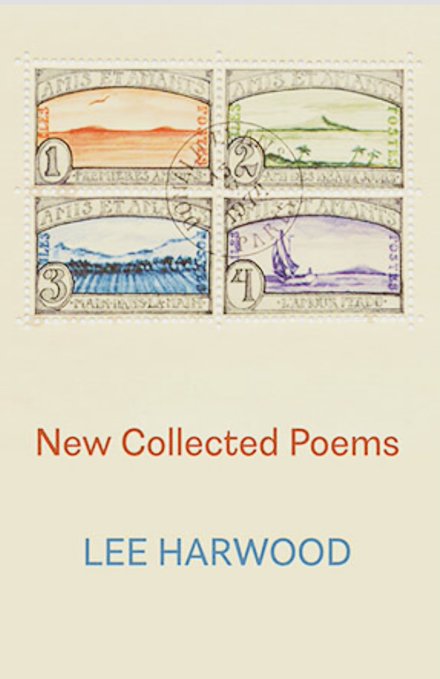
 Lee’s collaboration with John Ashbery is going to appear in the New Collected Poems that Kelvin Corcoran and I are currently editing for Shearsman. (See here: https://robertsheppard.blogspot.com/2022/01/lee-harwood-4-poems-and-note-on-them-in.html

This is it, as it will appear in our book. A taster:


Train poem – A collaboration


dog daisies poppies metal knitting

needles snail eyes backward

and then discord the records-file

prehensile tankers and block

which way the stage perimeter OK

block again greenhill rears upward mutinous

‘back!’ So until January

telegraphs twitching north to so and so

and a handkerchief slowly chopping heaves

‘ne nous fachons pas’ so that the houses

laughing in your eyes nearer the bang

let a forest caress unlace the instant

lovecog – did you really understand what I meant by that?

the farmyard in an uproar of freed peasants’ cough

            drops ah the old dogs at the window

but my love for you outgrew the shed

tools in disorderly heaps and wasps

a beam sagging into twisted visions of nowhere

and at this the small engine appeared from the siding

to inspect the phantoms and slowly disappear. 


What is different about the draft manuscript version is that we can see who wrote what. (Maybe that wasn’t the intention, because Lee doesn’t even tell us who the collaborator is! Perhaps as in some of my collaborations (about which I write here: https://robertsheppard.blogspot.com/2020/01/robert-sheppard-thoughts-on.html ), Harwood and Ashbery wanted to become the third author without differentiation, or perhaps they didn’t. Indeed, also printed here is a typescript of the poem, with Ashbery's contributions underlined. But to see the manuscript you will have to obtain the book, I’m afraid. The spacing is quite different from the published version. Neither Mr Corcoran nor myself can tell you what a ’lovecog’ is, but I can reveal that that phrase is in Lee’s handwriting!

The Bob Cobbing contribution is his 1951 notebook ‘Two Experiments’, and one is a word list for the now familiar (and oft performed) ‘WORM’, the other a contemporary word-list poem-draft, ‘Snow’. You can hear the eventual sound poem ‘Worm’ from about ten years later on the video below. There follows a fair description of Cobbing’s procedures, and we read the exciting information that the BL has over 300 reel-to-reel recordings of his work (as well as other recordings, such as my edition of 1983 number two which I speak of above). There is a later visual text printed too, which is odd because 'WORM' also exists as a visual poem (again, Cobbing waited for 10 years until duplicator technology enabled overprinting).    

My collaborations with Cobbing are now published by Veer. See here: Pages: COLLABORATIONS (Bob Cobbing - Robert Sheppard) published in a box by Veer - out now.


Thinking of recordings, I have a cassette recording of Verse and Perverse and Bob and I did record a video together of Blatant Blather/ Virulent Whoops, the two texts in Collaborations. That might be in the collection. The cassette tape is destined for my archive, I suppose, unless it gets lost.

 All of the catalogues of the BL collections may be consulted online.

The BL also archives this blog. 

The New Collected Poems of Lee Harwood is NOW available. HERE:  Lee Harwood - New Collected Poems (shearsman.com)

Monday, September 19, 2022

Robert Sheppard: A final final poem for British Standards!

I know I keep saying goodbye to Bo(ris Johnson), last time through the Medium of Jake Thackray’s masterpiece. That’s here: Pages: Goodbye to Bo through the Medium of Jake Thackray’s masterpiece (not a book review) (robertsheppard.blogspot.com)

Before that I said goodbye to Bo here, with a poem:

https://robertsheppard.blogspot.com/2022/08/final-extra-last-poem-of-english-strain.html

I also keep saying goodbye by writing the next ‘final’ poem of my ‘English Strain’ project, which consists of between 250-300 transpositions of canonical sonnets, about half of which (I guesstimate) mention Bo in one way or another. Three hundred! That’s more than enough. ‘Enough is enough’ as the contemporary campaign against the ‘cost of living crisis’ has it (but which is really the continuation of austerity, The Age of Immiseration as I call it). As you will see, I’ve squeezed one more in, or out, depending on how you think of poetry ‘production’.

The beginning of ‘the English Strain’ is best described here ( http://robertsheppard.blogspot.com/2018/04/robert-sheppard-petrarch-sonnet-project.html ) : that’s the first hundred, in the book The English Strain. Then here: https://robertsheppard.blogspot.com/2019/09/on-bad-idea-and-reference-to-earlier.html - that’s Bad Idea, another 80+ sonnets (and another book). You can buy both books together here: https://robertsheppard.blogspot.com/2021/06/how-to-buy-english-strain-books-one-and.html. British Standards, not yet a book, but finished (or so I thought, until today): see here: https://robertsheppard.blogspot.com/2021/04/transpositions-of-hartley-coleridge-end.html. They are all versions of Romantic Era sonnets, Wordsworth to Coleridge.

And then we had the Queen’s Funeral, and the weird cargo cult reactions to it, and the overreaching reactions by our police. So, I had to write another last poem. I couldn’t sleep last night, and it came to me. Why not do another version of Shelley’s ‘England in 1819’? I begin ‘British Standards’ with one, so why not do another version to finish, this time also versioning my previous ‘version’, but trying to avoid it sounding like a refrain to either of those.

 Here's Shelley’s great sonnet: England in 1819


An old, mad, blind, despised, and dying King;

Princes, the dregs of their dull race, who flow

Through public scorn,—mud from a muddy spring;

Rulers who neither see nor feel nor know,

But leechlike to their fainting country cling

Till they drop, blind in blood, without a blow.

A people starved and stabbed in th’untilled field;

An army, whom liberticide and prey

Makes as a two-edged sword to all who wield;

Golden and sanguine laws which tempt and slay;

Religion Christless, Godless—a book sealed;

A senate, Time’s worst statute, unrepealed—

Are graves from which a glorious Phantom may

Burst, to illumine our tempestuous day.


My first version of this famous sonnet has not been published yet, out at a mag I’ve not had a reply from. 

[Update 29/09/2022: The second poem, or a draft of it, After Sheppàrd After Shelley: England in 2022, was, like many others, posted temporarily on this blog, in this case for what I ironically call 'the Festival of Mourning for our late Empress of Bressex, "of happy memory"', as I shall date the poem (all of these poems are dated, because they trail (if not troll) public events). The poem is removed from here (not for further study, as in the Tom Raworth poem) but for publication. So here are some of its traces, also slightly updated.  

19th September 2022: the poem was written during the funeral itself. Revised a little the day after (and updated here.) A video of me reading it, I discovered, is too big to load up. I don't think it would do to just read it fast! Elegaic toilets and laureate eulogies notwithstanding.

If anyone thinks that the poem is too weird, here are some of the contributory images, (I mean contributory to the writing of the poem, I often use photographic images, as I discuss here: Pages: Robert Sheppard: Talk for the Open Eye Gallery on Poetry and Photography December 2016)), in this case, from the ‘Grieve Watch’ Twitter feed. Elsewhere you will find videos of the hapless rollerblader who dashed into the royal car, and you can still read about people being arrested for hoisting up blank sheets of paper, as I imagine myself doing! There are a few quotes from the draft of the poem between these immensely enjoyable photographs. An anthropologist might find them illuminating about contemporary Britain, although as I write, 29th September 2022, the Royal Fun-for-all seems aeons ago, as the free-market zelaots who have taken over from fun-loving, libertarian-laugh-a-minute-gift that-kept-on-giving-to-my-project Bo, are crashing the economy as their free-market ideology collides with the actual free market, which doesn't like what it sees. Come on British people, stop celebrating Bressex and Boot Them Out, Enough is (more than) Enough!.]


This image goes directly into the line 'Flowers are sprinkled on Holocaust/memorials...' , superbly unthinking bad taste simply described. 


Above and below: 'any bat-faced/effigy propped up on cartoon limbs/beside closed elegiac public loos, shut hospitals...'  I wrote, looking at these and similar representations of Her Majesty. In even Georgian or Regency times, you could have been arrested and transported (or at least jailed, like Leigh Hunt) for sticking this on your fence.  


(That one above is my favourite image of this period of mourning: hard core mourn! as some have called it. Look at those flowers.)


above: 'Thames mud sculpture...' How very odd (and ugly). Weirder for the sheer earnestness of such cargo cultism!


And finally, the inevitable: 'Mannequins in black mourning peer facelessly/ from over-lit sex shop windows...'  (In this last poem I didn't even get round to dogging sites, which appear throughout my poetic representations of post-Brexit Britain (Bressex: who put the sex in Bressex? Michael Go with his National Dogging Sites in Kent.) This is SOOOOO tasteful, isn't it?

As I said on Twitter at the time: 'Why is it that these acts of respect seem so ... well... disrespectful?

[There was even a horrible chance of Bo returning to power in October 2022. I was ready, as you'll see here: Pages: The Horrible Thought that Bo mioght be back: only The Bard could save me now! (robertsheppard.blogspot.com) and am ready, should he ever dare!]

Monday, September 05, 2022

Goodbye to Bo through the Medium of Jake Thackray’s masterpiece (not a book review)

 I keep saying goodbye to Bo(ris Johnson), most recently here:

https://robertsheppard.blogspot.com/2022/08/final-extra-last-poem-of-english-strain.html

I said goodbye using the final poem of my ‘English Strain’ project, which consists of between 250-300 transpositions of canonical sonnets, about half of which (I guesstimate) mention Bo in one way or another. (Or maybe it’s only in one way, the satirical, except when he was in hospital and I prayed he wouldn’t die and ruin my book.) Three hundred! That’s more than enough. ‘Enough is enough’ as the contemporary campaign against the ‘cost of living crisis’ has it (but which is really the continuation of austerity, The Age of Immiseration as I call it).

The beginning of ‘the English Strain’ is best described here ( http://robertsheppard.blogspot.com/2018/04/robert-sheppard-petrarch-sonnet-project.html ) : that’s the first hundred, in the book The English Strain. Then here: https://robertsheppard.blogspot.com/2019/09/on-bad-idea-and-reference-to-earlier.html - that’s Bad Idea, another 80+ sonnets (and another book). You can buy both books together here: https://robertsheppard.blogspot.com/2021/06/how-to-buy-english-strain-books-one-and.html.

 BRITISH STANDARDS is now available:  https://www.shearsman.com/store/Robert-Sheppard-British-Standards-p661920471

That leaves God knows how many poems in part three, British Standards, not yet a book, but finished (almost exactly 6 months ago today, as can be seen in the first link above). But also see here: https://robertsheppard.blogspot.com/2021/04/transpositions-of-hartley-coleridge-end.html. They are all versions of Romantic Era sonnets, Wordsworth to Coleridge (Hartley, that is). Hardly, that is.

So how to say goodbye to Bo (if not to Boris Johnson, they are not the same)? It’s tempting to write about his final weeks (telling us to buy a kettle, turning up at police raids, throwing grenades ineptly, not flying an RAF fighter) or about the The Daily Telegraph rumours that, once he’s made some money, he’ll be back at the helm, like Trump). If not that, then I thought that I might just present links (Lord knows, I overdo that already!) to all the online poems that feature Bo, but I think the links I’ve offered above do that pretty well, and I’ll let those of you who are interested follow the clues. In any case, buy the books! But here’s just one link, to stand for all the others, to three poems which are versions of sonnets by John Keats, with videos of me reading the text that is also published there. It’s not from this blog, but from (on) the wonderful online magazine Parmenar: here: https://www.pamenarpress.com/post/robert-sheppard. It’s a trailer for British Standards.

Enough is enough about me. I have been reading Beware of the Bull: The Enigmatic Genius of Jake Thackray by Paul Thompson and John Watterson, a new biography of its subject, a long time interest of mine (though I only have one CD, with another in the post). In this brilliant book (which I don’t have time to review, unless somebody pays me, like they used to at New Statesman or the TLS) they refer, in their very title, and in the text, to Thackray’s masterpiece Beware of the Bull. Patricia and I watched this video on Friday night, into the night, and I declared, ‘This is how I’m going to say goodbye to Johnson!’ It's on You Tube.

See what I mean? It also tells us to beware the next bull. 'Meet the new bull: same as the old bull,' as The Who didn't sing.

You may buy the book direct (forget Amazon, Jake would have hated it!): here: https://www.scratchingshedpublishing.com/products-page/biography/beware-of-the-bull-the-enigmatic-genius-of-jake-thackray/

This isn’t (as I’ve said already) a review of the book, but I want to record a number of things that occurred to me as I read it. I realised, indeed, how literary a character JT was, from English degree through to losing all his precious books to the taxman, from translating George Brassens (in not a dissimilar way to my ‘transpositions’, it strikes me now), from his own early poems to his late Yorkshire Post columns (worth collecting in book form I would have thought, hint hint). From references to Coleridge in his letters and references to Paul Valery in his unpublished essay on the very literary Brassens. I was left wanting to know more about what he read (other than Adrian Henri, mentioned once) or where a few of his early poems were published in small magazines, but I realise that’s only me. I’m grateful to read three of his poems here.

The book is otherwise rich on the cultural contexts in which JT … I was going to say ‘operated’, but that’s the wrong word; his career was almost accidental. He makes Scott Walker (whose use of Brel is directly parallel to JT’s use of Brassens) look like a socialite, particularly thinking about JT’s later semi-reclusive years. Both fought a battle with drink, of course, and I like the fact these authors call that an ‘illness’. It is. However upbeat they are, and they are, they cannot disguise the decline and demise of their hero. I read the book slowly, staving off that final sheepcounted chapter. But, he was a good, funny, fucked-up, cleareyed, hopeless, brilliant, shy, public, private, Catholic, Socialist, Yorkshire, European, loving, man.

Reading Beware of the Bull simultaneously with the poems of Mary Robinson was an interesting experience. I am editing an edition of her Selected Poems and I found myself more able to take on board her lighter poems in ‘Lyrical Tales’ if I thought of them (and their verse forms) as analogous to JT's narrative songs of lovers, liars, fantasists, diabolists, bus passengers, nuns in disguise, great apes, doggies, cats, and a mythical Jake Thackray and his ‘family’.

See my first encounter with Mary Robinson (part of British Standards) here: Pages: My Transpositions of Mary Robinson's sonnets 'Tabitha and Thunderer' are now complete (hub post) (robertsheppard.blogspot.com)).

A fascinating thing that isn’t explained in the book is how quickly he learnt to play the guitar, in just two years (from bedroom to BBC). In subtlety, he’s on a par with Joao Gilberto (that’s a weird analogy, but it’s one my fellow Lowry enthusiast and Thackray scholar, acknowledged in the book, Mark Goodall would get, I think).

There, that’s not a review, is it? It’s a farewell and good riddance to Bo (and no wishes for his return, when he’s earnt some money, writing his shit book on Shakespeare).

Thanks to Paul and John and Scratching Shed Publishing for this great book on Thackray and the odd things it’s taught me (above the obvious).  

[There was even a horrible chance of Bo returning to power in October 2022. I was ready, as you'll see here: Pages: The Horrible Thought that Bo mioght be back: only The Bard could save me now! (robertsheppard.blogspot.com) and am ready, should he ever dare!]

Monday, August 15, 2022

FINAL EXTRA: The last poem of The English Strain project is published on INTERNATIONAL TIMES


The comedy that was Bo (as opposed to the reality of Boris Johnson) is now over. Johnson, while he could be transformed into Bo, as indeed I was transforming sonnets into other forms and frames, was the gift that just kept on giving. I do not doubt, in the future, he will clumsily or carelessly and deliberately cause damage to our democracy and nation, as well as to individuals he will dispose of as he plunges through the undergrowth like a rogue elephant, but I won’t be pursuing him with my poetic blunderbuss. Perhaps he will return to writing: his memoirs, the crappy book on Shakespeare he has spent the advance of, or even his book about home furnishings. I’ve just heard a Tory MP on the radio refer to his ‘behavioral issues’, as though he was still the 'frozen child' of many years ago, though an ex-Tory MP called him a ‘wrong ‘un!’. He’s a rogue. Unfortunately, in Ukraine, he's a hero! (Though on the dancefloor, he's shit!)   

Of course, it had to end. Having to go out to support and defend his tricksterish ducking and diving, and face a volte face each day or even a U-turn immediately after their defence from his staunch officers (when they weren’t pissed out of their brains) was finally too much for some ministers, with some standards.

Talking of ‘standards’, British Standards, why did I not, why do I not still, write a sonnet (or a sequence!) to finish him off? A great Gillray balloon with a pin in it! Or the verbal equivalent of that video of him dancing at his wedding? Surely, even though the Decadents proved not to be ‘fruit-fly’ material, in Queneau’s sense, there would be some sonnet I could find to transfigure, torque, into a new shape to fit The Last of Bo into? 

You can read, if you want to, my provisional thinking on how to end the ‘English Strain’ project, or even whether to continue it into a FOURTH book! (Spoiler: the answer was No!) Here: https://robertsheppard.blogspot.com/2021/12/no-need-for-fourth-book-of-english.html

These sonnets, nearly all posted temporarily on this blog, have been conducted in public, if you like, because of their contemporaneous nature. Other projects are less visible until they are published. I talk about them here: https://robertsheppard.blogspot.com/2022/04/if-english-strain-is-finished-what-next.html. It is clear to me that a more combative approach will need to be taken to world politics generally, the 'Enough is Enough' movement, though this project was fun, and it was new for me, to take an entirely comic and satiric approach, though of course it was combined with the technique of 'transposition', which has sustained me through three books. I don't think I could have been so direct unless I was also being so indirect, if you see what I mean, if you can appreciate the generative tone between comic feeling and borrowed form.

I even thought an earlier poem, a transposition of a Gerard Manley Hopkins sonnet, would be the final poem and it was published in International Times earlier this year as just that. See Here: https://robertsheppard.blogspot.com/2022/01/the-shepherds-brow-final-poem-of.html

Actually, I then made this more recent poem the final poem.

BUT NOW it too has been published in International Times, an appropriate venue for a finale of these political poems: ‘The final poem of British Standards, the third and final book of the ‘English Strain’ Project’, I announce before its subtitle: ‘Monitoring Adam Mickiewicz’ first Crimean Sonnet: The Ackerman Steppe’. Its actual title is ‘After-Shock’, the last of four ‘After’ poems at the end of the book.

Read it here: https://internationaltimes.it/aftershock/

I wrote about the poem here at the time I wrote it. See here: https://robertsheppard.blogspot.com/2022/03/another-final-poem-of-english-strain.html

 where you find a video of me reading it in draft!  So here's a video of the final version, as published:


Thank you IT! And poetry editor Rupert Loydell. But of course that WASN'T the end at all. It nearly was, but one more poem revealed itself with the death of the Queen (did Bo kill her?) and the strange cargo cult reactions of the Great British Public. See here: Pages: Robert Sheppard: A final final poem for British Standards!


‘British Standards is still best described here: https://robertsheppard.blogspot.com/2021/04/transpositions-of-hartley-coleridge-end.html where you will find links to other on and off line appearances of parts of the book (and some other videos). I transpose sonnets by Wordsworth, Mary Robinson (more on her soon!), Shelley, both male Coleridges, John Clare, Hopkins, Arthur Symons, and others, as well as Keats. )

 ‘British Standards’ is also book three of a larger project of refunctioning traditional English sonnets, called ‘The English Strain’.

 Read about Book One of ‘The English Strain’, The English Strain:

 http://robertsheppard.blogspot.com/2018/04/robert-sheppard-petrarch-sonnet-project.html


Book Two, Bad Idea, is described here

https://robertsheppard.blogspot.com/2019/09/on-bad-idea-and-reference-to-earlier.html


You can buy both of these published books together here: Pages: How to buy The English Strain books one and two together (robertsheppard.blogspot.com)

[There was even a horrible chance of Bo returning to power in October 2022. I was ready, as you'll see here: Pages: The Horrible Thought that Bo mioght be back: only The Bard could save me now! (robertsheppard.blogspot.com) and am ready, should he ever dare!]

Saturday, August 13, 2022

Part of 'The Necessity of Poetics' republished with a new introduction on the CREATIVE CRITICAL website

My poetics piece ‘The Necessity of Poetics’ has been through a number of publication channels, including this blog, and a part of it (in some ways, the central part, the even slightly-famous, ‘definitions’) is now available on the new Creative Critical website, with a fresh introduction, as requested by the editor of this ‘blog’ part of the website, Robert Hampson. You may read these two conjoined discourses here: 

https://creativecritical.net/gathering-from-the-past/

Creative Critical is edited by Gabriel Flynn and Dr Thomas Karshan (UEA): see https://creativecritical.net/

‘The twenty first century’, they say, ‘has seen the erosion of any sharp distinction between the “creative” and the “critical”. Can criticism itself aspire to be creative? Does creative writing have a critical force? Or should we dispense with these terms altogether?

I’m quite happy to regard criticism as criticism (and with its inherent creative elements, as I know from writing it straight), creative writing as creative writing (which has critical elements and even a critical function, as I know and argue elsewhere), and see poetics as the third term between them, as I argued in, my inaugural lecture (which is on this blog, here: https://robertsheppard.blogspot.com/2017/03/robert-sheppard-inaugural-lecture-part.html ). Just to recap: I have (repeatedly) defined poetics as the ‘product of the process of reflection upon writings, and upon the act of writing, gathering from the past and from others, speculatively casting into the future’. It is a writerly discourse.

Just for the record: ‘The Necessity of Poetics’ first appeared as ‘The Poetics of Writing; The Writing of Poetics’, in Creative Writing Conference 1999, Proceedings, Sheffield Hallam University, 1999. A shorter version, emphasising practical uses for students, was published by Ship of Fools in 1999 solely for distribution amongst Writing Studies MA students at Edge Hill College of Higher Education (later University), Ormskirk, Lancashire, UK. Another – emphasising poetry – was published in Pores (2001). Updated versions were amended, expanded and abridged in various ways – a Ship of Fools booklet was published in 2002 and was re-printed a number of times until 2016 – but the chief addition is the section ‘Poetics as Discourse’ which was written in 2009.

This piece, along with others, on, of, or about poetics, appears in my 2024 Shearsman book The Necessity of Poetics. Details here: Pages: The Necessity of Poetics - out now! (robertsheppard.blogspot.com).